

Tankless Water Heater Installation in Washington, DC
Tired of running out of hot water? Installing a tankless (on-demand) water heater can eliminate frequent hot water shortages, cut down on energy waste, and free up valuable space in homes across Washington, DC. For DC homeowners, selecting the perfect on-demand system means carefully considering local factors like cold winter groundwater, older rowhouse plumbing, and specific municipal permitting requirements. With Tario HVAC, we'll walk you through the entire installation process, including sizing and load calculations, fuel and venting options, any necessary upgrades, maintenance, available rebates, and warranty considerations, ensuring you're empowered to make a truly informed decision.
.webp)
Why DC homes benefit from Tankless Water Heater installation
- Endless hot water for simultaneous showers and appliances helps households with multiple bathrooms.
- Higher energy efficiency than storage tanks because water is heated only when needed.
- Smaller footprint fits into tight mechanical closets common in DC rowhouses and apartments.
- When installed correctly, tankless systems last longer than traditional tanks and can reduce energy costs over time.
Common tankless types and fuel options
- Natural gas or propane on-demand heaters: Generally deliver higher flow rates for large homes and perform better with high temperature rise needs. Many DC properties already have natural gas service, but older buildings may need gas line upgrades.
- Electric tankless heaters: Easier to install where gas is not available but often require significant electrical panel capacity and large dedicated circuits. Electric models are a good choice for small households or point-of-use installations.
- Condensing vs non-condensing units: Condensing units extract extra heat from exhaust and are more efficient, but they require different venting materials and condensate management. Non-condensing units may use metal venting and have different clearance requirements.
- Recirculation-ready systems: For faster hot water at distant fixtures, a recirculation loop or pump can be integrated with many on-demand units.
Common tankless water heater issues in Washington, DC homes
- Hard water scaling that reduces heat exchanger efficiency and flow rate. Washington, DC has moderately hard water in many neighborhoods, so scale management is important.
- Undersized units for real-world simultaneous demand, especially during cold months that require larger temperature rises.
- Inadequate gas supply or electrical capacity in older rowhouses that limits unit performance.
- Improper venting or clearance in tight mechanical spaces, which can trigger code violations and unsafe operation.
- Lack of routine maintenance leading to reduced lifespan and voided warranties.
Sizing and load calculations
Proper sizing is the single most important step for reliable performance. A professional load calculation uses two basic inputs:
- Estimated simultaneous flow rate in gallons per minute (GPM) based on fixtures likely to run at the same time - for example: low-flow shower 1.5 to 2.5 GPM, kitchen faucet 1 to 2 GPM, dishwasher 1 to 2 GPM.
- Required temperature rise - the difference between desired outlet temperature and incoming water temperature.
In Washington, DC, incoming groundwater in winter often requires a larger temperature rise than in milder climates. That means a higher BTU input (gas) or higher kW rating (electric) is needed to meet the same GPM. Professionals will measure or estimate groundwater temperature for accurate sizing and recommend a unit capable of meeting peak simultaneous demand.
Electrical, gas upgrades, venting, permitting, and code compliance
- Gas upgrades: Many tankless installations require a larger gas service line or meter capacity to deliver needed BTUs. Proper pipe sizing and pressure testing are required.
- Electrical upgrades: Electric tankless units often need one or more dedicated high-amp circuits and may require an electrical panel upgrade. Even gas models sometimes need a 120V or 240V connection for controls and pumps.
- Venting: Gas units need correctly sized vents and termination locations. Condensing units use PVC venting and require condensate drainage. Vent routing in older DC buildings often requires creative planning to meet clearances and code.
- Permits and inspections: Washington, DC requires permits and code-compliant installation by licensed professionals. Inspections ensure safe venting, correct gas and electrical work, and proper combustion air. It is important to factor permit lead times into the installation schedule.
- Safety compliance: Carbon monoxide safety and proper combustion air are essential. Combustion safety devices, correct vent materials, and professional testing are standard parts of the installation.
Installation process and timeline
- Site assessment and load calculation to determine the right unit and required upgrades.
- Plan for any gas line, electrical, or venting upgrades; submit permits to the District for approval.
- Prepare the space: remove old equipment, adjust plumbing, add condensate drain or recirculation pump if needed.
- Installation day: mount the unit, connect gas or electrical services, tie into domestic hot water plumbing, install venting, and configure controls. Typical install time for a straightforward swap is several hours; complex upgrades can extend to multiple days.
- Startup, combustion testing, and inspection to verify safe operation. Technician will run initial performance checks and explain operating basics.
Maintenance needs and warranty considerations
- Annual maintenance is recommended, typically including a descaling or flush procedure to remove mineral buildup, cleaning the inlet screen or filters, inspecting venting and condensate traps, and verifying gas pressure and combustion. Homes with hard water should consider a water softening or conditioning solution to reduce scale and extend heat exchanger life.
- Many manufacturers offer limited warranties on heat exchangers and parts; warranty length varies by model and registration. Routine maintenance and professional installation are often required to keep the warranty valid. Keep records of service visits and any parts replacements.
Rebates, incentives, and long-term value
- Tankless systems may qualify for local utility rebates or federal energy incentives depending on program availability and equipment specifications. Eligibility typically depends on efficiency ratings and installation by a licensed contractor.
- Over time, the energy savings from on-demand heating and the extended equipment life can offset higher upfront complexity, especially in homes with significant hot water demand or where space is at a premium.
FAQs
Q: How do I know if my home needs a gas line or electrical panel upgrade for a tankless system?
A: A professional assessment will review your current gas meter capacity, pipe sizing, and electrical panel load. The assessment compares these to the unit’s requirements and identifies any necessary upgrades for safe, code-compliant operation.
Q: Will a tankless water heater provide enough hot water for my household during DC winters?
A: If sized correctly for simultaneous demand and the higher winter temperature rise, tankless systems can deliver continuous hot water. Cold groundwater in winter must be included in the sizing calculation to ensure adequate output.
Q: How often should a tankless water heater be descaled in Washington, DC?
A: Descaling frequency depends on water hardness and usage. In areas with moderate to hard water, an annual flush is common. Homes with very hard water may need more frequent maintenance or a whole-house water treatment solution.
Q: Do tankless water heaters require venting through an exterior wall or roof?
A: Venting options include sidewall or roof venting depending on unit type, building layout, and code. Condensing units typically use PVC for sidewall venting, while non-condensing units may require metal venting through a roof or wall with proper clearances.
Q: Can I add a recirculation pump to a tankless system for faster hot water delivery?
A: Yes, many tankless units support recirculation or can be paired with dedicated recirculation pumps and controls. Proper integration helps reduce wait times for hot water while minimizing energy waste.
Q: Will installing a tankless water heater require a permit in Washington, DC?
A: Yes, installations must meet District permitting and inspection requirements to ensure safety and code compliance. Licensed professionals will handle permit submission and inspections as part of the installation process.

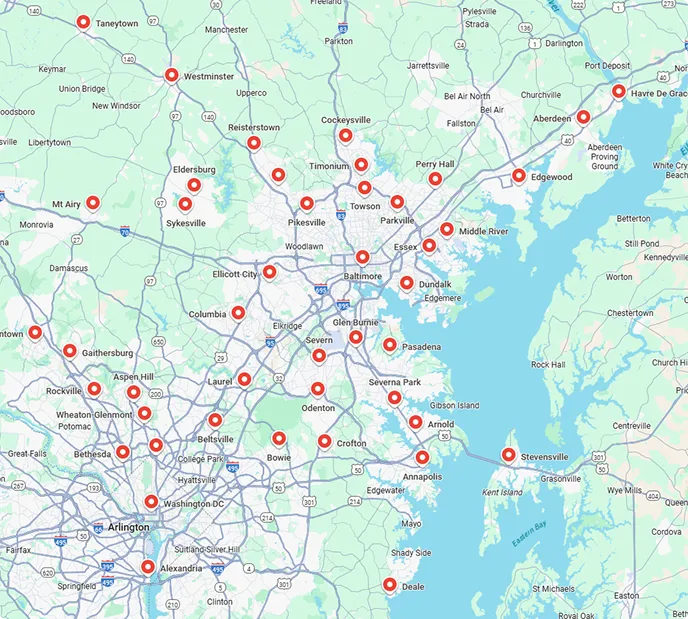
Service areas