

Whole House Air Filters in Halethorpe, MD
Achieving cleaner indoor air begins with a smart whole-house air filter strategy. For homeowners in Halethorpe, MD, selecting the ideal filter involves skillfully balancing particle removal with your HVAC system's performance, especially in a climate known for humid summers, seasonal pollen, road and industrial particulates, and even occasional regional smoke events. Tario HVAC can explain filter types and MERV ratings, compatibility with your furnaces and air handlers, available installation options, crucial replacement schedules, and the cost-versus-performance trade-offs you need to understand to make a confident, informed decision.
.webp)
Why whole house filtration matters in Halethorpe, MD
Halethorpe sits near major roadways and Baltimore’s urban edge, so indoor air often contains:
- Road dust, diesel soot, and fine particulates from nearby traffic
- Spring and fall pollen and higher indoor mold risk during humid months
- Pet dander and household dust in older, less-sealed homes
A whole house filter captures these contaminants at the system return, protecting occupants and HVAC equipment. Unlike portable units, whole house filters treat all rooms consistently and reduce dust build-up in ducts and coils when selected and installed correctly.
Common whole house air filter options and MERV ratings
Understanding filter types and MERV ratings helps you match performance to needs without overloading your HVAC.
- Fiberglass panel filters (MERV 1-4)
- Low cost, minimal airflow resistance
- Good for basic protection of HVAC equipment but poor at allergen and fine particle capture
- Typically replaced monthly
- Pleated filters (MERV 6-11)
- Common whole house choice for homes with mild allergy concerns
- Better particle capture with moderate pressure drop
- Replace every 1 to 3 months depending on load
- High-efficiency pleated filters (MERV 12-13)
- Capture smaller particles including some fine dust and smoke particles
- Useful if occupants have allergies or during high outdoor particulate events
- Monitor HVAC airflow; replace every 2 to 6 months
- Media filters and deep-pleat cartridges (MERV 8-16 depending on design)
- Thicker (4 to 12 inch) media packs with larger surface area
- Lower face velocity reduces pressure drop while offering high capture efficiency
- Often installed in dedicated filter cabinets; replacement intervals from 6 to 12 months
- HEPA-level filtration
- True HEPA is MERV 17-20 and removes very fine particles, but most residential HVAC systems cannot handle the pressure drop without a dedicated HEPA air handler or bypass system
- Consider only with professional system upgrades
- Electronic and electrostatic cleaners
- Reusable, can handle fine particles, and have low pressure drop when clean
- Performance varies; maintenance is critical
How to choose the right filter without overloading your HVAC
Choosing higher filtration does not always mean better overall results. The key is matching filtration efficiency to what your system can handle.
- Check system specifications
- Look in the furnace or air handler manual for recommended filter thickness and any maximum MERV rating. Some systems list an allowable pressure drop or maximum filter type.
- Consider filter depth and face velocity
- Thicker media filters reduce pressure drop for a given MERV rating. If you want MERV 13 performance, a 4 to 6 inch media filter often performs better and safer than a 1 inch MERV 13 pleated filter.
- Assess blower capacity
- Older furnaces and air handlers with weaker blowers are more sensitive to higher resistance filters. If you notice reduced airflow or uneven heating/cooling after upgrading filters, you may have exceeded the system’s acceptable pressure drop.
- Gauge local exposure
- If occupants have serious allergies, asthma, or you frequently experience poor outdoor air quality (pollen season, local smoke events), err toward higher MERV, but select media or professional upgrades to protect airflow.
Compatibility with existing furnaces and air handlers
Not all filters fit or work effectively in every system. Steps to check compatibility:
- Measure filter slot depth and dimensions (standard 1 inch vs 4 inch vs custom)
- Review the HVAC equipment specifications for max recommended filter type and MERV
- Inspect return grille sizing; undersized returns with high-MERV filters can cause excessive static pressure
- Consider professional evaluation if you plan to move above MERV 11 or install deep media systems
If the current system cannot accommodate a higher-MERV 1 inch filter, options include installing a media cabinet at the air handler, upgrading to a higher-capacity blower, or choosing an in-duct or standalone filtration supplement.
Installation options: standard vs media filters
- Standard (slot-in) filters
- Typically 1 inch thick, quick to replace, suitable for MERV 6-11
- Best for homeowners who prefer easy DIY maintenance
- Media filters and cabinets
- Dedicated housings that accept 4 to 12 inch media; can achieve higher MERV ratings with reasonable pressure drop
- Require more space and professional installation for proper sealing and airflow optimization
- Retrofit and add-ons
- In-duct electronic cleaners, whole-house HEPA bypass units, and UV germicidal lights are available as supplemental options when high-efficiency filtration is desired without compromising airflow
- These typically require professional assessment and installation
Recommended replacement intervals (adjust for Halethorpe conditions)
- Fiberglass panel (MERV 1-4): every 30 days
- Pleated MERV 6-11 (1 inch): every 1 to 3 months; check monthly during pollen season
- Pleated MERV 12-13 (1–2 inch): every 2 to 4 months
- Media filters (4 to 12 inch, MERV 8-16): every 6 to 12 months
- Electronic/electrostatic: clean monthly to quarterly depending on device
Local factors that shorten intervals in Halethorpe:
- High pollen in spring and fall
- Summer humidity that encourages mold spores
- Increased particulate loading after regional smoke or construction activity
- During these times, inspect filters more often and replace sooner if they look loaded.
Impact on system efficiency and indoor air quality
- Benefits of appropriate whole house filtration
- Lower indoor dust levels, reduced allergen exposure, and cleaner coils and ductwork
- When properly matched to the system, less strain on equipment and fewer repairs related to dirty components
- Efficiency trade-offs
- Filters that create excessive pressure drop reduce airflow, which can lower comfort, increase runtime, and raise energy use
- Overly restrictive filters can shorten blower life or cause heat exchange issues in furnaces
- Best practice
- Use the highest effective MERV rating your system can support without compromising airflow. Consider media filters or professional upgrades to achieve both high filtration and low resistance.
Cost and performance trade-offs
- Low-cost, low-MERV filters: cheap and low airflow impact but limited particle removal
- Mid-range pleated filters: good balance for many Halethorpe homes, moderate lifespan and cost
- High-MERV 1 inch pleats: good capture but can affect airflow; often require more frequent changes
- Media filters: higher upfront cost and installation, but longer life and better overall performance for higher MERV ratings
- Professional upgrades: added expense, but they enable high-efficiency filtration (including HEPA-level solutions) without sacrificing system health
- Inspect filters monthly the first season after changing filter strategy to confirm airflow and capture
- Seal return grilles and ducts to reduce bypass and improve filtration effectiveness
- Coordinate filter upgrades with routine HVAC maintenance: clean coils and check blower performance
- During allergy season, humid weather, or smoke events, increase inspection frequency and consider temporary higher-efficiency options
Choosing whole house air filters in Halethorpe, MD is about balancing indoor air quality needs with system capability. Selecting the right MERV, filter depth, and installation approach - and maintaining that system based on local seasonal conditions - delivers the best outcomes for health, comfort, and HVAC longevity.

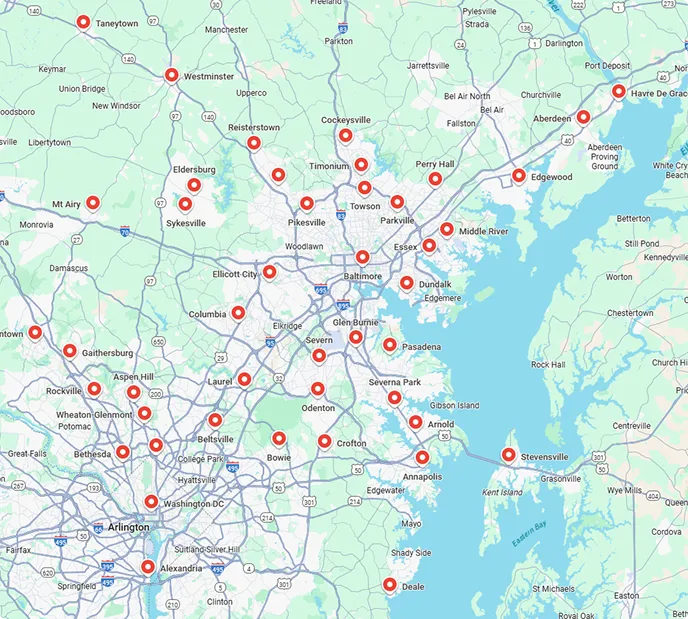
Service areas