


Ventilation in Halethorpe, MD
In Halethorpe, MD, proper whole-home ventilation is crucial for maintaining excellent indoor air quality, controlling moisture, and ensuring year-round comfort, especially in today's tight, energy-efficient homes. Halethorpe's climate brings hot, humid summers and chilly winters. The combination of high outdoor humidity and everyday indoor activities like cooking, showering, and clothes drying often creates excess moisture, leading to condensation, mold growth, and dust mite issues. Many local homes, retrofitted with insulation and new windows to boost energy savings, inadvertently reduce natural air leakage, intensifying the need for mechanical ventilation. Tario HVAC can help you implement proper whole-home ventilation to improve your living environment by:
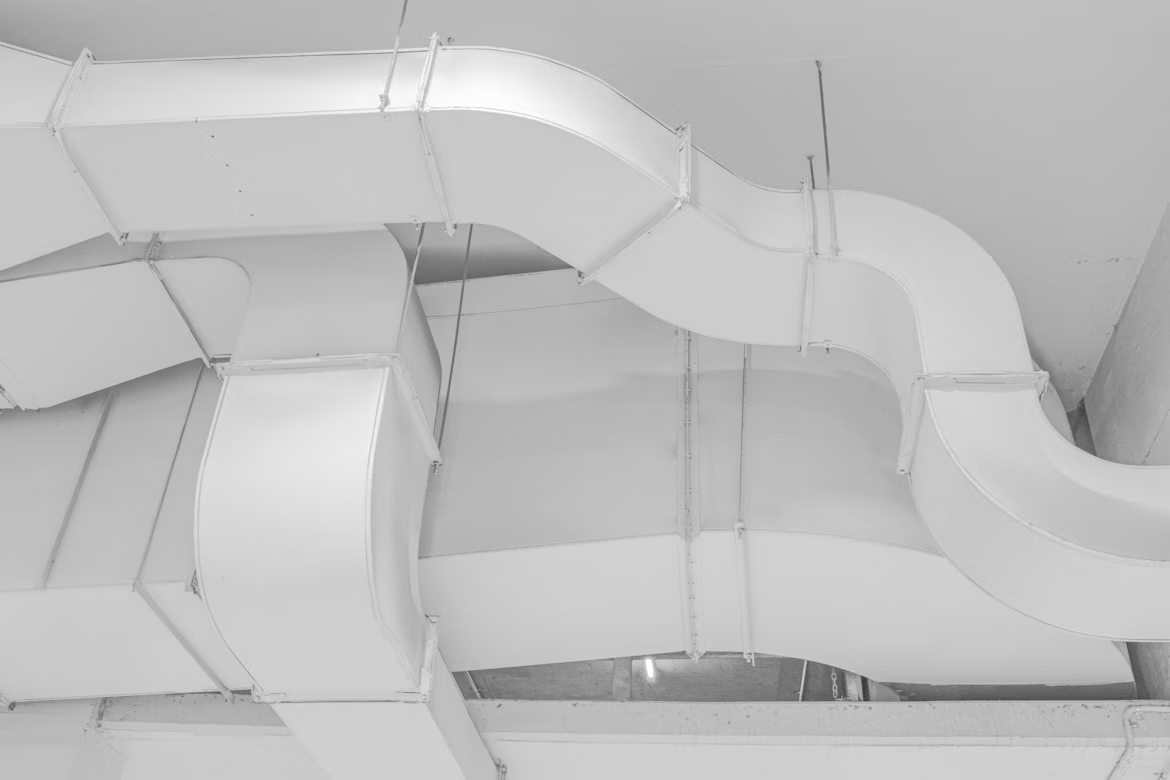
Ventilation in Halethorpe, MD
Proper whole-home ventilation in Halethorpe, MD is essential for healthy indoor air, moisture control, and year-round comfort. Homes here face humid summers, cold winters, and seasonal pollen - conditions that trap moisture and pollutants inside when houses are tightly sealed for energy efficiency.
- Reduce indoor humidity and mold risk
- Remove pollutants like volatile organic compounds, cooking odors, and NO2 from gas appliances
- Lower allergy triggers from pollen and dust
- Improve sleep and overall health by supplying fresh air consistently
Common ventilation systems for Halethorpe homes
Understanding options helps match a system to your home size, tightness, and indoor pollutant profile.
- Exhaust-only systems
- Simple fans remove stale air from bathrooms, kitchens, or whole-house exhaust fans.
- Pros: low cost, straightforward. Cons: can depressurize the home, drawing in unfiltered outdoor air and backdrafting combustion appliances.
- Supply-only systems
- Bring filtered, conditioned outside air into the home to pressurize and push out stale air.
- Pros: filters incoming air, helpful in areas with outdoor pollutants. Cons: may introduce humid air in summer without moisture control.
- Balanced systems
- Simultaneously supply and exhaust equal airflow for stable pressure and controlled ventilation.
- Pros: best indoor air control, minimizes infiltration. Usually paired with heat or energy recovery.
- Heat Recovery Ventilators (HRV)
- Transfer heat between exhaust and supply air without transferring moisture. Ideal in cold seasons to retain heat while ventilating.
- Energy Recovery Ventilators (ERV)
- Transfer both heat and moisture. In humid climates like Maryland, ERVs can reduce the amount of moisture introduced during summer while preserving humidity in winter.
Assessment and ductwork considerations
A professional assessment identifies the right system and necessary ductwork adjustments.
- Home airtightness testing: blower door tests show how much mechanical ventilation is needed to meet recommended airflow rates.
- Load and airflow calculation: follow ventilation rate standards to size equipment correctly; under-ventilation fails to address IAQ and over-ventilation wastes energy.
- Duct inspection: check for leaks, disconnected runs, crushed ducts, and dirty or insulated ducts that may reduce performance.
- Duct location and insulation: ducts in unconditioned attics or crawlspaces should be insulated and sealed to prevent energy loss and condensation.
- Intake and exhaust placement: position away from sources of outdoor pollution, neighbors vents, or dryer and roof exhausts to avoid cross contamination.
Recommended solutions for moisture and pollutant control
Matching strategies to local conditions limits mold, allergens, and chemical pollutants.
- Use a balanced ERV in many Halethorpe homes
- ERVs moderate outdoor humidity in summer and reduce load on air conditioning while maintaining indoor humidity levels in winter.
- Address localized pollutant sources
- Install properly vented range hoods for cooking and high-capacity bathroom fans for showers to remove moisture at the source.
- Filtration and particle control
- Use inline filtration with a recommended MERV rating appropriate for your HVAC system to reduce pollen, dust, and fine particles without restricting airflow.
- Supplemental dehumidification
- For homes with chronic dampness, a whole-house dehumidifier integrated into the HVAC system can maintain ideal humidity between 40 and 50 percent.
- Source control
- Reduce indoor pollutant sources when possible: vent combustion appliances, use low-VOC products, and ensure garages are separated from living spaces.
Installation and balancing procedures
A controlled installation and careful commissioning ensure the system performs as intended.
- Pre-install assessment: airtightness test, ventilation rate calculation, and duct survey.
- Equipment selection: choose appropriate size and type (ERV or HRV, fans, controls) based on calculated needs.
- Ductwork modifications: install or adapt ducts with sealed, insulated runs and proper routing for intakes and exhausts.
- System installation: mount units, connect controls, and set up filters and condensate management as required.
- Commissioning and balancing: measure supply and exhaust airflow at diffusers, adjust fan speeds and dampers to achieve target ventilation rates, and verify pressure neutrality in balanced systems.
- Occupant education: explain system controls, seasonal settings, and maintenance schedules.
Energy and code compliance
Ventilation in Halethorpe must meet both health and energy goals.
- Mechanical ventilation is required by modern energy codes for tight homes; systems should conform to ventilation standards similar to ASHRAE 62.2 for residential ventilation rates.
- Energy recovery units improve efficiency by reclaiming heat or humidity; look at sensible recovery efficiency and overall effectiveness to compare units.
- Properly sized fans and controls reduce energy penalty by ventilating only to required rates and using timers or demand control based on humidity or CO2 sensors when appropriate.
Routine maintenance and filter replacement
Regular upkeep preserves performance and indoor air benefits.
- Replace or clean filters per manufacturer guidance, typically every 3 months for standard filters, more frequently if occupants have allergies or pets.
- Clean the ERV or HRV core annually and inspect seals and condensate drains to prevent blockages and microbial growth.
- Inspect outdoor intakes and exhausts seasonally to remove leaves, nests, or debris and verify insect screens are intact.
- Verify system operation with airflow checks every 1 to 2 years, especially after HVAC changes or ductwork work.
Expected benefits for health and comfort in Halethorpe homes
Appropriate whole-home ventilation delivers measurable improvements:
- Lower indoor humidity and reduced mold and condensation on windows and walls
- Fewer allergy symptoms and less pollen and dust inside the home
- Reduced odors and indoor pollutant concentrations from cooking and household products
- Improved sleep, cognitive function, and overall comfort from consistent fresh air
- Better long-term durability of building materials by controlling moisture
Proper ventilation is a critical component of a healthy, energy-efficient home in Halethorpe, MD. Selecting the right system, ensuring correct ductwork and installation, and committing to routine maintenance will control moisture and pollutants while preserving energy performance and comfort year round.

Service areas