

Whole House Dehumidifiers in Rockville, MD
Considering whole-house dehumidification for your Rockville, MD home? Tario HVAC can show you exactly how it works, guiding you through sizing and selecting the right system, understanding installation steps, and managing condensate. We’ll also discuss energy considerations, routine maintenance, and recommended humidity targets for basements, living spaces, and crawl spaces – all aimed at preventing mold, protecting wood and finishes, and improving your overall comfort. We'll also cover common issues, such as short cycling and condensate problems, providing practical tips for ongoing performance and long-term reliability. Let Tario HVAC help you decide on the best solution for your Rockville property.
Whole House Dehumidifiers in Rockville, MD
High indoor humidity is a common problem for Rockville homes, especially during hot, muggy summers and after heavy seasonal rains. Whole house dehumidifiers provide a steady, controlled solution that protects finished basements, wood floors, HVAC systems, and family health by reducing mold, mildew, and dust mites. This page explains how whole-house dehumidification works, how to choose the right system for homes in Rockville, MD, common issues and diagnostics, installation and condensate management, energy considerations, routine maintenance, and recommended settings for basements and other high-humidity areas.
Why whole-house dehumidification matters in Rockville, MD
Rockville lies in a humid subtropical climate zone. Summers are frequently hot and humid, and seasonal storms and spring thaw can raise indoor moisture levels. Finished basements, crawl spaces, and lower-level living areas are especially vulnerable because they are cooler and closer to ground moisture. High indoor relative humidity accelerates mold growth, causes musty odors, degrades wood and paint, and increases perceived temperature, which makes air conditioning work harder. A whole-house dehumidifier helps maintain stable indoor humidity across all living spaces and takes moisture load off the HVAC system.
Common whole house dehumidifier issues in Rockville
- Insufficient dehumidification for the square footage - often caused by undersized units or underestimated moisture loads from basements, laundry, or frequent showers.
- Short cycling - frequent on-off cycles caused by incompatible controls or oversized compressors without proper control logic.
- Condensate drainage failures - clogged drains, improper trap height, or insufficient pump capacity lead to overflow or leaks.
- Poor airflow - closed supply or return registers, dirty filters, or high static pressure in ducts reduce system effectiveness.
- Freeze up or reduced performance in cooler basements - refrigerant-based units can struggle in low temperature conditions if not equipped with defrost cycles or supplemental heaters.
- Improper humidistat placement - locating controls in non-representative areas gives inaccurate readings and uneven humidity control.
Types of whole-house solutions and which fits Rockville homes
- Ducted refrigerant dehumidifiers: Mounted in the return plenum or mechanical room, these are common, energy-efficient options for most Rockville single-family homes and finished basements. They use the HVAC blower for air movement and remove moisture directly into HVAC drains or via a condensate pump.
- Desiccant dehumidifiers: Better for very cool basements or spaces that require low humidity at low temperatures. They are more common in specialized installations and may have higher energy use.
- Standalone or ducted point systems: For homes without central ductwork, a dedicated ducted unit with its own supply and return can serve multiple levels. These are common in older Rockville homes that have been retrofitted.
- Integrated HVAC dehumidification: Some modern HVAC systems include factory options for whole-house dehumidification, enabling coordinated control with the furnace or air handler for improved energy use and humidity control.
Sizing and capacity selection
Correct sizing is essential. Dehumidifier capacity is measured in pints per day (or liters per day) removed at specific temperature and humidity conditions. A proper load calculation considers:
- Total conditioned square footage and ceiling height
- Number of occupants and typical occupancy patterns
- Sources of moisture such as basement foundations, crawl spaces, attached garages, laundry rooms, and frequent showers
- Local climate factors like Rockville summer humidity and seasonal rainfall For Rockville basements and whole-house needs, many homes require 30 to 70 pints per day capacity depending on size and conditions, but actual requirements must be calculated case-by-case. Oversizing can cause short cycling, undersizing will not control humidity effectively.
Installation steps and integration with HVAC
- Site assessment and load calculation: Determine capacity and best mounting location based on duct layout and existing HVAC equipment.
- Mechanical integration: For ducted models, install in the return plenum or dedicated mechanical room with a short, direct connection to the return air. Ensure static pressure compatibility with the air handler.
- Control linking: Connect the dehumidifier to a dedicated dehumidistat or the HVAC control board for coordinated operation. Proper controls prevent conflicts with cooling cycles.
- Condensate connection: Route condensate to a gravity drain, floor drain, or sump pump as required. Install a condensate trap and overflow safety switch where needed.
- Ventilation and makeup air: Confirm that ventilation or ERV/HRV systems are balanced to avoid negative pressure that can pull in humid outdoor air.
Condensate management best practices
- Use gravity drainage when possible; slope lines to drain to prevent standing water.
- Where gravity is not available, install a condensate pump sized for peak condensate rates and vertical lift.
- Include a condensate trap and check valve to prevent air infiltration and backflow.
- Insulate drain lines in unheated spaces to prevent freezing or condensation on the outside of the line.
- Install an overflow safety switch or float to shut the unit down if the drain clogs.
Energy considerations
Whole-house dehumidifiers add electrical load, but they can improve overall HVAC efficiency by reducing cooling runtime. Look for units with variable-speed compressors and high energy factor ratings. Integrating the dehumidifier with the HVAC system allows the air conditioner to run less aggressively, because lower humidity improves comfort at higher thermostat setpoints. Consider the trade-offs between refrigerant and desiccant models, and factor in local electricity costs and typical Rockville cooling loads.
Typical maintenance tasks and service agreements
Regular maintenance keeps performance high and prevents failures:
- Replace or clean air filters every 1 to 3 months depending on use.
- Clean coils and condensate pans annually to prevent biological growth and blockages.
- Inspect and test condensate drains and pumps quarterly.
- Verify dehumidistat accuracy and sensor placement seasonally.
- Check electrical connections, refrigerant pressures (for refrigerant units), and defrost cycles. A service agreement can include scheduled inspections, seasonal performance tuning, priority repair response, and parts checks for pumps and controls. For Rockville households, annual spring and late-summer checks are common to prepare for high-humidity months.
Recommended humidity settings for Rockville homes
- Finished basements and high-humidity areas: Aim for 45 to 50 percent relative humidity to prevent mold while avoiding overly dry air.
- Living spaces: 40 to 50 percent relative humidity is comfortable and reduces allergens.
- Crawl spaces: Maintain 45 to 55 percent depending on ventilation and insulation; ensure vapor barriers and proper drainage are in place. Avoid setting targets lower than 35 percent for extended periods to prevent drying and shrinking of wood components.
Whole-house dehumidification is a practical, protective upgrade for Rockville homes that regularly face high indoor humidity. Proper sizing, correct integration with HVAC systems, dependable condensate management, routine maintenance, and the right humidity targets together prevent mold, improve comfort, and extend the life of home materials and HVAC equipment. When evaluating options for your Rockville property, consider local climate patterns, basement conditions, and the existing ductwork layout to choose a solution that delivers consistent, whole-home results.

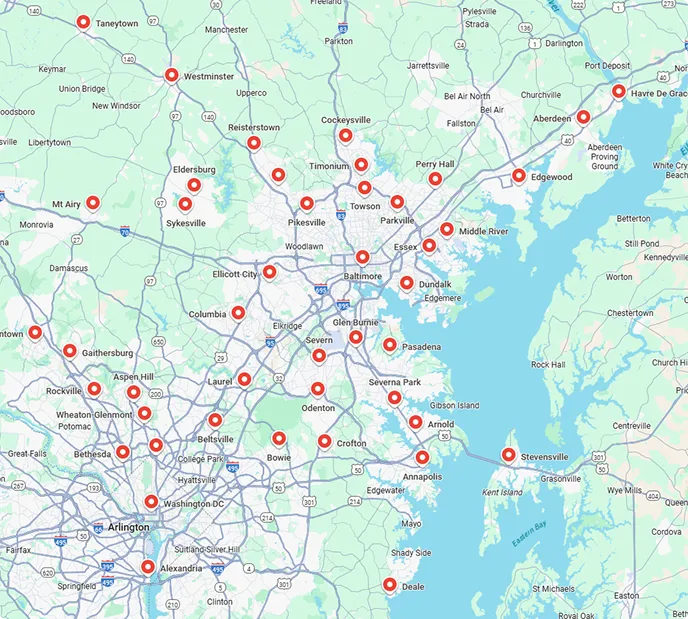
Service areas