

Whole House Air Filters in Rockville, MD
When it comes to whole-house air filtration for Rockville, MD homes, we at Tario HVAC dive deep into everything you need to know. We cover filter types, MERV ratings, and the art of balancing effective allergy control with healthy airflow. Our guide explores various installation options, practical replacement schedules, and how robust filtration impacts your system's performance and energy use. We also share insights on maintenance plans and even subscription suggestions for hassle-free upkeep. You'll learn how higher-efficiency filters affect static pressure, get expert advice on compatibility with your existing equipment, and discover practical tips to genuinely improve your indoor air quality while safeguarding your HVAC system through every seasonal shift.
.webp)
Whole House Air Filters in Rockville, MD
Keeping your indoor air clean is a practical priority in Rockville, MD where seasonal pollen, humid summers, cold winters, and neighborhood traffic all affect home air quality. Whole house air filters protect HVAC equipment and remove contaminants from the air that circulates through your home. This page explains the filter types and MERV ratings available, how to choose for allergy control versus airflow preservation, installation options, replacement schedules, effects on system performance and energy use, subscription or maintenance plan options, and practical tips to improve indoor air quality in Rockville homes.
Why a whole house filter matters in Rockville, MD
Rockville homeowners face a combination of airborne allergens and particulates: spring tree and grass pollen, summer pollen and humidity that encourage mold, and fine particulates from nearby roadways. A dedicated whole house system treats air continuously for the entire living space rather than relying on portable room units. That reduces dust on surfaces, lowers allergen load, stabilizes HVAC operation, and can reduce odor and smoke intrusions during seasonal events. Common whole house air filter issues in Rockville, MD include clogged filters from heavy pollen seasons, wrong MERV selection causing poor airflow, and older HVAC systems that need professional compatibility checks.
Filter types and how MERV ratings work
Understanding filter construction and MERV ratings makes choosing easier.
- Fiberglass/basic panel filters: Low initial cost, MERV 1-4. Good for large debris and protecting equipment but poor for allergy control.
- Pleated electrostatic filters: MERV 5-11. Better particle capture with moderate airflow resistance. Common residential choice.
- High-efficiency media filters: MERV 11-13. Dense media captures fine particles and many allergens without needing HEPA. Requires checking system compatibility for static pressure.
- HEPA and true HEPA in-duct systems: MERV 17+ equivalence. HEPA filters remove 99.97% of 0.3 micron particles but typically require specialized housings or standalone whole-house purifiers because most HVAC fans are not designed for the pressure drop.
- Activated carbon filters: Added to reduce odors and VOCs. Often paired with particulate filters in modular systems.
- Electrostatic precipitators and electronic air cleaners: Use charged plates to capture particles. They require routine cleaning and professional service to maintain effectiveness.
MERV ratings indicate the filter’s ability to capture different particle sizes. Higher MERV equals better capture of fine particles but also higher resistance to airflow. For Rockville homes, MERV 8-11 suits general dust and pollen control; MERV 11-13 is preferred for allergy or smoke concerns, provided your system can handle it.
Choosing the right filter: allergy control vs airflow preservation
Balancing allergy reduction and HVAC performance is the most common decision homeowners face.
- For allergy sufferers: Aim for MERV 11-13 or an in-duct HEPA solution. These capture pollen, pet dander, and many mold spores. Confirm with an HVAC professional that the air handler and blower can overcome the increased static pressure without reducing airflow.
- For older systems and airflow-sensitive setups: MERV 6-8 pleated filters offer improved particle capture over fiberglass while maintaining low resistance. This is a good compromise for many Rockville homes with older furnaces or smaller air handlers.
- For smoke or odor events: Use a combination of high-efficiency particulate filters and activated carbon or a dedicated whole-house air purifier designed for smoke removal.
Always review your HVAC manufacturer specifications. Using a filter that is too restrictive can increase energy use, cause uneven heating or cooling, and shorten equipment life.
Installation options
Whole house filtration can be configured several ways depending on your duct layout and goals.
- Drop-in panel (return grille) filters: Simple and low cost. Easy to change but limited media depth.
- Cabinet/panel filters at the air handler: Accommodates deeper media filters for better filtration without changing return grilles.
- Media filter boxes: Larger area media boxes reduce static pressure while offering higher efficiency. Installed at the air handler or in a dedicated slot.
- In-duct HEPA or advanced filtration systems: Require specially designed housings and often a higher-capacity blower.
- Add-on electronic or UV systems: Supplement particulate filtration by targeting biological growth or by electrostatic capture.
Professional assessment is recommended to determine the best location and configuration for efficient filtration and minimal impact on system operation.
Replacement schedules and maintenance plans
How often to change or service a chain of filters depends on filter type and local conditions.
- Fiberglass panels: Replace every 30 days or as visual dirt indicates.
- Pleated filters (MERV 5-11): Typically every 60-90 days; more frequently during high pollen periods.
- High-efficiency media filters (MERV 11-13): Every 6-12 months depending on load.
- HEPA and specialty systems: Follow manufacturer and professional service recommendations; some components need annual inspection.
Signs it is time to change: visibly dark or clogged filter, increased dust in living areas, reduced airflow at registers, or increased system runtime. Many homeowners benefit from a filter subscription or maintenance plan that schedules deliveries and professional annual inspections. Plans often include filter replacement at the air handler, testing of static pressure, and a brief HVAC check to confirm compatibility and performance.
Impact on system performance and energy use
Filters that are too restrictive raise static pressure, which can reduce airflow and force HVAC equipment to run longer to reach setpoints. Consequences include higher energy use, uneven temperature distribution, and increased wear on the blower motor. Properly sized high-efficiency media filters minimize pressure drop while improving particle capture. Professional installation and periodic static pressure checks ensure filtration upgrades deliver cleaner air without penalizing efficiency.
Practical tips to improve indoor air quality in Rockville homes
- Match the filter MERV to your HVAC capacity. Have a pro measure static pressure if upgrading to MERV 11-13.
- Change filters more often during spring pollen peaks and late summer mold-prone months.
- Control humidity: keep relative humidity between 40 and 50 percent to limit mold growth during humid summers.
- Seal drafts and improve ventilation: balanced ventilation brings controlled fresh air while reducing uncontrolled infiltration from roads or neighbors.
- Clean ducts selectively: only when there is evidence of mold, pests, or excessive debris. Poorly done duct cleaning can reintroduce contaminants.
- Use a vacuum with a HEPA-rated bag or filter and clean high-traffic areas frequently.
- Consider whole-house carbon filtration if odors or VOCs from nearby construction or traffic are persistent.
Whole house air filters in Rockville, MD offer measurable benefits for allergy control, particulate reduction, and equipment protection. The right solution depends on your household sensitivities, HVAC age and capacity, and local seasonal factors like pollen and humidity. Careful selection of filter type and MERV rating, professional installation options, and a predictable replacement or maintenance plan ensure improved indoor air quality without sacrificing system performance or energy efficiency.

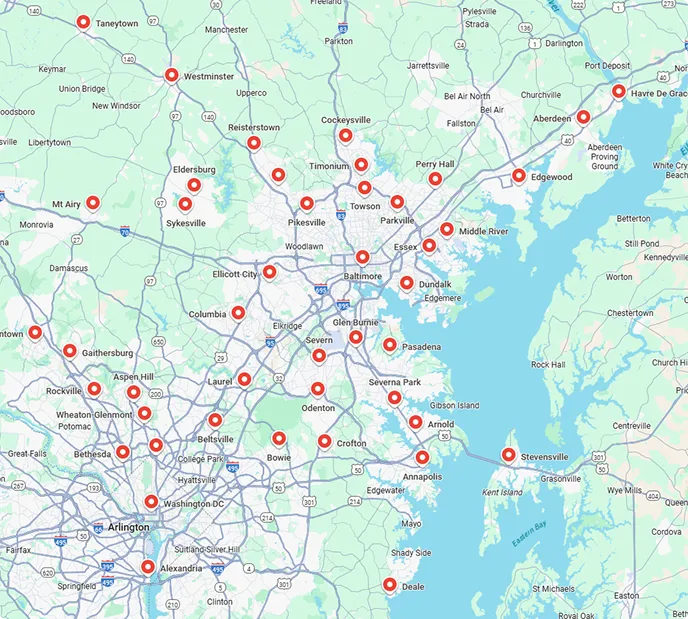
Service areas