

Whole House Air Purifiers in Rockville, MD
For Rockville, MD homes, Tario HVAC provides a clear overview of whole-house air purifiers, covering their technologies, crucial installation considerations, and how they seamlessly integrate with existing HVAC systems. We'll compare options like in-duct HEPA, high-MERV filters, UV-C, electronic precipitators, activated carbon, and hybrid systems, explaining proper sizing, ideal placement, essential maintenance, and realistic performance expectations. We outline measurable metrics, detailed maintenance schedules, and the significant health benefits you can achieve, such as reduced allergens, odors, and microbial growth, ultimately helping you choose a system perfectly aligned with your home's size, specific pollutant concerns, and the local climate.
.jpeg)
Whole House Air Purifiers in Rockville, MD
Keeping indoor air clean is increasingly important for Rockville, MD homes where seasonal pollen, humid summers, occasional regional smoke, and traffic-related vehicle emissions combine with everyday indoor sources like cooking, cleaning products, and pets. Whole house air purifiers provide continuous, integrated filtration and disinfection through your existing HVAC system to reduce allergens, smoke, odors, VOCs, and microbes throughout the home. This page explains the available technologies, what they remove, how to size and integrate systems with existing HVAC, measurable performance metrics, maintenance expectations, and the health benefits Rockville families can expect.
Common whole house air purifier issues in Rockville, MD
- Spring and early summer high pollen counts lead to elevated allergen loads in homes.
- Hot, humid summers increase mold and dust mite activity inside ductwork and attic spaces.
- Wintertime closed windows concentrate indoor VOCs from cooking, cleaning products, and formaldehyde from new furnishings.
- Regional wildfire smoke and local traffic can drive fine particulate matter (PM2.5) and soot into suburban homes.
- Older HVAC systems may not be designed for high-efficiency filters, causing pressure-drop or airflow problems when high-MERV or HEPA-level filtration is added.
Whole-house air purification options and what they address
Below are the main whole-home purification technologies used in Rockville homes, with their primary strengths and typical contaminant targets.
- In-duct HEPA systems (true HEPA, installed downstream of the air handler)
- Removes particles down to 0.3 microns with at least 99.97% efficiency.
- Best for allergens, smoke particles, and fine dust (PM2.5).
- Often paired with a prefilter to capture larger particles and protect the HEPA element.
- High-MERV pleated in-duct filters (MERV 8 to MERV 16)
- MERV 13 is a common recommended balance for whole-home HVAC systems; it captures many fine particles without excessive pressure drop in compatible systems.
- Good for pollen, mold spores, pet dander, and some respiratory aerosols.
- UV germicidal systems (UV-C installed in ductwork or at the coil)
- Inactivates bacteria, viruses, and mold on coil surfaces and airborne microbes when exposure time and lamp output are appropriate.
- Particularly useful in humid Rockville summers to reduce microbial growth on coils and in drain pans.
- Electronic air cleaners / electrostatic precipitators
- Charge and collect particles on collector plates; efficient for small particles when properly maintained.
- Some devices can produce ozone; choose CARB-compliant or UL-tested units to avoid ozone concerns.
- Activated carbon or sorbent media filters
- Adsorb odors, VOCs, smoke gases, and chemical smells from cleaning products or off-gassing materials.
- Often combined with particulate filtration for balanced performance.
- Hybrid whole-home systems
- Combine HEPA or high-MERV filtration with activated carbon and UV disinfection to address particles, gases, and microbes simultaneously.
How systems are sized and placed for Rockville homes
Proper sizing and placement are critical to performance and HVAC compatibility.
- Evaluate home volume and HVAC airflow (CFM). Whole-house systems are sized to handle the system’s delivered airflow so filtration efficiency does not compromise comfort or system performance.
- Confirm static pressure capacity of your furnace or air handler. High-efficiency filters and HEPA modules add resistance; some systems require a dedicated in-line fan or bypass duct.
- Placement options include return-duct housings, plenum-mounted units, or direct integration at the air handler. Locate filters and media where they can treat the full system airflow for whole-home coverage.
- For houses with multiple HVAC zones, ensure the purifier is installed on the primary return that services the majority of living space or consider zoned solutions.
Integration with existing HVAC systems
- Professional assessment of ductwork, blower capacity, and static pressure is essential before upgrading to high-MERV or HEPA-level filtration.
- UV-C lamps are commonly mounted near the cooling coil to reduce microbial growth and maintain coil heat transfer efficiency.
- Activated carbon modules are installed where airspeed allows sufficient contact time for adsorption; larger surface area or staged beds improve VOC capture.
- In some cases, an auxiliary fan or dedicated in-duct purifier is added to maintain airflow when high-efficiency filtration would otherwise restrict the HVAC fan.
Performance metrics and certifications to watch for
Use measurable metrics and certifications to compare whole-home systems:
- HEPA rating: True HEPA filters are rated to capture 99.97% of 0.3 micron particles.
- MERV rating: Indicates particle capture efficiency across size ranges. MERV 13 is a common target for improved residential filtration.
- CADR (Clean Air Delivery Rate): More common for portable units; for whole-house work, match system CFM and house volume to estimate air changes per hour (ACH).
- ACH (Air Changes per Hour): A way to estimate how often indoor air is filtered; aim for higher ACH for smoke-prone periods or severe allergies.
- CARB compliance and UL/ETL listings: Important for electronic devices to ensure low-to-no ozone emissions and electrical safety.
- Independent lab test data: Look for particle removal efficiency, gas adsorption capacity, and microbial log-reduction results from third-party labs.
Maintenance and filter replacement schedules
Maintenance frequency depends on technology, local pollutant load, and household habits (pets, smoking, renovations):
- Pre-filters / washable screens: Clean monthly or as they appear dirty.
- MERV pleated filters: Inspect every 1 to 3 months; typical replacement every 3 to 12 months depending on dirt load.
- In-duct HEPA cartridges: Replace every 12 to 36 months depending on prefiltration and home pollutant levels.
- Activated carbon modules: Replace or recharge every 6 to 12 months for moderate use; heavy odor or VOC situations can shorten life.
- UV-C lamps: Replace annually to maintain germicidal output; cleaning lamp sleeves every 6 months helps preserve effectiveness.
- Electronic collector plates: Clean monthly to quarterly to maintain performance and avoid re-entrainment of particles.
Factors that shorten replacement intervals include indoor smoking, heavy cooking, renovations, multiple pets, and wildfire smoke episodes.
Health benefits and expected outcomes for Rockville families
- Reduced allergy and asthma triggers by lowering pollen, pet dander, and dust mite fragments circulating through the home.
- Lower indoor fine particulate (PM2.5) concentrations during smoke events, improving respiratory safety.
- Reduced odors and chemical smells from activated carbon media, improving indoor comfort and perceived air quality.
- Less microbial growth on coils and duct surfaces with UV integration, which can reduce mildew odors and maintenance headaches in humid months.
- Improved HVAC efficiency and extended equipment life when filters capture particulate before it settles on coils and fan blades.
Choosing the right whole-home air purifier in Rockville, MD depends on your primary indoor air concerns, home size, HVAC compatibility, and maintenance readiness. Properly specified and installed systems provide continuous, whole-home protection that measurably reduces particles, odors, VOCs, and microbes—delivering cleaner air and improved health outcomes for occupants living in the specific climate and pollutant mix typical of Rockville.

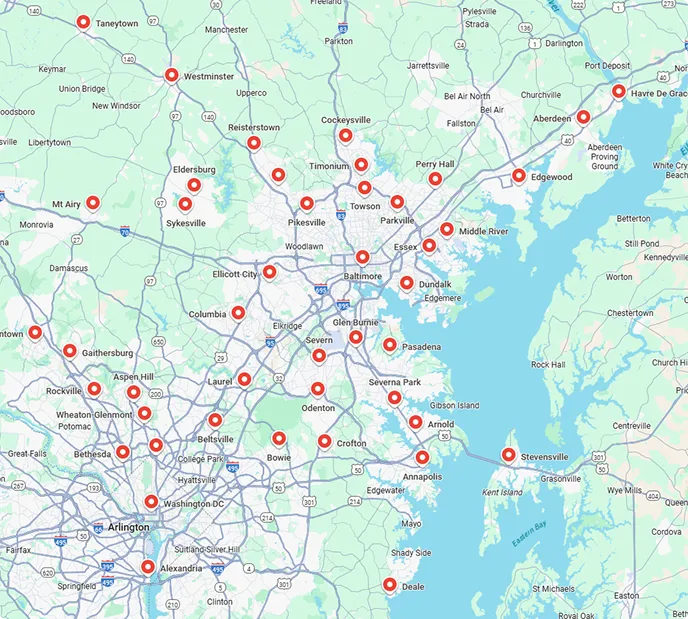
Service areas