

Whole House Dehumidifiers in Aberdeen, MD
Whole-house dehumidifiers from Tario HVAC in Aberdeen, MD expertly control indoor humidity, reducing mold, preventing moisture damage, and enhancing comfort alongside your home’s HVAC system. We guide you through selecting properly sized integrated or standalone units, outlining clear installation steps, drainage options, and commissioning to ensure reliable, long-lasting operation. Our solutions prioritize energy efficiency, aiming for ideal RH targets around 40–50 percent, with comprehensive maintenance schedules and expert troubleshooting for common issues. The outcome is a durable, long-term solution that effectively protects your home's structures, materials, and family's health in Aberdeen's coastal, humid conditions.
Whole House Dehumidifiers in Aberdeen, MD
Excess indoor humidity is a common and persistent comfort and health issue for homes in Aberdeen, MD. High relative humidity contributes to musty odors, mold and mildew growth, wood rot, increased dust mite populations, and reduced comfort during humid summers near the Chesapeake Bay. A professionally selected and installed whole house dehumidifier provides year-round control, protects building materials, improves indoor air quality, and helps your HVAC system run more efficiently.
Why whole-house dehumidification matters in Aberdeen, MD
- Summer humidity in Aberdeen is frequently high due to proximity to water and coastal air flows. Even when outdoor temperatures are moderate, indoor spaces can stay damp.
- Poorly controlled humidity leads to visible mold on walls and in basements, condensation on windows, warped hardwood floors, and corrosion of electronics.
- Local homes with basements, older framing, or high-occupancy households are particularly vulnerable to chronic moisture issues.
A whole house dehumidifier works with your HVAC to maintain a targeted indoor relative humidity (RH), typically in the 40 to 50 percent range, reducing both immediate discomfort and long-term property damage.
Common whole house dehumidifier issues in Aberdeen, MD
- Persistent basement dampness and mold despite running window units.
- Condensation on windows and cold surfaces in late spring and summer.
- Musty odors after rainy spells or extended high-humidity periods.
- Frequent cycling of the air conditioner with little dehumidification effect.
- Allergies or respiratory irritation that worsen during humid months.
If these sound familiar, whole-house dehumidification is often the most effective, long-term solution.
Standalone vs integrated ducted dehumidifiers
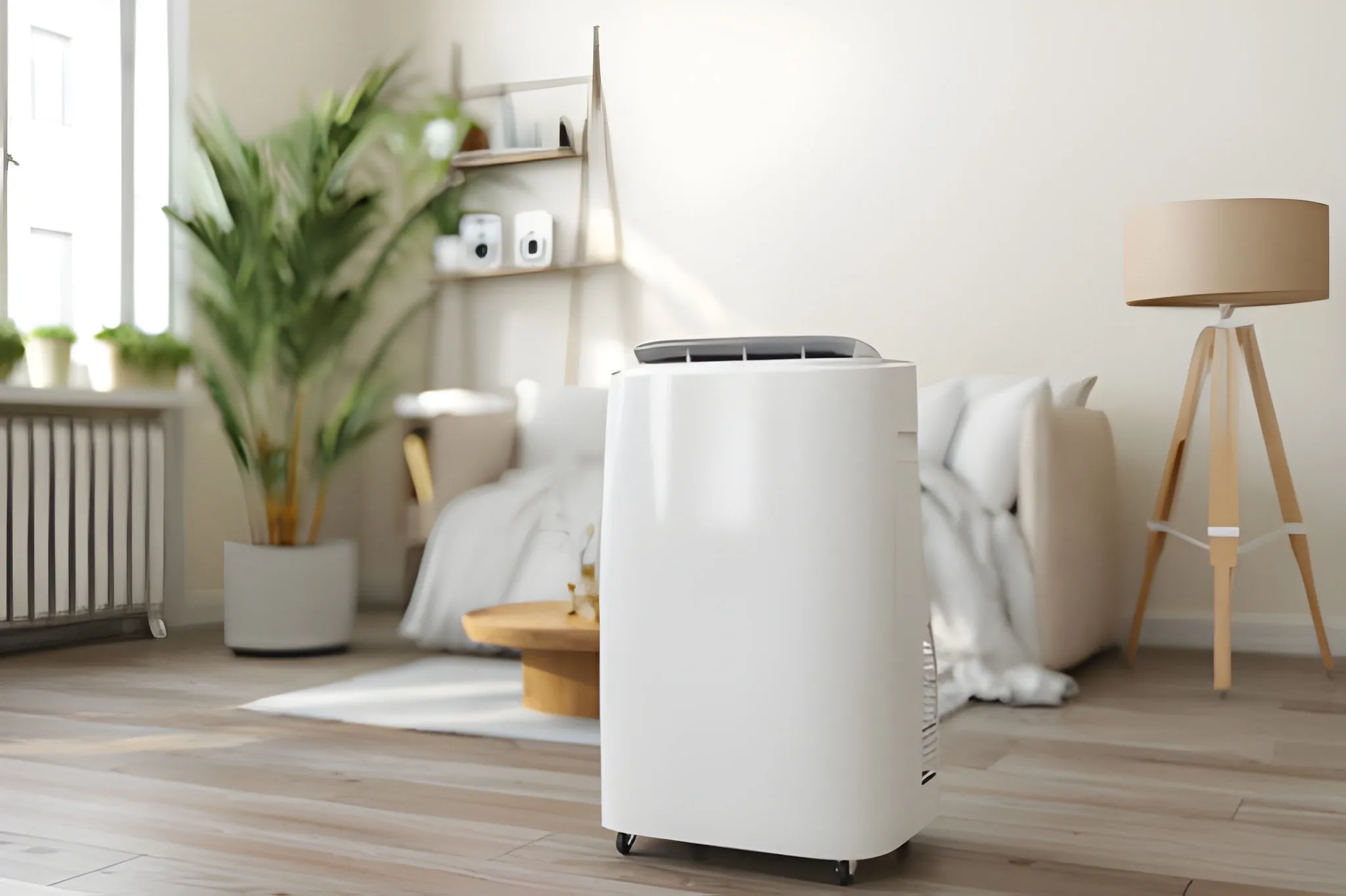
- Standalone (portable or room units): Designed for single rooms or basements, portable units are affordable up front but limited in capacity and coverage. They require frequent emptying or a nearby drain and do not interact with central HVAC air distribution.
- Integrated ducted whole house dehumidifiers: Installed into the HVAC ductwork or next to the air handler, these units provide balanced humidity control for the entire home. They dehumidify conditioned air at the system level, reduce strain on the air conditioner, and can operate independently of cooling when configured with a humidity control strategy.
For most Aberdeen homes, integrated ducted units deliver consistent, whole-home humidity control with better energy use and convenience than multiple standalone units.
Sizing and placement considerations
Correct sizing is essential. Key factors include:
- Home square footage and ceiling height.
- Existing building envelope tightness and insulation levels.
- Number of occupants and typical activities that add moisture (laundry, cooking, showers).
- Basement presence and condition.
- Local climate: Aberdeen’s humid summers require higher dehumidification capacity than drier regions.
Sizing is expressed in pints or liters of water removed per day at specific conditions. Proper placement is typically near the air handler or within the return duct to treat all circulating air. In some cases, a dedicated duct run or placement in the basement is preferred to address localized moisture sources.
Typical installation steps and drainage options
Installation follows a predictable process:
- Evaluate existing HVAC, duct layout, and moisture sources.
- Select a unit sized for the home and anticipated moisture load.
- Locate and mount the dehumidifier - adjacent to the air handler or in a return plenum is common.
- Integrate the unit into the ductwork with proper bypass or full-flow sections to ensure adequate airflow.
- Connect electrical and control wiring, including humidistats or integrated thermostats.
- Provide condensate drainage using one of these options:
- Gravity drain to a floor drain or exterior outlet when elevation allows.
- Condensate pump when no gravity drain is available.
- Hard pan/condensate tray routed to an appropriate disposal point.
- Commissioning: verify airflow, humidity setpoints, defrost or evaporator protection functions, and system controls.
Installations vary in complexity depending on existing equipment, basement configuration, and accessibility. Proper commissioning ensures the system meets expected moisture removal and runs efficiently.
Energy use, controls, and expected performance
- Modern whole house dehumidifiers are designed for efficient operation and often work more economically than running multiple portable dehumidifiers.
- They can be set to maintain a specific RH, and many models integrate with the HVAC control system to coordinate with cooling cycles. Some systems operate independently of the air conditioner, allowing dehumidification in mild weather without unnecessary cooling.
- Expect consistent RH control in the target range (commonly 40 to 50 percent) when the system is properly sized and installed. Performance varies with outdoor humidity, indoor moisture generation, and home tightness.
- Efficient units include features such as variable-speed compressors, automatic defrost for cooler seasons, and smart humidistats with time-of-day or humidity-based control.
Maintenance schedule and common service tasks
Regular maintenance keeps performance reliable:
- Quarterly: Inspect condensate drain lines for clogs and confirm pump operation if used.
- Biannually: Clean or replace air filters and check evaporator coils for dust buildup.
- Annually: Professional inspection of electrical connections, refrigerant charge if applicable, airflow measurements, and verification of humidistat calibration.
- Address issues like unusual noises, reduced moisture removal, or leaks promptly to prevent secondary damage.
Maintenance is straightforward and prevents efficiency loss and component failure over time.
Benefits specific to Aberdeen homes
- Reduces mold and mildew risks in humid coastal conditions, protecting indoor air quality and home value.
- Improves perceived comfort without lowering thermostat setpoints, which can save on energy compared to overcooling to remove moisture.
- Protects wood floors, trim, musical instruments, and electronics from humidity-related damage.
- Reduces dust mite populations and allergen levels, important for families with asthma or allergies.
Troubleshooting and what to expect after installation
After proper installation and commissioning, homeowners should notice:
- Fewer condensation problems on windows and pipes.
- Reduced musty odors and visible mold in previously affected areas.
- More stable indoor humidity throughout the house, including basements and upper levels.
If humidity remains high after installation, common causes include improper sizing, inadequate airflow, open crawlspaces or vents, or continual high moisture sources. A follow-up diagnostic check typically identifies the root cause and corrective steps.
Whole house dehumidification is a practical, long-term investment for Aberdeen, MD homes that experience seasonal or chronic moisture problems. A properly designed system tailored to your home size, occupancy, and local climate will deliver reliable humidity control, protect structural elements, and improve indoor comfort and health.

Service areas