

Whole House Air Filters in Havre de Grace, MD
In Havre de Grace, MD, whole-house air filtration is an effective way to reduce indoor allergens and dust by expertly filtering return air before it reaches your HVAC system. We'll compare filter types, from basic fiberglass panels to advanced whole-house HEPA, and clearly explain MERV ratings. Tario HVAC will guide you through optimal installation methods, replacement intervals, and essential maintenance routines. We's also discuss how unique local factors like coastal salt and pollen influence your choices, stressing the importance of selecting a system that perfectly balances air quality with proper airflow and long-term equipment longevity for Havre de Grace homes.

Whole House Air Filters in Havre de Grace, MD
Keeping indoor air clean in Havre de Grace, MD matters year-round. Coastal humidity, seasonal tree and grass pollen, salt air from the Chesapeake, and winter heating all affect indoor air quality in local homes. Whole house air filters address those challenges at the source by filtering return-air before it moves through your HVAC system. This page explains whole-home filtration options, compares filter types and MERV ratings, details installation methods and replacement intervals, and describes how the right choice protects both your family’s health and your HVAC system.
Why whole house filtration matters in Havre de Grace, MD
Havre de Grace has humid summers that promote mold and dust mite growth, spring and fall pollen spikes, and breezy conditions that can bring salt and fine particulates off the bay. These local factors increase airborne allergens and corrosive salt deposits in ductwork and equipment. Whole house filtration:
- Reduces allergens and particulates throughout living spaces
- Helps prevent dirt buildup on coils and blower components
- Lowers cleaning needs for furniture and air registers
- Can extend HVAC life when properly selected and maintained
Common whole house filtration options and how they compare
Choosing the right system begins with understanding types and performance.
- Fiberglass panel filters: Low cost, low MERV (1-4). Protects equipment from large debris but does little for allergens, pollen, or fine particles.
- Pleated disposable filters: Common for return grills, available in MERV 5-13. Good balance of filtration and airflow for most homes.
- Extended media filters / media cabinets: Deeper filters with more surface area; capture more particles with lower pressure drop. Available in higher MERVs without overloading the blower.
- High-efficiency pleated (MERV 11-13): Better for allergy and asthma control. May increase static pressure—verify system compatibility.
- Whole-house HEPA systems: Near-HEPA filtration for very sensitive occupants. Often require a dedicated HEPA cabinet and upgraded blower because true HEPA introduces significant pressure drop.
- Electronic air cleaners and electrostatic filters: Reusable options that capture particles electrically. Performance varies and they need regular cleaning; some remove odors poorly unless paired with activated carbon.
- Activated carbon and odor filters: Target VOCs, cooking smells, and salt aerosols. Typically used in combination with particle filters.
Understanding MERV ratings and local recommendations
MERV (Minimum Efficiency Reporting Value) indicates particle-capturing capability:
- MERV 1-4: Minimal particle capture
- MERV 5-8: Improved dust and pollen control
- MERV 9-12: Good for allergies; captures smaller particles including some mold spores
- MERV 13-16: Medical-grade level for fine particles down to 0.3-1.0 microns
Recommended baseline for Havre de Grace homes:
- General households: MERV 8-11 balances air quality and system efficiency.
- Homes with allergy or asthma sufferers: MERV 11-13, preferably in an extended media cabinet to avoid excessive pressure drop.
- Immunocompromised occupants or severe indoor pollution concerns: Whole-house HEPA or a dedicated HEPA cabinet from a qualified HVAC professional, with system modifications as needed.
Installation methods and considerations
Whole house filtration can be implemented several ways depending on existing HVAC layout and goals.
- Drop-in panel filters: Installed at the return grille or furnace filter slot. Easy and inexpensive but limited surface area.
- Media filter in plenum or dedicated cabinet: Deep media filters (4-12 inch) installed in the return plenum or in a retrofit cabinet provide large surface area and lower resistance for high-efficiency filtration.
- Upgrade kits: Some systems accept retrofit kits that add a media cabinet or larger filter frame to reduce pressure issues when moving to higher MERV filters.
- Electronic/UV additions: Electronic cleaners or UV lights can be added for particle charging or microbial control, but require professional sizing and maintenance.When upgrading filtration, always confirm blower capacity, static pressure limits, and furnace/air handler manufacturer guidance. An undersized system pushed by a high-MERV, low-surface-area filter will suffer reduced airflow, increased run times, and possible component stress.
Impact on airflow and system performance
Filter efficiency and surface area directly affect static pressure and airflow. Common impacts include:
- Higher static pressure from dense filters reduces airflow, lowering heating and cooling capacity.
- Reduced airflow can cause short cycling, uneven temperatures, and frozen evaporator coils in cooling season.
- Increased runtime and strain on the blower can shorten motor life.Mitigation strategies: choose filters with adequate surface area (extended media), maintain recommended replacement intervals, and have a technician measure static pressure and adjust blower settings or install a larger filter cabinet if necessary.
Replacement intervals and maintenance
Recommended replacement or service intervals vary by filter type and local conditions:
- Disposable pleated filters (MERV 8-13): Check every 1-3 months; typical replacement every 3 months for most homes. In high-pollen or high-salt months, check monthly.
- Extended media filters: Usually 6-12 months depending on load and MERV level.
- Electrostatic washable filters: Clean monthly and inspect for physical wear.
- Activated carbon inserts: Replace every 3-6 months depending on odor load.Signs it is time to change: visible dust build-up, reduced airflow, increased energy use, or higher static pressure readings. In Havre de Grace, spring pollen and late summer humidity often shorten filter life.
What a professional service plan should include
A reliable service plan focused on whole house filtration typically offers:
- Scheduled filter inspections and replacements timed to seasonal needs
- Static pressure measurement and airflow testing after filter changes
- Annual HVAC tune-ups including coil cleaning to prevent buildup from local salt and pollen
- Duct inspection for leaks and dust accumulation, with duct cleaning if necessary
- Recommendations for filter upgrades or cabinet installation if higher MERVs are needed
- Documentation of filter types and replacement dates to track performance over time
Final considerations: balancing health and HVAC longevity
Selecting the right whole house air filter in Havre de Grace is a balance between indoor air quality goals and system performance. For most local homes, moving to a high-quality pleated filter or an extended media cabinet with MERV 8-11 improves air quality and protects equipment without compromising airflow. For allergy sufferers or higher-risk occupants, higher MERVs or whole-house HEPA solutions provide stronger protection but require professional system assessment to avoid unintended performance penalties. Regular maintenance and monitoring are crucial—properly specified filtration improves indoor comfort, reduces dust and maintenance tasks, and extends HVAC service life in Havre de Grace’s coastal, humid environment.

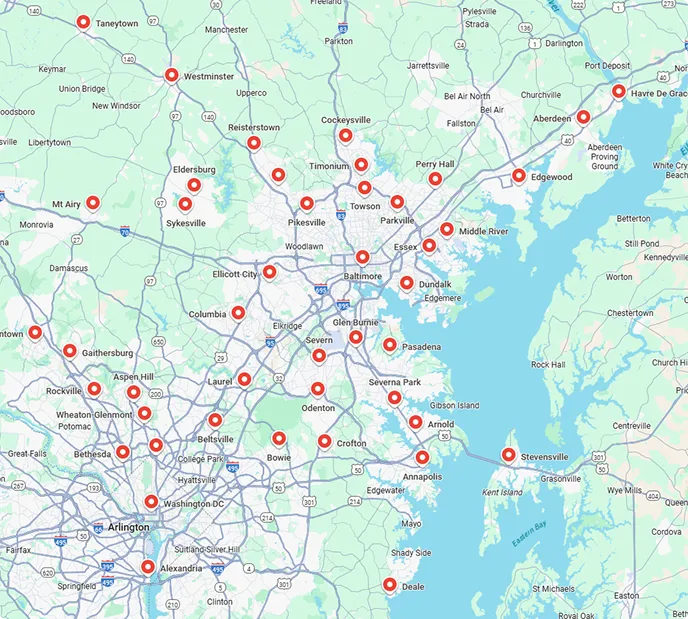
Service areas