

Smart Thermostats Installation in Havre de Grace, MD
Tario HVAC provides professional smart thermostat installation in Havre de Grace, MD, helping homeowners seamlessly upgrade to app-driven climate control. We emphasize thorough compatibility checks with existing HVAC equipment, reliable Wi-Fi setup, and zone-aware performance specifically tailored to coastal weather. From initial pre-install assessments and expert wiring to secure mounting, precise configuration, and voice-assistant integration, our technicians ensure proper operation, maximize energy savings, and provide full warranty protection. Our post-install testing and comprehensive user training empower residents like you to easily manage schedules, monitor energy use, and truly optimize comfort throughout humid summers and mild shoulder seasons.
.webp)
Smart Thermostats Installation in Havre de Grace, MD
Smart thermostat installation in Havre de Grace, MD brings modern comfort controls to homes that face humid summers, chilly winters, and the energy demands of living near the Chesapeake Bay. Upgrading to a smart thermostat reduces wasted heating and cooling runtime through remote scheduling, learning algorithms, and zone-aware controls. For homeowners ready to move from basic programmable controls to intuitive, app-driven systems, professional installation ensures compatibility with existing HVAC equipment, reliable Wi-Fi setup, and optimized performance tailored to local weather patterns.
Why Havre de Grace homes benefit from smart controls
- Energy savings: Smart thermostats use adaptive schedules, setback strategies, and usage reports to cut runtime during shoulder seasons and peak summer humidity.
- Remote scheduling and geofencing: Control systems remotely during travel or automate settings based on occupancy — helpful for vacation homes or seasonal renters in the area.
- Learning and sensor features: Devices that learn when to precondition rooms improve comfort without wasted energy, important when outdoor temperatures swing in spring and fall.
- Improved humidity and comfort control: In our coastal climate, properly timed cooling and integration with dehumidification reduce sticky conditions and limit HVAC overrun.
Common smart thermostat issues and service types in Havre de Grace
- Compatibility checks for older systems, including boilers, oil furnaces, and heat pumps.
- C-wire power problems and solutions, such as adding a common wire or installing a compatible power extender.
- Integration with zoning systems or multiple dampers in larger or historic homes.
- Wi-Fi connectivity and app setup for homes with weak signals or unique router placements.
- Multi-stage HVAC setup and heat pump reversing valve configuration.
- Remote sensor installation for rooms with uneven temperatures or sun-driven heat gain.
Compatibility checks and thermostat selection guidance
Before installation, a professional assessment confirms the thermostat will work with your HVAC system. Key checks include:
- System type: forced-air furnaces, heat pumps, boilers, or multi-stage systems each have specific wiring and control needs.
- Voltage: Low-voltage (24V) controls are standard for most residential systems; line-voltage systems require specialized thermostats.
- C-wire availability: If no common wire exists, installers evaluate using an adapter, power extender, or choosing a battery-powered model that meets functionality needs.
- Zoning and automation: Homes with multiple zones need a thermostat that supports multi-zone integration or separate thermostats per zone.
- Smart features: If you want learning algorithms, remote sensors, or third-party integrations (voice assistants, energy monitoring), selection focuses on models with those capabilities.
In Havre de Grace, where many homes range from modern builds to historic structures, installers also consider physical mounting locations to avoid salt-air exposure for outdoor sensors and to place thermostats away from direct sunlight, drafts, and interior heat sources.
Professional installation and setup: step-by-step
A professional installation follows defined steps to protect your HVAC, preserve warranties, and deliver predictable performance.
Pre-install assessment
- Inspect equipment, wiring, and breaker access.
- Confirm system compatibility and identify any necessary components such as a C-wire adapter or relay.
Power isolation and safety checks
- Turn off power at the breaker and verify voltage levels to prevent damage during wiring.
Mounting and wiring
- Remove the old thermostat, label wires, and install the new base.
- Connect terminals precisely (R, RC, W, Y, G, O/B, etc.) and secure wiring for reliable contact.
Power restore and initial boot
- Restore power and confirm the thermostat powers on and recognizes the HVAC type (furnace, heat pump, multi-stage).
Wi-Fi and app integration
- Connect the thermostat to the home Wi-Fi network and link it to the manufacturer app.
- If the home has a weak Wi-Fi signal near the thermostat, assess alternatives such as range extenders or mesh nodes.
Zoning and multi-device setup
- Configure damper or zone controller communication where applicable and ensure each zone responds correctly.
Configure smart features
- Enable learning modes, set initial schedules, pair remote sensors, and program geofencing or energy-saving preferences.
Final verification and tuning
- Run heating and cooling cycles, verify stage switching, heat pump reversing valve operation, and fan control sequences.
Post-installation testing and user training
After installation, thorough testing validates system response and user comfort:
- Confirm heat and cool calls, damper position changes, and compressor staging.
- Verify compatibility with smart home integrations and voice controls if enabled.
- Test remote access from a smartphone and demonstrate adjusting schedules on the app.
- Train occupants on daily use: temporary hold vs schedule, Away modes, manual overrides, and how to read energy reports.
- Explain routine checks: battery replacement (if applicable), firmware update notifications, and how to reset Wi-Fi credentials after a router change.
Training is focused on empowering homeowners to use features that matter locally — like setting humidity-targeted cooling during hot, muggy summer days.
Warranty and support options
Professional installations typically come with two layers of protection:
- Manufacturer warranty: Covers the thermostat hardware for a defined period. Installers help register devices to ensure warranty coverage.
- Installation warranty: A short-term guarantee on workmanship and wiring performed by the installer, protecting against installation-related issues.
Support services often include remote troubleshooting, firmware update assistance, and follow-up visits for advanced integrations such as zoning adjustments. For older systems, a professional install can prevent voiding HVAC equipment warranties by ensuring controls interact correctly.
Maintenance tips and long-term benefits
- Keep firmware up to date: Manufacturers release updates that improve performance and security.
- Check Wi-Fi and power: Ensure stable connectivity and verify the C-wire or adapter remains secure.
- Avoid placing the thermostat in direct sun or near vents to prevent false readings.
- Schedule seasonal HVAC maintenance: Clean filters, inspect coils and ductwork to maximize efficiency and let the smart thermostat accurately track system performance.
- Use energy reports: Review monthly summaries to fine-tune schedules and identify unusual HVAC usage that could indicate equipment issues.
Smart thermostats installed correctly deliver measurable comfort and efficiency gains for Havre de Grace residents dealing with coastal humidity and seasonal temperature swings. Professional installation ensures the thermostat matches your HVAC type, that advanced features work reliably, and that you understand how to get the most from smart controls in your home.

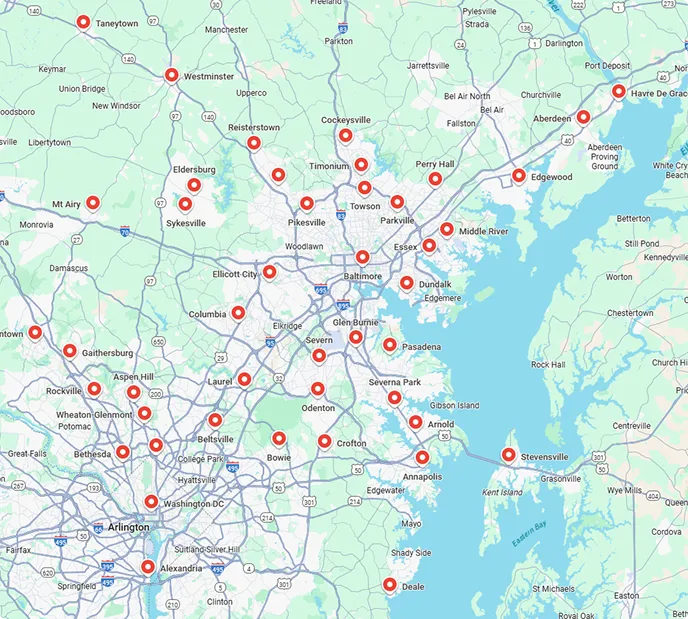
Service areas