

Furnace Repair in Bowie, MD
Tario HVAC addresses common furnace issues in Bowie, MD – from no-heat symptoms to short-cycling and unusual noises. We’ll explain how our qualified technicians diagnose problems through thorough interviews, safety checks, detailed inspections, electrical testing, and precise airflow measurements. We'll also detail our typical repair procedures and parts replacements, discuss emergency response times, clarify warranties, and explain our use of OEM or aftermarket components. Furthermore, Tario HVAC provides helpful scheduling tips, preparation steps for diagnostics, and practical maintenance advice designed to protect Bowie homes and extend your furnace's lifespan.
Furnace Repair in Bowie, MD
When your furnace acts up in Bowie, MD, it affects more than comfort — it impacts safety, energy bills, and indoor air quality. Bowie’s cold winters and humid coastal-adjacent climate put specific stresses on heating systems in local homes. This page explains the common furnace problems Bowie homeowners face, how qualified technicians diagnose issues, typical repair procedures and parts replacement, emergency repair availability and response expectations, warranty considerations, and practical instructions for scheduling service.
Why timely furnace repair matters in Bowie, MD
- Cold snaps from late fall through early spring mean furnaces work harder and failures are more disruptive.
- Humidity and salt air can accelerate corrosion on outdoor vents and associated components in some Bowie neighborhoods.
- Older homes in Bowie often have legacy ductwork or mixed heating systems; diagnosing interactions between furnace and ducts prevents repeated issues.Timely repair reduces energy waste, prevents breakdowns at the coldest times, and keeps combustion appliances operating safely.
Common furnace problems and symptoms in Bowie homes
Here are the typical issues technicians see and the symptoms homeowners report:
- No heat or intermittent heat — Furnace runs but produces little or no warm air. Often caused by failed ignitors, pilot issues (on older units), or a malfunctioning gas valve.
- Frequent short-cycling — Furnace starts and stops frequently. Common causes include clogged air filters, improper airflow, oversized units, or failing control boards.
- Strange noises — Rattling, banging, or squealing can indicate loose panels, motor bearings wearing out, or issues with the blower wheel.
- Uneven heating or cold rooms — Often traced to duct leaks, blocked returns, or failing blower motors.
- Pilot light or ignition failures — For gas furnaces, ignition problems can come from dirty burners, faulty ignitors, or clogged gas orifices.
- Higher than normal bills — Reduced efficiency from dirty heat exchangers, worn components, or incorrect thermostat operation.
- Odors, soot, or yellow pilot light — Signs of combustion or venting issues that require immediate attention for safety.
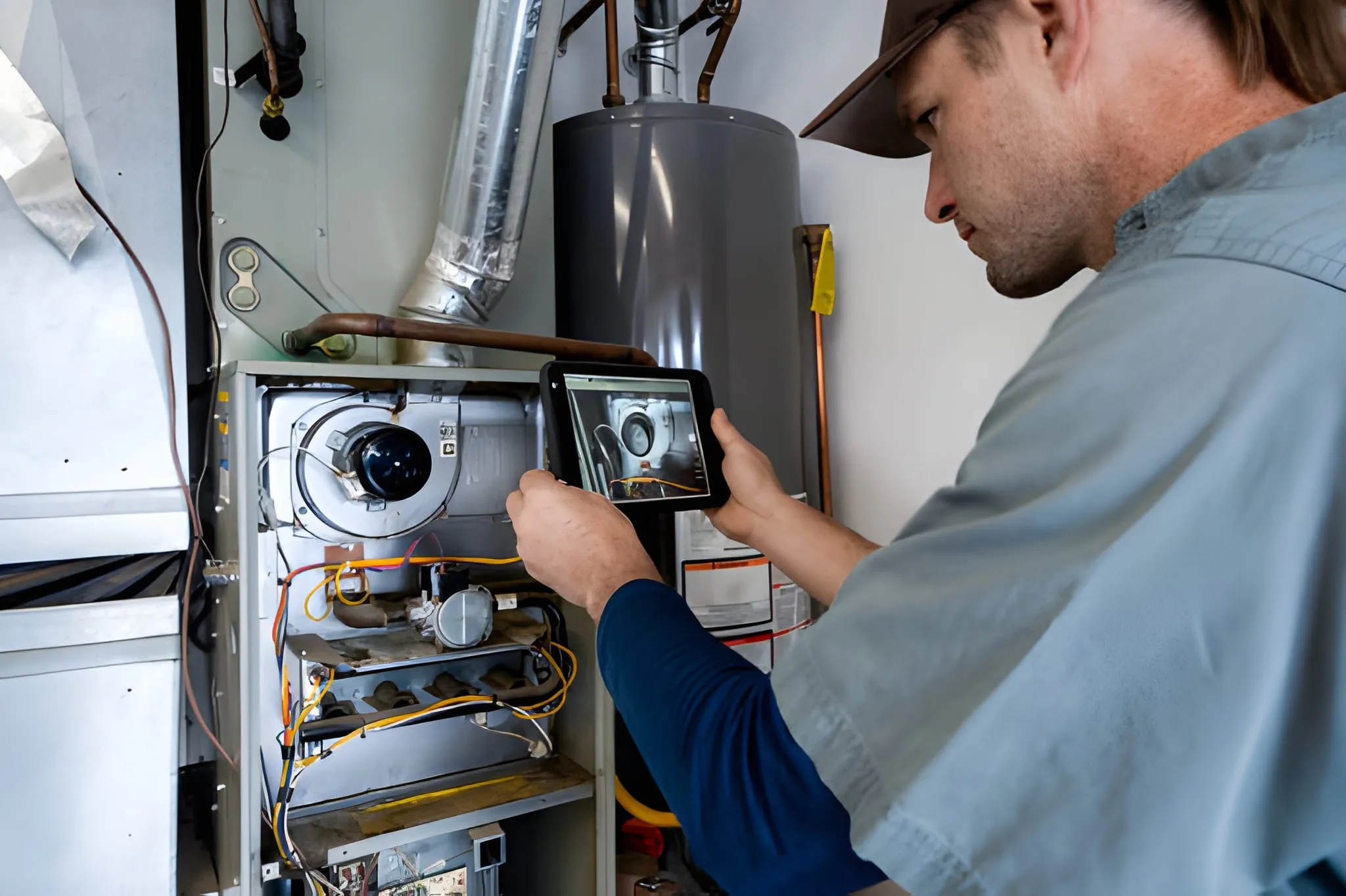
Diagnostic process: how a technician determines the real problem
A professional diagnostic follows a systematic approach to find root causes without guesswork:
- Initial interview — Technician documents symptoms, error codes, recent changes, and the furnace’s service history.
- Safety check — Verify combustion safety, gas lines, and proper venting before other tests.
- Visual inspection — Look for corrosion, soot, loose wiring, and condition of components like the burner assembly and heat exchanger.
- Electrical and control checks — Measure voltages, inspect the control board, thermostat signals, and diagnostic LED codes.
- Airflow and combustion testing — Measure supply and return airflow, check filter condition, and verify combustion efficiency where applicable.
- Component isolation — Test ignitor, gas valve, blower motor, pressure switches, and limit switches to isolate failures.A clear diagnostic yields a prioritized list of repairs with parts needed and a rationale for each recommendation.
Typical repair procedures and parts replacement
Repairs vary by symptom and system age. Common procedures include:
- Filter replacement and airflow cleanup — Simple but often resolves short-cycling and efficiency losses.
- Ignitor or pilot assembly replacement — Replacing cracked ceramic ignitors or cleaning/replacing the pilot components on older furnaces.
- Blower motor or capacitor replacement — When motors hum but don’t move air, or start/stop erratically.
- Limit switch, pressure switch, or control board replacement — Modern furnaces rely on these controls; symptoms often point to one failing component.
- Heat exchanger inspection and repair recommendations — Cracks or severe corrosion typically require replacement of the heat exchanger or the entire furnace for safety.
- Gas valve and burner cleaning/replacement — To restore reliable combustion and efficiency.
- Duct sealing and return adjustments — To correct uneven heating and improve system longevity.Parts used may be OEM (manufacturer) or compatible aftermarket components; technicians should explain the trade-offs in longevity and warranty coverage.
Emergency repair availability and expected response times in Bowie
Emergencies (no heat in freezing conditions, suspected gas leaks, or carbon monoxide concerns) require fast response. Standard expectations in the local service market:
- Emergency response — Same-day or within a few hours during extreme cold is common for emergency calls.
- Non-emergency repairs — Typically scheduled within 24 to 72 hours depending on season demand.
- After-hours options — Many local services provide 24/7 emergency coverage for life-safety issues; response times can vary by time of day and weather.When calling for service, describe symptoms clearly and note if occupants are vulnerable (elderly, infants, medical needs) so priorities can be safely assessed.
Warranty, parts, and workmanship information to expect
Understanding warranty terms protects your investment:
- Manufacturer warranties — New furnaces and many major components come with manufacturer parts warranties that vary by model (commonly 5 to 10 years on specific components, sometimes limited lifetime on heat exchangers).
- Labor and workmanship warranties — Technicians typically offer a labor warranty covering repairs for a defined period (commonly 90 days to 1 year). Confirm the exact duration and what it covers.
- OEM vs aftermarket parts — OEM parts usually preserve manufacturer warranty coverage; aftermarket parts can be reliable but may carry different warranty terms.
- Documentation — A proper repair includes an invoice listing replaced parts, serial numbers (if relevant), and warranty details. Keep this for any future claims.
What to have ready when scheduling repair service
Preparing a few items makes diagnostics faster and more accurate:
- Furnace make, model, and approximate age if available
- Description of symptoms and any error codes shown on the unit or thermostat
- Recent maintenance history (last filter change, last professional tune-up)
- Any relevant household concerns (gas smell, occupants with health sensitivities)
- Access details for utility shutoffs, basement or closet locations, and parking constraints for technicians
Maintenance and prevention tips for Bowie homes
- Replace filters every 1 to 3 months during heavy use; more frequently in dusty or pet homes.
- Schedule an annual pre-winter inspection and tune-up to catch issues before the coldest months.
- Ensure vents and returns are unobstructed and that outdoor venting is clear of debris, snow, or bird nests.
- Consider upgrading older thermostats to programmable or smart models to improve efficiency and reduce strain.
Repairing a furnace promptly and choosing the right parts and warranty options ensures safer operation and better long-term value for Bowie homes. Clear diagnostics and transparent repair plans help you understand priorities so you can make informed decisions about repair versus replacement.

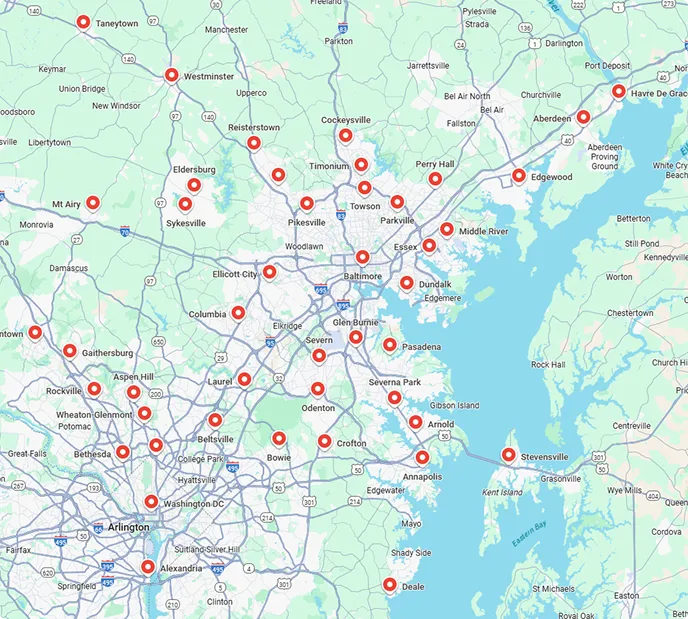
Service areas