

Tankless Water Heater Installation in Germantown, MD
An upgraded hot water system can truly transform your daily comfort and significantly cut down on long-term energy costs. Tankless water heater installation in Germantown, MD by Tario HVAC delivers on both fronts: instant hot water, a smaller footprint, and much lower standby losses compared to traditional tanks. We'll outline all the benefits, explain our process for sizing and selecting the perfect system for Germantown homes, discuss any necessary site work and upgrades, detail the installation process and timeline, cover all permit and code considerations, give you clear expectations for costs and energy savings, and go over warranty and maintenance essentials so you can make your decision with complete confidence.
.webp)
Why Choose a Tankless Water Heater in Germantown, MD
- Continuous hot water for showers and appliances without running out during peak usage.
- Smaller physical footprint frees up utility closet or garage space in Germantown homes.
- Lower standby heat loss helps cut water heating bills in Montgomery County’s mix of seasonal weather.
- Longer service life than conventional tanks when properly maintained; many units last 15 to 20 years or more.
- Reduced risk of catastrophic tank leaks that can cause water damage.
Germantown’s climate affects performance: colder groundwater in winter increases the required temperature rise, so accurate sizing and fuel-type selection are essential for reliable year-round performance.
Common tankless water heater issues in Germantown homes
- Undersized unit that can't meet household peak demand (low flow rates during simultaneous showers).
- Inadequate gas line capacity or improper gas pressure for gas-fired units.
- Electrical panel capacity limits for high-amperage electric tankless systems.
- Mineral scale buildup from moderate to hard water causing loss of efficiency and service interruptions.
- Venting or condensate management problems with high-efficiency condensing units.
- Improper installation or lack of permits leading to code compliance problems.
Sizing and fuel-type selection
Correct sizing is based on peak hot water demand and required temperature rise. Key considerations:
- Estimate total hot water flow in gallons per minute (GPM) for simultaneous fixtures (showers, dishwasher, laundry).
- Determine inlet water temperature in winter to calculate temperature rise needed. In Germantown winters, assume colder inlet temperatures and plan accordingly.
- Choose fuel type by availability and performance needs:
- Gas (natural gas): high flow capacity, common choice for larger homes. Requires proper venting and gas line sizing.
- Propane: similar to gas but requires adequate propane supply and tank considerations.
- Electric: simpler venting and installation in some homes, but requires a high-capacity 240V electrical circuit and may be less effective for high simultaneous demand.
- Consider future needs (adding bathrooms, changing appliances) when selecting capacity.
Site evaluation and typical upgrade needs
A thorough on-site evaluation examines:
- Existing water heater location, venting paths, and clearances.
- Gas meter and line capacity or existing electrical service and panel space.
- Water quality (hardness) and need for scale prevention like a water softener or descaling program.
- Condensate drainage requirements for high-efficiency condensing units.
- Structural access and piping layout for hot and cold lines.
Common upgrades:
- Gas line upsizing or dedicated gas branch for high-BTU units.
- New 240V circuit and potentially panel upgrade for electric units.
- New venting, including stainless steel or direct-vent piping for gas condensing units.
- Condensate drain installation and neutralization if required.
- Minor plumbing rework to relocate supply lines or add isolation valves.
Installation process and timeline
Typical steps and timeframes:
- Pre-installation consultation and on-site measurement (30–60 minutes).
- Final selection and permit application (permit timelines vary by Montgomery County; allow several days to a few weeks).
- Day-of installation:
- Removal of existing water heater and site preparation.
- Plumbing and gas or electrical upgrades as needed.
- Mounting and connecting the tankless unit, venting, condensate, and controls.
- Startup, commissioning, and temperature/flow testing.
- Owner orientation and documentation.
- For straightforward replacements, expect 4 to 8 hours on site. Complex installs with gas or electrical upgrades, new vent runs, or structural changes may take 1 to 2 days. Permit inspection scheduling can add additional time.
Permit and code compliance
Installation must comply with Maryland and Montgomery County building, plumbing, mechanical, and fuel gas codes. Typical requirements include:
- Building permits and inspections for new water heating equipment and significant gas or electrical work.
- Proper venting, clearances, and combustion air provisions for gas units.
- Electrical work permitted and inspected for new high-amperage circuits.
- Condensate management and routing to code-approved drains.
A compliant installation minimizes safety risks, ensures insurance coverage, and avoids rework from inspections.
Cost estimates and energy-savings comparison
Costs vary by unit type, capacity, and required upgrades. Typical ranges:
- Unit price: $500 to $2,500 depending on brand, flow rate, and condensing vs. non-condensing models.
- Installation labor and basic plumbing: $800 to $2,500 for straightforward swaps.
- Additional upgrades (gas line, panel work, new venting, condensate management): $500 to $3,000 or more depending on complexity.
- Total project: commonly $2,000 to $7,000 for most Germantown homes, depending on choices and necessary upgrades.
Energy-savings:
- Tankless systems can reduce water heating energy use by approximately 20 to 40 percent compared to conventional storage tanks, depending on hot water use patterns and unit efficiency.
- Higher-efficiency condensing gas units often deliver the best operating cost savings, especially in homes with higher usage.
- Savings are greater in households that use hot water intermittently rather than continuously.
Warranty and maintenance
Warranty coverage varies by manufacturer:
- Heat exchanger warranties commonly range from 5 to 15 years; parts warranties typically run 1 to 5 years.
- Warranty terms may require professional installation and routine maintenance.
Recommended maintenance for Germantown homes:
- Annual or semi-annual descaling/flush to remove mineral buildup; frequency depends on local water hardness.
- Inspect and clean inlet filters and strainers.
- Check venting, condensate drains, and combustion components (for fuel-fired units).
- Verify gas pressure or electrical connections.
- Regular maintenance preserves efficiency, extends service life, and helps keep warranty coverage valid.
Benefits summary for Germantown homeowners
- Reliable hot water with no tank standby losses.
- Space savings and longer equipment life when maintained.
- Potentially significant monthly energy cost reductions depending on usage.
- Customizable solutions for colder Maryland winters and local water conditions.
Q: How do I know what size tankless unit I need?
A: Calculate peak simultaneous hot water flow (GPM) for showers and appliances and determine the winter inlet water temperature to find required temperature rise. Match those figures to the unit’s rated GPM at the needed temperature rise.
Q: Will my gas line or electric panel need upgrades?
A: Possibly. High-BTU gas units may require a larger gas line or dedicated branch, and electric tankless units generally need a 240V circuit and sufficient panel capacity. A site evaluation will confirm necessary upgrades.
Q: How long does a tankless installation take?
A: A simple replacement can be completed in a single day (4 to 8 hours). Complex installs with gas, venting, or electrical upgrades may require 1 to 2 days, plus time for permits and inspections.
Q: What maintenance does a tankless water heater need in Germantown, MD?
A: Annual or semi-annual descaling is recommended in areas with moderate to hard water, plus routine checks of filters, venting, and connections to maintain efficiency and warranty compliance.

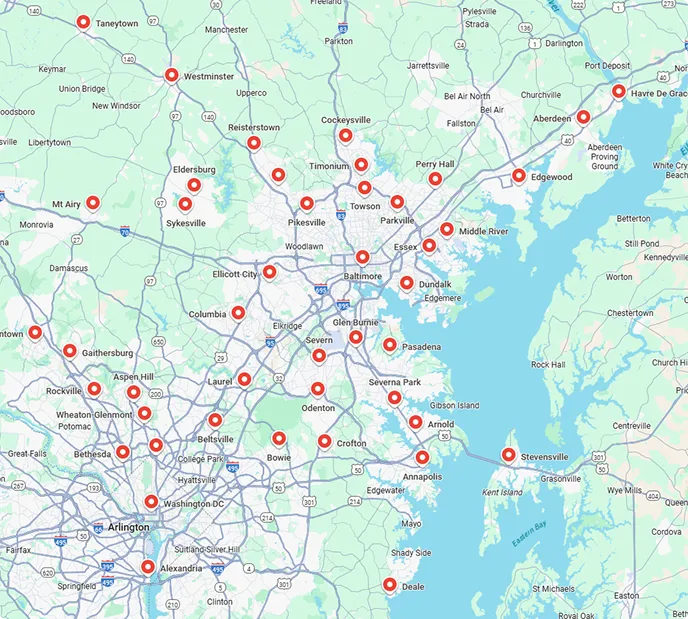
Service areas