

Whole House Humidifiers in Westminster, MD
Westminster, MD residents striving for perfectly balanced indoor humidity will discover how whole-house humidifiers expertly integrate with their HVAC systems to consistently maintain 30–45% relative humidity during the heating season. This not only safeguards your cherished woodwork but also significantly improves overall comfort. At Tario HVAC, we clearly explain the different options—bypass, fan-powered, and steam—along with critical sizing considerations, seamless HVAC compatibility, and the importance of professional installation steps. We also cover system controls, convenient automation features, the numerous health benefits, essential maintenance schedules, potential energy impacts, comprehensive warranties, and practical care tips designed to ensure reliable performance and long-term preservation for homes throughout Carroll County's often dry winters. Our goal is to provide practical insights that empower homeowners to plan their upgrades with complete confidence.
.webp)
Whole House Humidifiers in Westminster, MD
Dry winter air is one of the most common comfort problems in Westminster, MD homes. With cold, low-humidity outdoor air coming in from December through March, indoor relative humidity can fall below comfortable and safe levels, causing dry skin, sore throats, static shocks, and damage to wood floors, trim, and musical instruments. Whole house humidifiers add controlled moisture to your HVAC system so humidity is balanced throughout your home without running portable units room by room.
Why a whole house humidifier matters in Westminster, MD
Westminster experiences cold winters and fluctuating indoor heating cycles that drive down humidity. A properly sized whole-home humidifier:
- Keeps indoor humidity in the recommended 30 to 45 percent range during heating season
- Helps protect hardwood floors, moldings, and cabinets from shrinking and cracking
- Reduces dry-skin symptoms, nosebleeds, sore throats, and static
- Can improve perceived comfort so you can set thermostats a degree or two lower without feeling colder
Types of whole house humidifiers
Understanding the main options helps match performance to your home and HVAC setup.
- Bypass humidifiers (evaporative bypass)
- Use warm furnace air routed through an evaporation pad and return to the ducts.
- Low electricity use because they rely on the furnace blower.
- Best for homes with central furnace and compatible duct layout.
- Fan-powered evaporative humidifiers
- Have their own small fan to force air through the evaporative pad.
- Provide higher output independent of furnace blower speed.
- Good when you need higher capacity or when furnace blower use is limited.
- Steam humidifiers
- Electrically heat water to produce steam injected into the duct or air handler.
- Fast response and high capacity; best for tight modern homes or large houses with very low winter humidity.
- Higher electrical draw and require proper electrical circuit and water treatment if you have hard water.
Sizing and compatibility with existing HVAC systems
Correct sizing is essential for steady humidity without overhumidification.
- Sizing factors
- Home square footage and ceiling height
- Airtightness and insulation levels
- Typical winter outdoor temperatures for Westminster
- Desired indoor relative humidity (commonly 30-45%)
- Typical capacity examples
- Smaller homes/tight 1,000 to 1,500 sq ft: lower capacity (12 to 20 gallons per day)
- Medium homes 1,500 to 3,000 sq ft: 20 to 40 gallons per day
- Large homes or very dry conditions: 40+ gallons per day, or a steam system
- HVAC compatibility
- Furnace-mounted units install on the supply plenum or return plenum.
- Air handler and split systems require models compatible with lower-temperature duct air.
- Steam units need adequate electrical service; evaporative units need a reliable water line and proper drain access.
A professional assessment determines the right model and capacity for your Westminster home, accounting for cold snaps common in Carroll County that increase humidification demand.
Installation steps (what to expect)
Whole-home humidifier installation follows a predictable sequence to integrate safely with your HVAC system.
- Assessment of duct layout, furnace/air handler type, and electrical/water access
- Select unit and location (supply plenum, return plenum, or air handler)
- Mount the humidifier to ductwork and verify clearances
- Run a potable water line with shutoff and pressure regulator to the unit
- Install a drain line for evaporation systems; for steam models, ensure proper condensate handling if required
- Connect controls and wiring to the furnace/thermostat or standalone humidistat
- Test operation across heating cycles and adjust output/damper settings
- Explain maintenance needs and seasonal operation for homeowners
Controls and automation
Controls determine how well humidity is maintained without manual adjustments.
- Basic humidistats maintain a set RH on a single display.
- Integrated controls work with modern thermostats to adjust humidity according to occupancy and outdoor temperature.
- Smart thermostats and humidity sensors provide remote monitoring, scheduling, and alerts if humidity falls outside target ranges.
- Outdoor-temperature-based controls prevent overhumidification when it’s very cold outside.
For Westminster climates, outdoor-sensing control is useful to avoid condensation on windows during rapid outdoor temperature swings.
Health, comfort, and home protection advantages
- Improved respiratory comfort, fewer dry eyes and sore throats
- Reduced static electricity
- Protection for hardwood floors, trim, doors, and musical instruments
- Better sleep quality from more stable indoor humidity
Important note: keep humidity in the recommended range. Excessive humidity can promote dust mites and mold growth. Proper controls and regular maintenance prevent overhumidification.
Maintenance and filter replacement schedules
Routine upkeep keeps the system efficient and healthy.
- Evaporative pads (filters)
- Replace or clean every heating season; frequency depends on water mineral content and usage.
- Inspect mid-season in areas with hard water; scale can reduce output.
- Steam humidifiers
- Descale and clean annually; electrodes or steam cartridges may need replacement every 1-3 years depending on water quality.
- Consider a water treatment or scale management system if Westminster water hardness affects performance.
- General maintenance
- Annual check of water line, drain, and controls
- Clean the unit housing and verify no leaks
- Check wiring and integration with the HVAC controls each fall before heavy use
Energy impacts and operating considerations
- Evaporative bypass units use the furnace blower and add minimal electricity; fan-powered units use low-voltage plus a small fan motor.
- Steam humidifiers use more electricity but give fast, high-capacity humidity control; factor electrical needs and potential circuit upgrades.
- Improved comfort often allows lowering thermostat setpoints by 1 to 2 degrees, offsetting some operating cost of humidification.
- Water usage is measurable in gallons per day based on capacity and conditions; colder, drier days increase consumption.
Warranty and servicing details
Manufacturer warranties typically cover parts for a specified period; labor warranties vary by installer. Regular annual servicing extends equipment life and maintains warranty compliance. Service tasks usually include pad replacement, descaling, control calibration, and verification of the water/drain connections.
Whole house humidifiers offer tangible comfort and preservation benefits for homes in Westminster, MD. Selecting the right type and capacity, integrating reliable controls, and committing to seasonal maintenance are the keys to steady comfort and protected woodwork during cold, dry months. With appropriate installation and upkeep, whole-home humidification provides balanced indoor humidity that supports health, comfort, and long-term home preservation in the local climate.

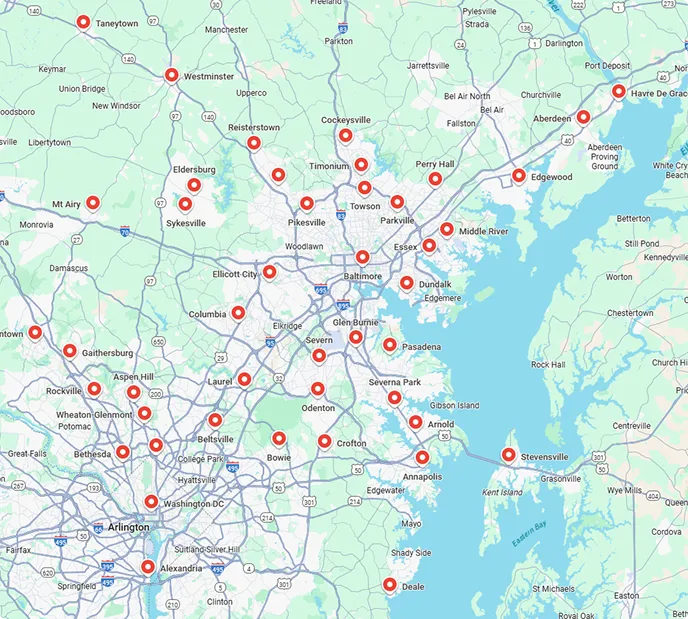
Service areas