

Whole House Dehumidifiers in Sykesville, MD
Wondering how whole-house dehumidification works in Sykesville homes? Tario HVAC provides clear answers, covering equipment types, drainage options, and seamless integration with existing HVAC systems. We address common humidity issues, offer sizing guidelines, detail installation considerations, and explain essential maintenance needs, always highlighting energy efficiency, cost factors, and the excellent expected outcomes. You'll understand how properly selected and installed dehumidifiers effectively reduce moisture, deter mold, protect finishes, and improve year-round comfort, with a focus on precise measurement, effective controls, and long-term performance specifically for Maryland homes. We'll also outline necessary maintenance routines and service considerations to keep your system running smoothly.
.webp)
Whole House Dehumidifiers in Sykesville, MD
Excess indoor humidity is a common, persistent problem in Sykesville homes. Hot, humid summers and seasonal temperature swings create conditions where basements stay damp, crawlspaces trap moisture, and mold can take hold. Whole house dehumidifiers provide a reliable, energy-efficient way to control relative humidity throughout a home, preventing mold growth, protecting finishes and stored belongings, and improving year-round comfort. This page explains how whole-house dehumidification works, the right equipment and drain options for Sykesville homes, integration with HVAC systems and controls, cost and efficiency considerations, maintenance needs, and the outcomes you can expect.
Why Sykesville homes need whole-house dehumidification
- Summers in central Maryland bring sustained high humidity that can keep indoor relative humidity above recommended levels for extended periods.
- Basements and crawlspaces often experience ground moisture intrusion and poor ventilation, creating a mold-friendly environment.
- Older construction and mixed HVAC systems may not adequately control humidity even when temperatures are managed.
Keeping indoor relative humidity between 40 and 50 percent reduces musty odors, lowers allergen loads, prevents condensation on windows, and protects wood floors, framing, and stored items.
Common moisture issues in Sykesville and what to look for
- Persistent basement dampness or visible mold spots on walls and joists.
- Condensation on basement windows or garage doors during warm months.
- Musty odors in lower levels and crawlspaces.
- High indoor RH readings on hygrometers, especially during and after summer storms.
- HVAC short-cycling or insufficient dehumidification when cooling runs only intermittently.
A proper assessment includes spot humidity readings, data logging over a few days, and inspection for water entry, vapor barriers, and ventilation problems.
Types of whole-house dehumidifiers and recommended capacities
- Ducted refrigerant dehumidifiers: Integrated with the home’s air handler or installed inline with supply/return ducts. Best for typical Sykesville single-family homes.
- Standalone whole-house units: Mounted near the air handler or in the basement and connected to ductwork. Useful when retrofitting without modifying the primary HVAC system.
- Desiccant dehumidifiers: More effective in cooler basements or unheated spaces; less common for whole-house use but useful in specific low-temperature scenarios.
Sizing guidelines (general): - Small homes or tight 1-2 bedroom layouts: 30 to 50 pints per day capacity.
- Average 3-4 bedroom homes with basement: 50 to 70 pints per day.
- Large homes, high moisture loads, or severe basement problems: 70 to 90+ pints per day.
Final sizing should be determined after a moisture assessment that accounts for square footage, basement or crawlspace volume, occupancy, showers and laundry frequency, and regional humidity patterns.
Installation options and drain configurations
- Typical installation locations: near the furnace or air handler, in the basement, or in a utility room. Placement should allow for sufficient airflow and easy access for maintenance.
- Drain options:
- Gravity drain to a floor drain or utility sink when elevation allows.
- Condensate pump to lift condensate to a higher drain point when gravity is not possible.
- Plumb to the home’s sanitary line where code permits, using appropriate trap and venting.
- Electrical and ventilation considerations: Most whole-house units require a dedicated 120V or 240V circuit and clearance for service. Ductwork modifications may be needed to balance airflow and ensure the dehumidifier can treat the whole home rather than just one zone.
- Placement for winter: In colder months, units installed in unheated spaces should be rated for low-temperature operation or located where freeze protection is provided.
Integration with HVAC systems and controls
- Whole-house dehumidifiers can be integrated with existing forced-air systems to condition return or supply airflow. When properly integrated, the home’s conditioned air is dehumidified without separate ducting to every room.
- Controls:
- Dedicated humidistats allow direct RH control independent of thermostat settings.
- Smart and wired controls can coordinate with thermostats to prioritize dehumidification during off-peak cooling cycles.
- Some systems offer demand-based ventilation control to balance fresh air and humidity management.
- Proper integration reduces the risk of short-cycling the air conditioner, prevents over-drying in winter, and ensures consistent RH throughout the home.
Energy efficiency and operating costs
- Whole-house dehumidifiers are generally more energy-efficient than multiple portable units because they treat the entire home more consistently and avoid redundant operation.
- Operating cost depends on capacity, local electric rates, and how many hours the unit runs. In Sykesville’s humid months, units often operate more frequently, so energy-efficient models and proper sizing help control costs.
- Look for models with higher water removal per kilowatt-hour ratings or Energy Star certification where available. Using a programmable or smart humidistat to maintain a target RH of 40 to 50 percent minimizes unnecessary run time.
Routine maintenance and filter care
- Monthly or every 1 to 3 months: Inspect and clean or replace intake filters. Dirty filters reduce airflow and efficiency.
- Annually: Clean coils and drains, inspect condensate lines for clogs, and check condensate pump operation if installed.
- Periodically: Verify humidistat calibration and check for unusual noises or vibration that could indicate airflow blockages or motor issues.
- Winter care: For units in unheated areas, ensure freeze protection or remove condensate lines prone to freezing. Follow manufacturer guidelines for seasonal shutdown or low-temperature operation.
Typical outcomes and benefits for Sykesville homes
- Measurable reduction in indoor relative humidity and fewer high-RH spikes during summer storms.
- Lower mold and mildew growth risk, particularly in basements, laundry rooms, and closets.
- Improved comfort with less clamminess and fewer temperature adjustments required from cooling systems.
- Protection for wood floors, furniture, and stored belongings from moisture-related damage.
- Reduced allergen levels as dust mite populations decline with lower humidity.
- Potential improvement in overall HVAC efficiency and comfort balance when dehumidification is properly integrated.
A targeted moisture assessment followed by the right whole-house dehumidifier, correctly sized and integrated with proper drainage and controls, delivers reliable humidity control for Sykesville homes. Regular maintenance keeps systems operating efficiently and preserves the long-term benefits of a drier, healthier indoor environment.

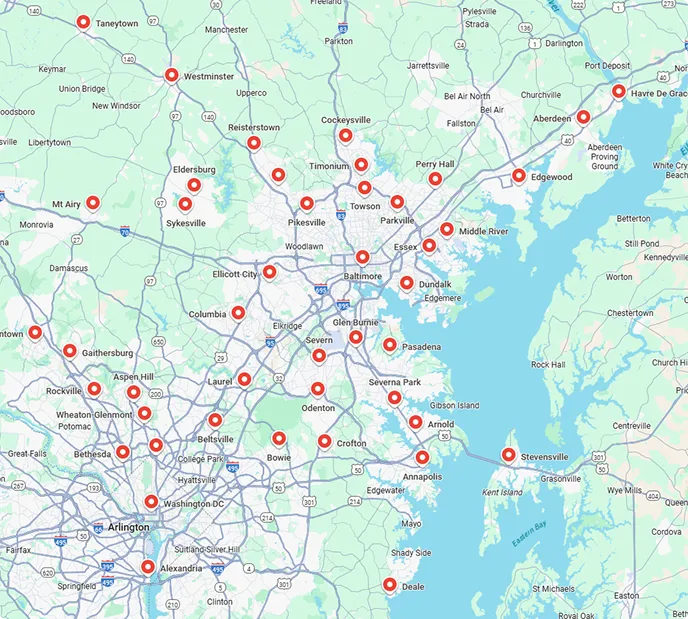
Service areas