

Whole House Air Purifiers in Sykesville, MD
Discover how whole-house air purifiers can transform the indoor air quality in your Sykesville home by seamlessly integrating with your central air distribution system. At Tario HVAC, we'll dive into the major technologies available, from HEPA in-duct filters and electronic cleaners to UV germicidal systems and activated carbon, explaining how to choose the right one, proper sizing, placement, and compatibility. We'll also cover common installation steps, maintenance schedules, and practical performance metrics like ACH targets and pollutant reduction. Our guidance emphasizes a layered approach, tailored to your home's unique needs, including seasonal pollen, humidity, and duct conditions, ensuring lasting allergy relief and superior contaminant control for your family.
.jpeg)
Whole House Air Purifiers in Sykesville, MD
Whole house air purifiers in Sykesville, MD are a practical solution for homeowners who want consistent, homewide improvements in indoor air quality. Whether you or family members live with allergies, asthma, chemical sensitivities, or you simply want fewer particulates and microbes circulating in your living spaces, a properly selected whole-house system integrated with your HVAC delivers measurable reductions in allergens, dust, pollen, mold spores, volatile organic compounds, and airborne pathogens. In Sykesville homes, where humid summers, spring pollen from wooded areas, and older ductwork are common, choosing the right technology and installation plan matters.
Common whole house air purifier types and what they do
Understanding the major technologies helps match performance to your household needs.
- HEPA in-duct filters
- Captures particles down to 0.3 micron with test-rated efficiency (commonly 99.97% under laboratory conditions).
- Best for allergy and particle control (pollen, dust, pet dander, some smoke).
- Requires appropriate space or a bypass/box design to manage static pressure in HVAC systems.
- Electronic air cleaners (electrostatic precipitators/ionizing collectors)
- Charge and collect particles on metal plates that must be cleaned regularly.
- Efficient for fine particles and smoke; low ongoing replacement cost but needs scheduled cleaning.
- Some units can produce small amounts of ozone; choose certified low-ozone models.
- UV germicidal systems
- Use ultraviolet light to inactivate bacteria, viruses, and mold spores on coils and moving air.
- Particularly useful in humid Sykesville summers where coil mold and microbial growth affect IAQ.
- Most effective as part of a combined strategy, not as the sole particulate control.
- Activated carbon filters
- Adsorb odors, VOCs, and chemical smells from cleaners, paints, or new furnishings.
- Important for homes near roadways or undergoing renovations.
- Typically used in combination with particle filtration because carbon does not remove particulates.
Common whole house air purifier issues in Sykesville, MD
Homeowners should be aware of typical problems that affect performance:
- Undersized systems that cannot achieve sufficient air changes per hour (ACH) for whole-house effectiveness.
- Increased static pressure from high-efficiency filters causing reduced airflow or strain on older furnaces or air handlers.
- Poor duct sealing or bypass leaks that reduce the percentage of home air actually filtered.
- Neglected maintenance: clogged prefilters, dirty electronic collector plates, or expired UV lamps reduce effectiveness.
- Seasonal spikes in pollen, humidity-driven mold growth, or pet odor events that require combined technologies.
How system sizing and placement work
Proper sizing and placement are the core of an effective whole-house solution.
- Calculate home volume and desired ACH. Typical target for meaningful particulate reduction is 4 to 6 ACH in bedrooms and living areas, but whole-house systems often aim for 1 to 3 ACH through the central HVAC plus supplemental filtration.
- Match purifier capacity to existing HVAC blower CFM. A whole-house purifier must handle airflow without creating excessive static pressure. Use manufacturer pressure drop curves and your system CFM to select the right model.
- Placement is usually in the supply or return plenum near the air handler to treat all circulated air. Some technologies, like UV at the coil, are mounted at the coil location to reduce microbial growth directly on equipment.
Installation process and system compatibility
A clear installation plan ensures safety, efficiency, and longevity.
- Inspection of existing furnace/air handler, duct layout, and static pressure. Older Sykesville homes with dated equipment may need blower adjustments or duct sealing to accommodate high-efficiency filtration.
- Selecting the appropriate mounting: in-duct housings for HEPA or carbon, plate access for electronic cleaners, and lamp fixtures for UV systems.
- Electrical considerations: electronic cleaners and UV systems require power; wiring must meet code and avoid interference with HVAC controls.
- Commissioning includes verifying airflow, measuring static pressure change after installation, and testing the system for secure mounting and safe operation.
Maintenance schedules and replacement parts
Regular maintenance is crucial to preserve performance and indoor air quality improvements.
- HEPA in-duct filters: inspect every 3 months; replace primary HEPA or high-MERV media typically every 6 to 12 months based on dust load.
- Prefilters: monthly to quarterly cleaning or replacement to protect downstream media and prolong life.
- Electronic air cleaner plates: clean every 1 to 3 months for optimal collection efficiency; annual inspection of power supply.
- UV germicidal lamps: replace annually or per manufacturer life rating; keep lamp sleeves clean to maintain UV output.
- Activated carbon modules: replace every 6 to 12 months depending on VOC exposure and odor levels.
- Keep a parts inventory of replacement filters, carbon cells, and UV lamps to avoid performance gaps during peak pollen or flu seasons common in the region.
Performance metrics and expected indoor air quality improvements
Know what measurable changes to expect after professional installation.
- Particle reduction: Whole-house HEPA or high-efficiency media can reduce airborne particulates by 70 to 95 percent over days to weeks, depending on ACH and initial load. HEPA-rated media tests at 99.97 percent for 0.3 micron particles under ideal single-pass lab conditions, but whole-house systems yield system-level reductions.
- Allergen and asthma relief: Many households report fewer allergy symptoms when particle counts drop substantially and VOCs are controlled. Combined filtration plus source control and humidity management delivers the best results.
- Pathogen reduction: UV systems do not sterilize air instantly but can significantly reduce viable microbes on coils and passing air over time; expect incremental improvements, especially when paired with good filtration.
- Odor and VOC reduction: Activated carbon reduces odors and many VOCs; effectiveness depends on carbon bed size and contact time.
- Measurable IAQ improvement can be confirmed with particle counters, VOC sensors, and relative humidity monitoring before and after installation
Selecting a whole-house air purifier is a systems decision. In Sykesville, MD, seasonal pollen, humid summers that foster microbial growth, and the presence of older ducts make a combined approach most effective: particle filtration (HEPA or high-MERV media) paired with activated carbon for odors and UV for microbial control. Proper sizing, attention to static pressure, and a maintenance plan tailored to local seasons will ensure consistent, measurable indoor air quality improvements and lasting benefits for allergy or asthma sufferers and families concerned about pathogens and pollutants. Regular monitoring and timely filter and lamp replacement keep systems performing as expected through spring pollen peaks and humid summer months.

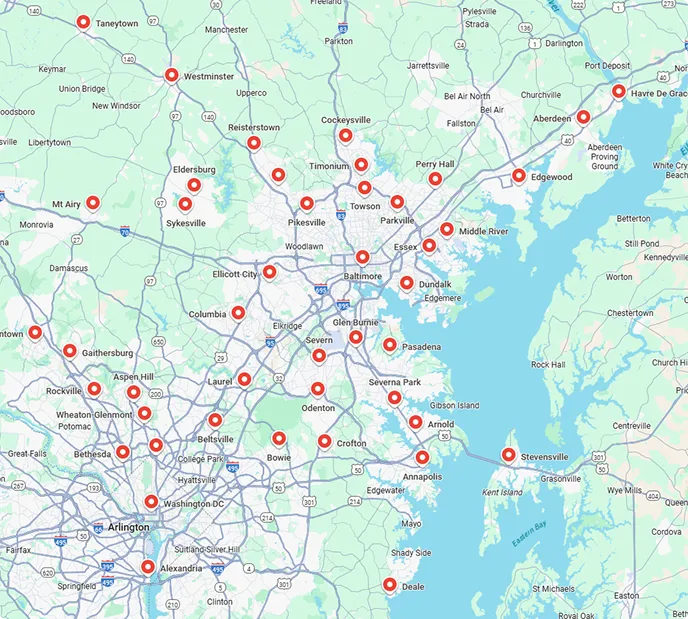
Service areas