

Ventilation in Sykesville, MD
Tario HVAC offers an in-depth guide to choosing and maintaining effective ventilation for Sykesville, MD homes. We explain common local issues like humidity, condensation, and stubborn odors, then compare passive, mechanical, ERV, and HRV approaches, providing clear guidance on sizing, installation, and ductwork. Our service covers energy recovery benefits, smart monitoring and control strategies, and ensures full code compliance, along with practical maintenance tips to preserve your air quality. We teach homeowners how to tailor whole-home or spot ventilation precisely to their climate, home tightness, and occupant needs, guaranteeing lasting comfort and durability.

Ventilation in Sykesville, MD
Proper ventilation is one of the most important upgrades you can make to improve comfort, health, and energy performance in Sykesville, MD homes. Whether you are dealing with lingering cooking odors, high indoor humidity in summer, condensation on windows in winter, or persistent allergies, the right ventilation strategy reduces pollutants, controls moisture, and protects your HVAC investment. This page explains whole-home and spot ventilation options, the difference between passive and mechanical approaches, ERV and HRV technology, sizing and installation factors, code and moisture control considerations, and practical maintenance guidance specific to Sykesville climate conditions.
Common ventilation issues in Sykesville, MD homes
Sykesville’s humid summers and cold winters create conditions that commonly reveal ventilation weaknesses. Typical problems include:
- Persistent indoor humidity and musty odors, especially in basements and bathrooms.
- Condensation on windows and trim during winter cold snaps.
- Kitchen and bathroom pollutants lingering after use due to underperforming fans.
- Stale air and dust accumulation in tightly sealed modern homes.
- Imbalanced pressure that draws moisture or outdoor pollutants into the home.
Spot ventilation (bathroom and kitchen fans) addresses immediate pollutant sources, while whole-home systems manage air quality and moisture continuously for better overall performance.
Ventilation types: passive, mechanical, ERV, and HRV
Understanding the differences helps you match a system to home needs and local climate.
- Passive ventilation: Relies on natural airflow through vents, operable windows, and stack effect. Low cost but unreliable in humid summers and airtight homes. Best paired with other measures in Sykesville.
- Mechanical supply or exhaust ventilation: Uses fans to bring fresh air in or exhaust stale air out. Effective for source control and simple to implement, but can affect indoor pressure and energy use.
- Balanced mechanical systems: Supply and exhaust fans work together to keep neutral pressure. This is the preferred approach for modern tight homes.
- HRV (Heat Recovery Ventilator): Transfers heat from outgoing to incoming air to reduce heating load in winter. Best for cold climates where sensible heat recovery is key.
- ERV (Energy Recovery Ventilator): Transfers both heat and moisture between airstreams, reducing summer humidity load and recovering energy year-round. ERVs are often the best fit for Sykesville’s humid summers and cold winters because they reduce the need for dehumidification while saving energy.
Assessment and system sizing
Correct sizing and a tailored plan are critical. Assessment typically includes:
- Building envelope review: insulation levels, air sealing, window performance, and age of the home.
- Occupancy and use patterns: number of occupants, activities that generate pollutants (cooking, showers), and allergy or asthma concerns.
- Measured indoor humidity and CO2 levels, when available.
- Calculation based on guidelines such as ASHRAE 62.2 and local building codes to determine required continuous ventilation rate and intermittent needs.
Sizing determines fan capacity, duct sizing, and whether spot fans alone are enough or a whole-home balanced system is necessary.
Installation and ductwork considerations
Proper placement and duct design directly affect performance and noise.
- Whole-home units should have insulated, airtight ducts sized to minimize static pressure and noise. Short, straight runs and rigid ductwork where possible improve efficiency.
- Supply vs exhaust locations matter: bringing fresh air into living zones and exhausting from bathrooms and kitchens creates a balanced, healthy flow.
- Condensate management: ERV and HRV units require drain provisions and freeze protection considerations for cold Sykesville winters.
- Integration with existing HVAC: Many homes deliver ventilation air through return ducts or dedicated distribution registers. Ensure controls and dampers prevent unwanted backdrafting or short cycling.
Energy recovery and efficiency impacts
Ventilation adds fresh air but does not have to sacrifice energy efficiency.
- ERV and HRV units can recapture 60 to 90 percent of heat or energy in outgoing air, significantly reducing the heating and cooling penalty of ventilation.
- In Sykesville summers, an ERV helps control incoming moisture, reducing load on air conditioning and dehumidification equipment.
- Look for units with low wattage fans and high sensible recovery efficiency. Proper commissioning reduces runtime and energy waste.
- Controls such as demand-controlled ventilation based on CO2 or humidity sensors adjust ventilation to actual needs, further saving energy.
Code compliance and moisture control strategies
Ventilation must align with current standards and effectively manage moisture.
- Follow applicable standards like ASHRAE 62.2 and local building codes for minimum ventilation rates and dryer/garage venting requirements.
- Moisture control combines ventilation with source reduction: exhaust directly from kitchens and bathrooms, adequate dryer venting, and controlling attic and crawlspace conditions.
- In Sykesville, proactive moisture management prevents mold growth after humid summers or during temperature swings. Use ERV moisture transfer and properly sized exhaust fans to avoid condensation risks.
Maintenance needs for lasting performance
Routine care keeps ventilation systems effective and efficient.
- Replace or clean filters per manufacturer guidelines, typically every 3 to 12 months depending on use and filtration level.
- Clean the ERV or HRV core annually and inspect condensate drains for clogs.
- Verify fan performance and static pressure during seasonal checks to ensure airflow rates meet design.
- Confirm exterior intake and exhaust locations are clear of debris, nesting, and snow in winter.
Simple ongoing maintenance protects indoor air quality and extends equipment life.
Choosing the right ventilation approach in Sykesville, MD
Select a solution based on home tightness, occupancy, and comfort goals.
- Older, leaky homes may benefit from targeted spot ventilation plus selective air sealing to reduce drafts.
- Newer or recently air-sealed homes typically need a balanced whole-home ERV or HRV to control humidity and recover energy.
- Homes with occupants who have allergies, asthma, or chemical sensitivities should prioritize balanced systems with filtration and controlled fresh air delivery.
- Budget-minded homeowners can combine upgraded spot fans and improved source control with gradual steps toward a whole-home ERV when practical.
Match system performance to local climate realities: for humid Sykesville summers and cold winters, ERVs often deliver the best year-round comfort and energy balance.
Ventilation is not one-size-fits-all. Accurate assessment, proper sizing, and professional installation are essential to deliver healthy, comfortable, and energy-efficient indoor air in Sykesville, MD homes. With the right combination of whole-home or spot ventilation, energy recovery technology, and regular maintenance, you can control moisture, reduce pollutants, and protect both occupant health and home durability.

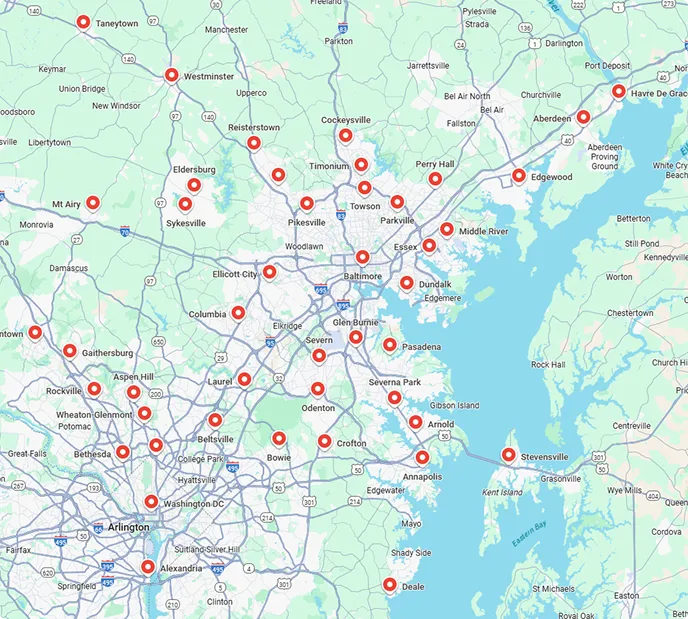
Service areas