

Whole House Air Purifiers in Taneytown, MD
For homeowners in Taneytown, MD, whole-house air purifiers are a game-changer for year-round indoor air quality, seamlessly integrating with your central HVAC system. We'll explore the various technology options – from HEPA filtration and activated carbon to UV germicidal lights and electronic systems – along with common installation approaches, performance metrics, maintenance schedules, and crucial warranty considerations. Tario HVAC provides guidance to help you match solutions to specific concerns like smoke, allergens, or pathogens, verify third-party testing, and plan a long-term program. This not only protects your valuable HVAC equipment but also enhances comfort for a healthier home and easier upkeep.
.jpeg)
Whole House Air Purifiers in Taneytown, MD
Keeping indoor air clean in Taneytown homes matters year-round. Cold winters mean closed windows and more time spent indoors, humid summers increase mold risk, and seasonal pollen, road dust, and wood smoke from fireplaces or nearby burning can elevate airborne irritants. A whole house air purifier integrated with your central HVAC tackles these issues at the source—treating all living spaces consistently and improving comfort, sleep, and indoor air quality for allergy or asthma sufferers and households concerned about smoke or pathogens.
Common indoor air problems in Taneytown homes
- Seasonal pollen and tree/grass allergens in spring and summer
- Fine dust from rural roads, landscaping, and agricultural activity
- Wood smoke and particulate matter during colder months or from nearby burning
- Household VOCs from cleaning products, paints, or stored fuels
- Mold spores in basements and poorly ventilated rooms during humid months
- Pathogens and viruses in high-occupancy or multi-generation homes
Whole-house technologies explained
Understanding the options helps choose a system that matches your primary concerns.
- HEPA filtration
- High Efficiency Particulate Air (HEPA) filters capture particles down to 0.3 microns with proven efficiencies (standard HEPA media captures up to 99.97% of particles at that size).
- Best for allergens, dust, pet dander, and fine smoke particulates when sized and installed properly in the HVAC return or dedicated air handler.
- Activated carbon
- Carbon media adsorbs gases, odors, and volatile organic compounds (VOCs).
- Recommended for households sensitive to smoke smells, cooking odors, or household chemicals.
- UV germicidal lights
- Ultraviolet-C (UVC) lamps installed in the HVAC plenum or in-duct air cleaners inactivate many biological contaminants on exposed surfaces and in the airstream.
- Useful as part of a layered approach for pathogen reduction and to limit microbial growth on coils.
- Electronic/ionization systems
- Use electrostatic precipitation or ionization to remove particles from the air. They can be effective at lowering particle counts but require periodic cleaning and proper design to avoid ozone generation.
- Some newer designs minimize ozone; verify independent testing and certifications.
System compatibility and typical installation approach
Whole-house purifiers are most commonly integrated into central forced-air HVAC systems. Typical installation options include:
- In-duct media units mounted in the return duct or furnace cabinet to treat all supply air
- Dedicated air handler assemblies with integrated filtration for homes without central ducting
- Hybrid systems combining HEPA/activated carbon media plus optional UV lamps for targeted performance
Critical installation considerations:
- Static pressure: High-efficiency media increases resistance; your furnace blower must be able to handle the added pressure or a compatible in-line fan may be required.
- Sizing: Systems are sized by airflow (CFM) and the home’s volume to achieve target air exchanges per hour (ACH).
- Location: Placing filtration in the main return ensures the entire home receives treated air; UV lamps must be positioned for sufficient dwell time and safe access for maintenance.
- Professional testing and balancing: Ensures consistent airflow, prevents strain on equipment, and confirms the purifier operates within design specifications.
Expected performance and testing metrics
When evaluating whole-house solutions, look for measurable performance indicators:
- MERV/CADR ratings: MERV indicates filter efficiency by particle size; HEPA is outside the MERV scale but is the gold standard for particle removal. Clean Air Delivery Rate (CADR) describes volume of filtered air over time for standalone units; equivalent HVAC metrics use airflow (CFM) and ACH.
- Particle reduction: Properly installed HEPA systems can reduce airborne particulate counts dramatically—especially particles 0.3 microns and larger.
- Gas and odor reduction: Activated carbon effectiveness is measured by breakthrough time and capacity for specific VOCs; laboratory or third-party data helps compare products.
- Microbial inactivation: UV systems are tested for log reduction of bacteria, mold, or viruses under specified exposure times. Real-world performance depends on airflow and lamp placement.
- On-site verification: Particle counters, VOC meters, and microbial swabs before and after installation provide tangible evidence of improvement.
Maintenance and replacement schedules
Routine care keeps performance consistent and protects HVAC equipment:
- Pre-filters: Inspect and clean monthly; replace when visibly loaded or per manufacturer guidance.
- HEPA or high-efficiency media: Typical replacement intervals range from 12 to 36 months depending on home environment and use (homes with smoke or heavy dust may need more frequent changes).
- Activated carbon cartridges: Replace every 6 to 12 months for strong odor control; capacity depends on pollutant load.
- UV bulbs: Most UVC lamps lose effective output over time and are typically replaced annually; ballast and housing should be inspected annually.
- Electronic collectors: Require cleaning of collector plates every 3 to 6 months and occasional professional servicing.
- Annual system check: Verify seals, airflow, and verify there is no excessive static pressure on the HVAC system.
Choosing the right solution for smoke, allergens, or pathogens
Match the technology to your primary indoor air challenge:
- Smoke (particulate and odor): Combine HEPA or high-efficiency media for particulates with activated carbon for gases and odors.
- Allergens (pollen, pet dander, dust mite): HEPA media integrated in-duct is the most effective primary solution; add proper humidity control and regular cleaning to reduce reservoirs.
- Pathogen control (viruses, bacteria, mold): A layered approach—HEPA filtration to remove airborne carriers, UV germicidal in the HVAC plenum to limit microbial growth, and humidity control—offers the best results.
When evaluating options, confirm:
- Third-party testing or certifications for filtration efficiency and ozone emissions
- System integration that won’t overwhelm furnace fans or change HVAC warranties
- Practical maintenance commitments based on household activity and local air quality
Cost factors and warranty considerations
Cost is affected by system type, home size, ductwork complexity, and whether additional electrical or blower upgrades are needed. Instead of flat numbers, focus on value drivers:
- Complexity of installation (retrofit vs. new ductwork or dedicated air handler)
- Filter media type and replacement frequency
- Need for auxiliary fans or controls
- Add-on features such as monitoring sensors or smart integration
Warranty and reliability:
- Manufacturer warranties commonly cover parts and limited component lifetimes; length and scope vary by brand and component (media housings, electronic modules, and UV lamps may have different warranty terms).
- Verify warranty conditions related to installation by a licensed HVAC professional and routine maintenance requirements to maintain coverage.
Long-term benefits for Taneytown homeowners
A properly selected and installed whole-house air purifier reduces allergens, lowers fine particle counts from smoke and road dust, reduces odors and VOCs, and can contribute to easier breathing and better sleep for sensitive household members. In Taneytown’s variable climate—cold, closed winters and humid summers—integrated air purification helps maintain consistent indoor air quality throughout the year while protecting HVAC components from particulate buildup.
Regular testing, adherence to maintenance schedules, and choosing the right combination of HEPA, activated carbon, UV, or electronic technologies will ensure your whole-house system delivers measurable improvements tailored to the local air challenges common in Taneytown homes.

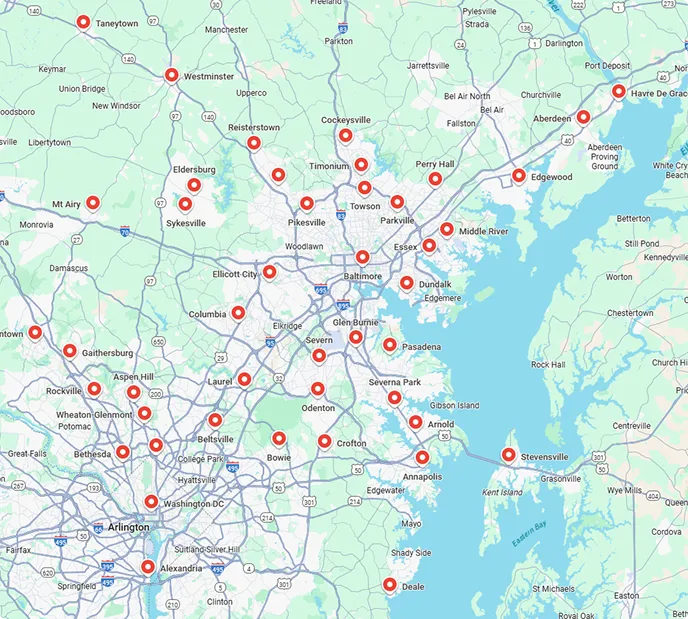
Service areas