

Whole House Air Filters in Taneytown, MD
At Tario HVAC, we're dedicated to helping Taneytown homeowners understand whole-house air filtration. We'll outline your goals, explore various filter options, and guide you on choosing the ideal MERV level to strike that perfect balance between filtration performance and overall system health. Our services include expert installation, thorough compatibility checks, and professional replacement services, all aimed at maintaining pristine indoor air quality. We also discuss essential maintenance schedules, transparent cost considerations, and practical tips to significantly extend your HVAC system's longevity. You'll gain insights into how higher-efficiency filters impact airflow, when it might be time to upgrade equipment, and how strategically combining centralized filtration with portable units can further enhance your home's comfort and air quality.
.jpeg)
Whole House Air Filters in Taneytown, MD
Keeping the air inside your Taneytown home clean is a practical step toward better health, comfort, and HVAC performance. Whole house air filters that work through your central HVAC system reduce dust, pollen, pet dander, smoke, and many airborne particles before they circulate through living spaces. In Taneytown, MD, seasonal pollen, agricultural dust, variable humidity, and domestic heating in winter make targeted whole house filtration particularly beneficial for allergy sufferers, homes with pets, and households concerned about smoke or odors.
Common indoor air quality goals and selecting the right filtration level
Before choosing a system, identify your primary goal. Below are typical objectives and the appropriate filtration approach for each:
- Allergy and asthma symptom reduction: MERV 11 to MERV 13 pleated filters are a common balance between particle capture and HVAC compatibility.
- General dust and maintenance reduction: MERV 8 pleated filters remove most large particles and are an efficient, low-resistance option.
- Smoke, fine particulates, or wildfire events: MERV 13+ or a whole-house media filter plus portable HEPA in key rooms helps capture fine particulates (PM2.5).
- Odor and VOC control: Filters with activated carbon media or a dedicated whole-house carbon module address odors and many gases.
- Immunocompromised occupants or medical requirements: High-efficiency solutions including dedicated HEPA systems or tightly integrated high-MERV media housings may be required. Confirm HVAC compatibility first.
Filter types explained
Understanding filter media clarifies tradeoffs between performance and system impact:
- Fiberglass panel filters: Low cost, low resistance, limited particle capture. Best only for basic furnace protection.
- Pleated filters (synthetic media): Widely used in homes. Available from MERV 5 to MERV 13. Good balance of capture and airflow when sized correctly.
- High-efficiency pleated/media filters: Larger surface area media in cabinet-style housings. Lower pressure drop for higher filtration levels.
- Electrostatic filters: Use charged fibers to attract particles. Performance varies; some are washable but may lose efficiency over time.
- HEPA: True HEPA removes 99.97 percent of particles 0.3 micron and larger but is not compatible with most stock HVAC systems without a specialized bypass or upgraded blower.
- Activated carbon: Targets odors and many VOCs. Often combined with particulate filters.
Integration with central HVAC systems
Whole house filters must fit correctly in the filter rack or be installed in a dedicated media housing. Critical integration considerations:
- Filter size and orientation: Use the correct size and direction arrow. Improper fit causes bypass and reduced effectiveness.
- Static pressure and airflow: Higher-MERV filters increase resistance. If the HVAC blower cannot overcome that resistance, comfort and efficiency suffer.
- Media housings and retrofit options: If you want MERV 13+ filtration, a larger media cabinet or a professional upgrade to blower capacity often provides the required airflow with less strain.
- Sealing: Ensure the filter cabinet and duct connections are sealed so all return air passes through the filter.
Professional installation and replacement services
A professional service for evaluation and installation typically includes:
- System assessment: Measure static pressure, airflow (CFM), and inspect the filter rack and ductwork.
- Compatibility check: Determine the highest MERV rating your system can support without reducing performance.
- Correct installation: Install the chosen filter or media cabinet, confirm sealing, and verify blower operation.
- Baseline performance check: Run the system and measure temperature splits, airflow, and static pressure after installation.
Recommended replacement intervals depend on filter type and local conditions:
- Basic pleated filters (MERV 8-11): Inspect every 1 to 3 months; typical replacement every 90 days for average homes.
- Higher efficiency pleated or MERV 13: Inspect monthly during high load seasons; replacement may be every 1 to 3 months depending on dust and pollen.
- Media filters: Often last 6 to 12 months depending on load and whether they are disposable or washable.
- Activated carbon or specialty filters: Replace according to manufacturer guidance, often every 1 to 3 months for heavy odor control.
In Taneytown, expect heavier filter loading during spring pollen season and after nearby construction or agricultural activity, so more frequent checks are recommended.
Effects on airflow, energy use, and equipment longevity
Higher efficiency filtration reduces airborne contaminants but can increase the resistance the blower must overcome. Consequences of mismatched filtration include:
- Reduced airflow to living spaces, causing uneven temperatures and comfort issues.
- Increased fan energy use and potential strain on older motors, shortening equipment life.
- Frosting or reduced heat exchange in extreme cases if airflow drops significantly.
How to balance filtration performance and equipment longevity:
- Select the highest MERV your existing system can support based on a professional static pressure test.
- Consider upgrading to a larger media cabinet or a variable-speed blower if you need consistently high filtration.
- Combine whole-house filtration with portable HEPA units in bedrooms for peak particle removal without overloading the central system.
- Maintain filters on schedule and keep return grilles unobstructed to minimize added resistance.
Cost considerations and long-term value
Evaluate both short-term and lifetime costs:
- Upfront costs vary by filter type. Fiberglass is cheapest but least effective. Pleated filters at moderate MERV levels are low cost with good value. Media housings and high-efficiency media have higher initial expense but lower long-term resistance and replacement frequency.
- Operating costs: Higher-MERV filters can slightly increase fan energy use if the blower runs harder. Upgrading to a more capable blower or a variable-speed motor can offset inefficiencies.
- Health and maintenance ROI: Better filtration reduces dust accumulation in homes and HVAC components, potentially lowering maintenance and cleaning frequency and improving indoor comfort and health.
Practical maintenance tips for Taneytown homes
- Check filters monthly during spring pollen and after any smoke events. Replace when visibly dirty or according to the schedule for the filter type.
- Keep return vents clear of furniture and draperies to avoid constricting airflow.
- Note filter size and MERV rating when stocking spares. Label the filter change date to stay on schedule.
- Combine filtration upgrades with regular duct inspections and sealing to maximize performance.
- Manage indoor humidity, especially in summer, to reduce mold and microbial growth that can burden filters.
Whole house air filtration delivers measurable benefits in Taneytown homes when chosen and installed to match your indoor air goals and HVAC capacity. Proper selection, professional integration, and season-aware maintenance protect system performance while improving indoor air quality for occupants.

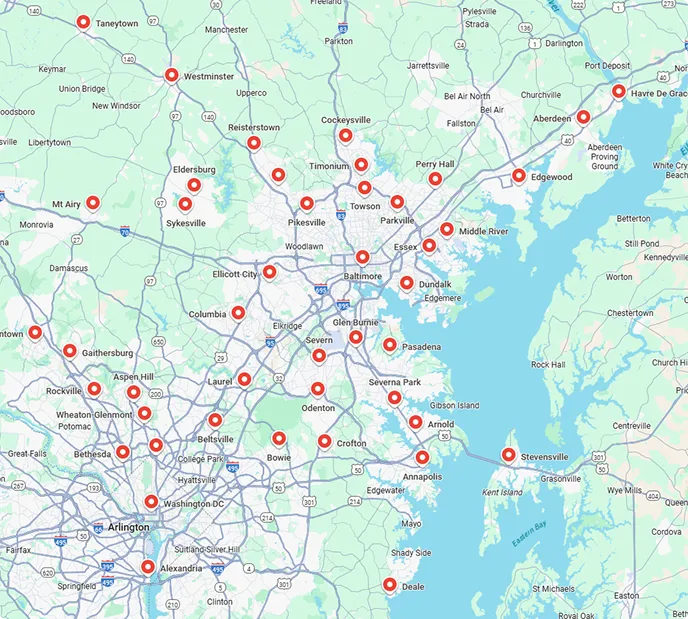
Service areas