

Whole House Air Purifiers in Parkville, MD
When it comes to whole-house air purification for Parkville, MD, Tario HVAC explains available technologies, how these systems integrate seamlessly with existing ductwork, and crucial installation considerations specifically for local homes. We cover common indoor air challenges, important selection criteria, essential maintenance schedules, and the significant health benefits for sensitive households. We'll outline typical installation steps, from initial assessments to full system integration and balancing, always emphasizing professional design and proper sealing to preserve your HVAC performance. We also highlight the importance of ongoing upkeep and the immense value of combining advanced filtration with activated carbon and UV for truly comprehensive protection.
.jpeg)
Whole House Air Purifiers in Parkville, MD
Whole-home air purification is a practical, long-term solution for improving indoor air quality in Parkville, MD homes. Whether household members suffer from allergies, asthma, chemical sensitivities, or you want to reduce smoke, odors, and dust throughout the house, a whole-house system that integrates with your HVAC delivers continuous filtration and targeted contaminant control. This page explains the technologies available, how systems work with existing ductwork, selection and installation considerations specific to Parkville, maintenance expectations, and the health benefits for sensitive households.
Common indoor air problems in Parkville, MD
Parkville’s climate and location create several predictable indoor air challenges:
- Spring and early summer pollen from trees and grasses that trigger seasonal allergies.
- Warm, humid summers that increase indoor mold and mildew growth, especially in basements and attics.
- Vehicle exhaust and urban pollutants from nearby Baltimore traffic, contributing to fine particulate (PM2.5) indoors.
- Occasional smoke events (wildfire drift or residential wood-burning) that introduce fine particles and strong odors.
- Tight homes in winter trap indoor-generated VOCs from cleaning products, paints, and furnishings.
These local factors make whole-home solutions particularly valuable, because single-room purifiers often miss contaminants that travel through ductwork or originate in other parts of the house.
Types of whole-house air purification technologies
Understanding the strengths and limits of each technology helps you choose a system that fits your home and health needs.
- HEPA (High Efficiency Particulate Air) filtration
- Captures 99.97% of particles down to 0.3 microns, including pollen, pet dander, and many fine particulates.
- Whole-house HEPA setups often require a dedicated air handler or a compatible HVAC system because of the higher airflow resistance (pressure drop).
- Electronic air cleaners (electrostatic precipitators, ionizers)
- Charge and collect particles on plates or filters; effective for fine particles.
- Require periodic cleaning and, if poorly designed, some models can produce ozone—look for low-ozone-certified units.
- UV germicidal lamps
- Installed in the ductwork or at the coil to reduce biological contaminants such as mold, bacteria, and some viruses.
- UV does not remove particles or odors; it is best used in combination with filtration.
- Activated carbon adsorption
- Effective at capturing odors, smoke-related compounds, and many volatile organic compounds (VOCs).
- Performance depends on carbon quantity and contact time; cartridges need periodic replacement as saturation reduces effectiveness.
Combining technologies (for example, HEPA filtration + activated carbon + UV) often provides the most comprehensive indoor air protection for sensitive households.
How whole-house systems integrate with HVAC
Whole-house air purifiers are typically installed in a central location within the HVAC system so filtered air is distributed through existing ductwork:
- Return-duct installation is common for filters and electronic cleaners so contaminants are captured before air is reconditioned and redistributed.
- Dedicated air handlers or bypass housings are used when a high-efficiency HEPA element is required, to avoid overloading the main blower.
- UV lamps are mounted near the evaporator coil or in the return plenum to inhibit microbial growth on wet surfaces.
- Activated carbon modules can be placed in-line with filtration to treat gases and odors.
A professional assessment ensures the selected solution matches your system’s airflow, fan capacity, and duct design. Proper installation includes sealing around the filter housing and balancing airflow so filtration does not reduce HVAC performance or efficiency.
Selection criteria for Parkville homes
Choose a whole-house purifier based on these practical considerations:
- Primary concern (allergens, smoke/odors, mold, VOCs, or mixed concerns)
- Compatibility with your current HVAC blower capacity and duct design
- Filtration efficiency needs (HEPA-level for severe allergies vs. high-MERV filters for general improvement)
- Ongoing maintenance requirements (filter replacement frequency, cleaning needs, lamp replacement)
- Ozone emissions and certifications—prefer low-ozone or ozone-free technologies for sensitive occupants
- Local seasonal patterns: robust pollen filtration for spring; activated carbon for smoke events and VOCs; UV for mold-prone, humid basements
Typical installation process
A professional whole-house installation generally follows these steps:
- Home and HVAC assessment: inspect ducts, blower capacity, and pollutant sources.
- System selection: choose the appropriate combination of HEPA, carbon, UV, or electronic cleaning.
- Ductwork preparation: repair leaks and ensure proper access locations for equipment.
- Installation: mount filtration housings, UV lamps, or carbon modules in the return or air handler.
- System integration: verify controls, fan operation, and any pressure differentials.
- Testing and balancing: measure airflow and particle reduction when possible; confirm no negative impact on heating/cooling performance.
- Customer orientation: review maintenance tasks and replacement schedules.
Maintenance and replacement schedules
Regular upkeep preserves performance and protects indoor air quality:
- Pre-filters: inspect every 1–3 months, replace or clean as needed to protect downstream filters.
- HEPA filters: typical replacement every 1–3 years depending on usage and pollutant load; check pressure drop annually.
- Activated carbon cartridges: replace every 6–12 months or sooner if odors return.
- UV lamps: replace annually for full UV output; clean lamp sleeves periodically.
- Electronic collector plates: clean every 1–3 months and replace cells per manufacturer guidance.
- Annual HVAC check: include airflow and filtration inspection during routine heating/cooling service, and test for duct leaks.
Indicators that service or filter replacement is needed include increased dusting, worsening allergy symptoms, persistent odors, reduced airflow, or unusual energy use.
Health benefits for sensitive households
For families with asthma, allergies, chemical sensitivities, young children, or elderly members, whole-house purification offers measurable advantages:
- Lower indoor allergen loads (pollen, pet dander, dust mite debris) that reduce symptom frequency and medication reliance.
- Reduction of fine particulate matter (PM2.5) from smoke and traffic, which improves respiratory and cardiovascular outcomes.
- Fewer odors and VOCs, which can decrease headaches, irritation, and long-term exposure risks.
- Reduced mold spore distribution in humid seasons, supporting better indoor air and fewer mold-triggered symptoms.
- Cleaner surfaces and less frequent dust accumulation, translating to a noticeably fresher indoor environment.
Whole-house systems provide consistent coverage across every room served by your HVAC, avoiding the limitations of portable units and delivering continuous filtration during heating and cooling cycles.
Selecting and installing a whole-house air purifier for a Parkville home should be driven by your primary indoor air concerns, local seasonal patterns, and HVAC compatibility. Regular maintenance keeps systems working at peak effectiveness and protects sensitive household members. For homes impacted by pollen, humidity-driven mold, traffic pollution, or occasional smoke events, integrating high-quality filtration with targeted technologies like activated carbon and UV yields the most complete indoor air protection.

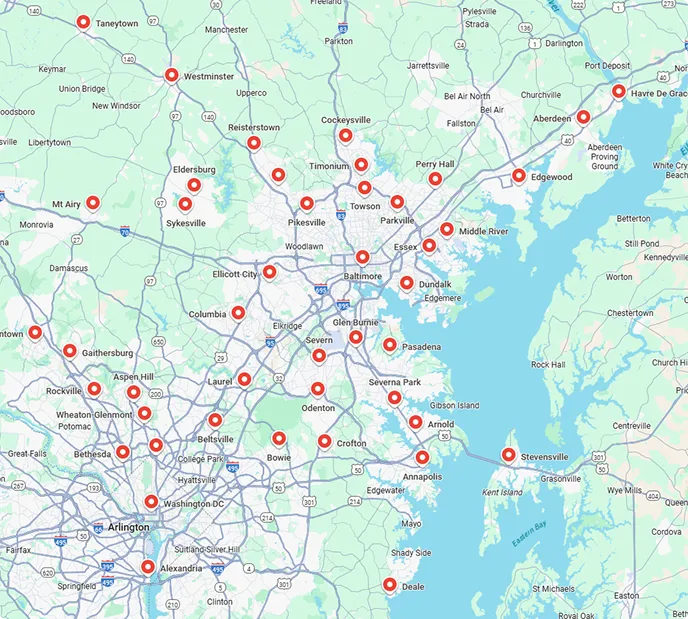
Service areas