

Ventilation in Parkville, MD
Parkville, MD homeowners often seek tailored ventilation solutions to tackle humidity, odors, and indoor pollutants, all while boosting comfort and energy efficiency. We understand the common regional issues here, like high humidity, mold risk, and stale air. Tario HVAC helps homeowners understand residential and whole-home systems such as exhaust, supply, balanced, and HRV/ERV units. Our process includes thorough assessments, code-compliant inspections, precise installation, and ongoing maintenance. You can expect significant improvements in health and comfort from our professional ventilation upgrades, specifically designed for Parkville homes and climate, ensuring lasting comfort.

Ventilation in Parkville, MD
Proper ventilation is one of the most effective ways to protect indoor air quality, control moisture, and improve year-round comfort in Parkville, MD homes. With hot, humid summers and cold, damp winters common to Baltimore County, inadequate ventilation leads to condensation, mold growth, persistent odors, and higher allergy symptoms. This page explains residential and whole-home ventilation options, typical issues in Parkville, what an assessment and code-compliance inspection covers, recommended equipment and ductwork upgrades, the installation process, maintenance needs, and the measurable health and comfort benefits you can expect.
Common ventilation issues in Parkville, MD
Homes in Parkville often show similar ventilation problems due to regional climate, building age, and remodeling trends:
- High indoor humidity and condensation on windows and in basements during winter and spring.
- Mold and mildew growth in bathrooms, attics, and basements from trapped moisture.
- Stale air and persistent odors in tighter, energy-efficient homes where natural infiltration is reduced.
- Unbalanced airflow and pressure causing backdrafting at combustion appliances or cold drafts in parts of the home.
- Poor removal of indoor pollutants such as VOCs from new finishes, cooking byproducts, and allergens like dust and pollen.
Understanding these typical issues is the first step toward choosing the right whole-home ventilation solution for Parkville residences.
Types of residential and whole-home ventilation systems
Choosing the right system depends on home size, envelope tightness, occupant needs, and local climate conditions. Main options include:
- Exhaust ventilation
- Uses fans to remove indoor air, creating a slight negative pressure that pulls fresh air in through leaks and intentional vents.
- Best for smaller homes or targeted removal in bathrooms and kitchens. In Parkville, exhaust systems can help remove humidity after showers and cooking.
- Supply ventilation
- Introduces filtered outdoor air using a fan and creates slight positive pressure to push stale air out.
- Useful where outdoor air quality is acceptable and you want controlled fresh-air delivery without relying on uncontrolled leaks.
- Balanced ventilation
- Simultaneously supplies and exhausts equal amounts of air for precise control of indoor airflow and pressure.
- Ideal for tighter, well-insulated Parkville homes where natural infiltration is limited.
- Heat Recovery Ventilator (HRV) and Energy Recovery Ventilator (ERV)
- HRV transfers heat between outgoing and incoming air, retaining warmth in winter.
- ERV transfers both heat and moisture, helping control humidity in humid summers and retaining moisture in dry winters.
- Recommended for Parkville homes that need year-round ventilation with energy efficiency and improved humidity control.
Assessment and code-compliance inspections
A comprehensive ventilation assessment includes both performance and safety checks to meet local codes and best practices:
- Visual inspection of existing ventilation fans, ductwork, intakes, exhaust points, and combustion appliance ventilation.
- Measurement of airflow rates (CFM) and whole-house ventilation rates based on occupancy and square footage, using ASHRAE or local code guidance.
- Evaluation of building pressure to detect backdraft risks or uncontrolled infiltration paths.
- Duct leakage testing and basic thermal imaging to identify insulation gaps that affect ventilation effectiveness.
- Combustion safety checks for furnaces, water heaters, and fireplaces to ensure ventilation changes will not create carbon monoxide risks.
- Verification of compliance with local Baltimore County and Maryland ventilation and mechanical codes for newly installed systems.
These inspections inform a recommended solution that meets health, comfort, and code requirements.
Recommended equipment and ductwork upgrades for Parkville homes
To get the most from a new or upgraded ventilation system, consider these equipment and duct improvements:
- Properly sized HRV or ERV units with ECM motors for efficient, variable-speed operation.
- Inline fresh-air supply fans for balanced systems or kitchen/bathroom fans with humidity sensors for targeted control.
- High-quality filters (MERV 8 to MERV 13 depending on outdoor air quality) to reduce pollen and particulate matter during spring and fall pollen seasons.
- Duct sealing and insulation to reduce leakage, energy loss, and condensation in unconditioned spaces like attics or crawlspaces.
- Dedicated fresh-air intakes located away from dryer vents, exhausts, or known pollutant sources.
- Backdraft dampers, motorized dampers for zone control, and drainage for ERV condensate where needed.
Upgrading ductwork and installing energy recovery can reduce HVAC load and keep indoor humidity in the ideal range for Parkville climates.
Installation process and what to expect
A professional installation typically follows these stages:
- Site assessment and design: Confirm target ventilation rate, system type, and equipment placement based on home layout and local climate factors.
- Permit and code review: Prepare required documentation for Baltimore County inspections as applicable.
- Equipment selection and procurement: Choose HRV/ERV or fans sized for the home and compatible controls.
- Installation: Mount units, modify or install ductwork, run condensate and electrical connections, and install intakes/exhausts with proper weatherproofing.
- Commissioning and testing: Measure airflow, balance the system, test for backdrafting and combustion safety, and verify controls and timers.
- Occupant orientation: Explain system operation, control settings, and recommended maintenance intervals.
This predictable process ensures a ventilation system that performs reliably in Parkville weather and living conditions.
Maintenance needs and expected lifespans
Regular maintenance preserves performance and indoor air quality:
- Replace or clean filters every 3 to 12 months depending on filter rating and outdoor pollen/particulate levels.
- Clean HRV/ERV cores and drains annually and check for blockages before high-use seasons.
- Inspect and clean inline fans and exhausts annually; more often in homes with heavy cooking or multiple occupants.
- Check duct seals, insulation, and intake/exhaust terminations annually for damage or obstructions.
- Expect major components like fans and cores to last 8 to 15 years with proper maintenance; filters and belts require more frequent service.
Routine maintenance keeps humidity in check and prevents the performance decline that leads to mold and allergy problems common in Parkville.
Health, comfort, and energy benefits
Properly designed and installed ventilation delivers measurable benefits for Parkville homes:
- Reduced indoor humidity and lower risk of mold and structural moisture damage.
- Fewer allergy and asthma triggers by removing pollen, dust, and indoor pollutants.
- Improved odor control and fresher indoor air, even in tightly sealed homes.
- Reduced risk of combustion appliance backdrafting and associated safety hazards.
- Improved HVAC efficiency and potentially lower energy use when using HRV/ERV to recover heat and moisture.
For Parkville homeowners concerned about seasonal humidity swings, mold risk in basements, or persistent indoor allergies, whole-home ventilation is a practical, long-term solution that improves comfort and protects both health and property value.
In summary, ventilation solutions tailored to Parkville, MD homes address the specific challenges of a humid summer and cold winter climate. A professional assessment, code-compliant installation, and ongoing maintenance make ventilation an effective investment in indoor air quality, moisture control, and year-round comfort.

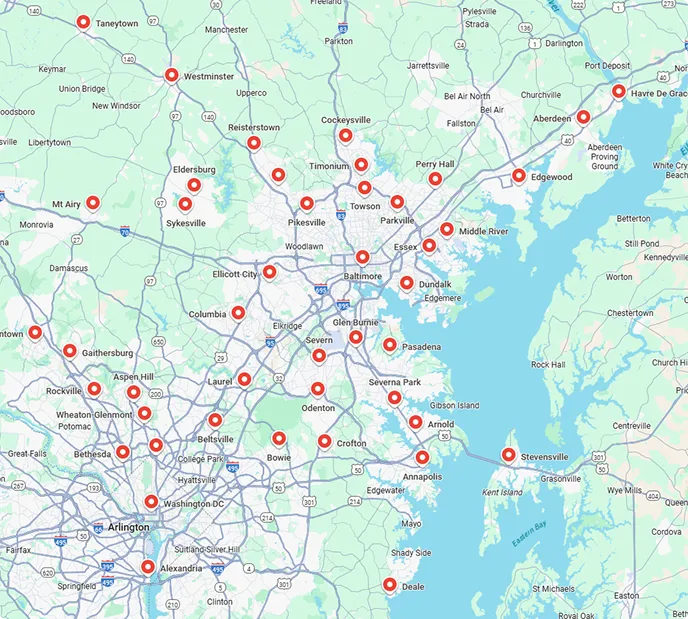
Service areas