

Ventilation in Towson, MD
At Tario HVAC, we believe well-planned ventilation in Towson, MD is crucial for protecting your indoor environment from excess moisture, pollutants, and stale air, all while boosting comfort and reducing long-term maintenance risks. Our energy recovery ventilators offer the added advantage of significant energy savings and superior humidity control, especially vital in mixed-humid climates. Tario HVAC provides a tailored assessment that meticulously accounts for your home's size, existing ductwork, occupancy patterns, and local code requirements, ensuring we deliver the most reliable solution. Our commitment to proper installation, precise duct design, and a consistent maintenance plan guarantees lasting performance and healthier indoor air for every Towson home.
Ventilation in Towson, MD
Proper ventilation is essential for healthy, comfortable homes in Towson, MD. With humid summers, cold winters, and a large stock of older rowhouses and detached homes, homeowners here face specific indoor air quality challenges: excess humidity, odor buildup, condensation on windows, and stale air trapped by insulation upgrades.
Why ventilation matters in Towson homes
- Excess humidity during Chesapeake Bay summers encourages mold, mildew, and dust mites.
- Tighter building envelopes after weatherization trap pollutants and moisture if ventilation is not balanced.
- Older homes may have unbalanced or leaky ductwork that undermines heating and cooling efficiency while allowing moisture and pollutants to enter living spaces.
- Proper ventilation protects finishes, reduces allergy triggers, improves comfort, and lowers HVAC strain.
Common ventilation problems in Towson, MD
- Persistent bathroom and kitchen odors and visible mold or mildew in showers and basements.
- Condensation on windows in winter due to indoor humidity and cold exterior surfaces.
- Uneven airflow, pressure imbalances, and backdrafting of combustion appliances.
- No or inadequate mechanical ventilation in retrofits where insulation and sealing were added.
- Loud, undersized, or inefficient exhaust fans that do not meet airflow needs.
Types of ventilation solutions
- Whole-home mechanical ventilation
- ERV (Energy Recovery Ventilator): Transfers heat and some moisture between incoming and outgoing air. Often preferred in mixed-humid climates like Towson because it helps manage indoor humidity and reduces latent load on air conditioning.
- HRV (Heat Recovery Ventilator): Transfers heat but not moisture. Works well in colder, drier climates or homes where humidity control is handled separately.
- Balanced systems provide controlled fresh air without pressurizing or depressurizing the house.
- Targeted ventilation
- Kitchen range hoods: Ducted, high-CFM fans vented to the outside for effective removal of cooking pollutants and moisture.
- Bathroom exhaust fans: Sized and located to remove moisture at the source, vented through the roof or wall.
- Spot fans and inline duct fans: Useful for long duct runs or retrofit scenarios where adding full ductwork is impractical.
Assessment and diagnostic process
- Indoor air quality evaluation: Measure temperature, relative humidity, CO2, and particulate levels to establish baseline conditions and prioritize solutions.
- Airflow measurement: Use anemometers and flow hoods to quantify exhaust and supply rates for fans and ventilation systems.
- Building envelope and duct inspection: Check for leaks, insulation gaps, and conditions in attics, basements, and crawlspaces common to Towson homes.
- Combustion safety testing: Evaluate gas appliances for spillage and backdraft risk when adding ventilation that could change pressure dynamics.
- Occupancy and lifestyle review: Consider household size, cooking frequency, and any occupants with allergy or respiratory concerns.
Installation and ductwork considerations
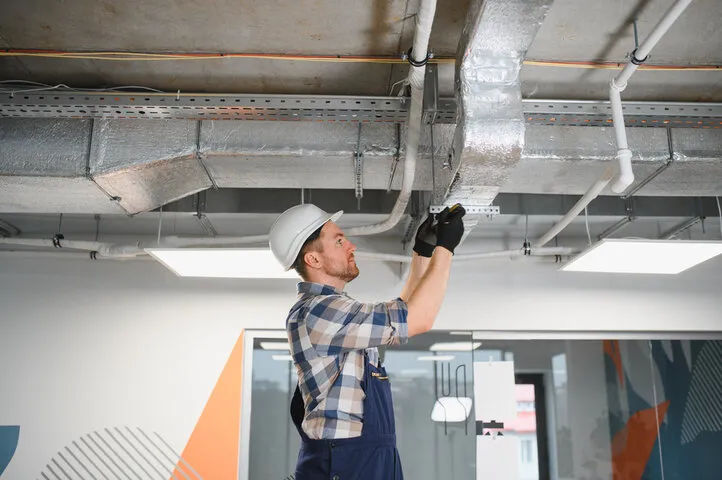
- Balanced vs. unbalanced systems: Balanced ERV/HRV installations require supply and exhaust ducts sized to achieve recommended air exchange rates. Proper balancing prevents pressure issues that can cause backdrafting.
- Duct sizing and routing: Short, insulated ducts minimize energy loss and condensation. Older Towson houses may require creative routing or minimal-invasive solutions like thin-profile ducts or combination of central and spot ventilation.
- Exterior terminations: Position exhaust and intake vents to avoid short-circuiting airflows and to prevent moisture re-entrainment. Follow clearance requirements for windows, doors, and roof penetrations.
- Integration with HVAC: Decide whether to use dedicated ventilation ducts or tie the system into existing HVAC ducting. For homes with limited ductwork, ductless ERV units or decentralized systems can be a practical retrofit.
- Noise control: Use vibration isolators, insulated ducting, and appropriately sized fans to keep operating noise low for living spaces and bedrooms.
Code compliance and energy recovery benefits
- Compliance: Mechanical ventilation installations should adhere to the International Residential Code (IRC) ventilation provisions and local Baltimore County building codes. Permitting and proper documentation ensure systems meet ventilation rate and safety standards.
- Make-up air: High-capacity range hoods often trigger makeup air requirements per code to prevent negative pressure. Plan makeup air pathways to avoid backdrafting of combustion appliances.
- Energy recovery: ERV and HRV systems reduce heating and cooling loads by transferring thermal energy between outgoing and incoming air. This leads to improved comfort and lower energy use compared with continuous window opening or uncompensated exhaust.
- Indoor air quality and moisture control: Energy recovery reduces the need to condition 100 percent of incoming air, which is particularly valuable during Towson summers and winters.
Maintenance plans and lifecycle care
- Regular filter replacement: Monthly to quarterly checks depending on occupancy and filter type keep particles from circulating and protect the heat exchange core.
- Annual inspections: Clean and inspect cores, coils, condensate drains, fan motors, and controls annually. In humid months inspect for condensation or microbial growth.
- Duct checks: Inspect accessible duct runs every few years for leaks, insulation integrity, and pest or moisture intrusion common in basements and crawlspaces.
- Fan performance testing: Verify airflow performance after seasonal changes and after any major HVAC service to retain design ventilation rates.
- Documentation: Keep a maintenance log including filter change dates, core cleanings, and any repairs to demonstrate proper care and support warranty needs.
Choosing the right system by home size and type
- Small apartments and rowhouses: Consider decentralized ERV units or high-capacity ducted bathroom and kitchen fans combined with spot ventilation. Less invasive duct runs and compact units often fit these homes better.
- Mid-size detached homes: A single balanced ERV or HRV tied into the HVAC or a small dedicated duct system provides consistent whole-home fresh air without extreme retrofit complexity.
- Large or multi-level homes: Multiple supply and exhaust branches or a larger centralized ERV/HRV with zoning helps distribute fresh air evenly. Duct sizing and pressure balancing become critical in multi-level layouts.
- Older Towson homes with limited attic space: Use low-profile ducts, short runs, or decentralized units. Address combustion safety and ventilation air pathways early to avoid pressure-related hazards.

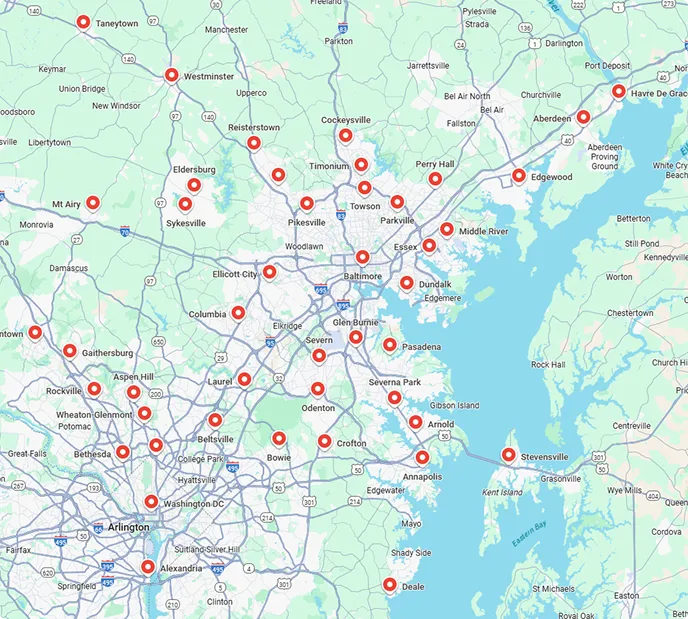
Service areas