

Ventilation in Severn, MD
Achieving ideal whole-home ventilation in Severn, MD means perfectly balancing moisture control, indoor air quality, and energy efficiency. Tario HVAC does this through expertly selected ERV or HRV options, precise sizing, thoughtful ductwork, and careful installation. Our expert assessment ensures your equipment is perfectly aligned with your home's construction, occupancy, and local climate, always following ASHRAE 62.2 guidance. With energy recovery, advanced humidity management, and smart humidity-sensing controls, we help reduce mold, odors, and wasted energy, while routine maintenance preserves your system's peak performance. Our proper configuration supports superior comfort, ensures code compliance, and fosters healthier indoor environments for Severn homes, always emphasizing safety, efficiency, and long-term value for you, the homeowner.

Ventilation in Severn, MD
Proper whole-home ventilation in Severn, MD protects indoor air quality, controls moisture in a humid coastal plain climate, and keeps HVAC systems running efficiently. Whether you are considering an ERV or HRV system, a balanced supply-exhaust strategy, or targeted exhaust for kitchens and baths, the right ventilation plan reduces allergens, prevents mold growth, and meets code requirements while minimizing energy impacts.
Why whole-home ventilation matters in Severn, MD
Severn and the surrounding Anne Arundel County area experience warm, humid summers and cold winters. High indoor humidity in summer encourages mold and dust mite growth, while tightly sealed homes in winter can trap pollutants and elevate carbon dioxide and VOC concentrations. A well-designed whole-home ventilation solution addresses both seasonal problems by continuously replacing stale indoor air with filtered outdoor air and by recovering energy to limit heating and cooling penalties.
Common ventilation approaches and when to use them
- Balanced systems (ERV or HRV): Provide controlled incoming and outgoing air rates with energy recovery. Best for most tightly built Severn homes where humidity control and energy savings are priorities.
- Energy Recovery Ventilators (ERV): Exchange heat and moisture between outgoing and incoming air. Preferred in humid climates like Severn for helping control summer moisture loads.
- Heat Recovery Ventilators (HRV): Exchange heat only, useful in colder, dryer climates. HRVs can still be appropriate where moisture transfer is not desired.
- Exhaust-only: Uses fans to expel indoor air, relying on makeup air from leaks. Simpler and less expensive but can create negative pressure and backdraft risks.
- Supply-only: Introduces fresh air under positive pressure, useful in specific retrofit scenarios or when makeup air is needed for combustion appliance safety.
- Demand-controlled ventilation: Uses humidity, CO2, or VOC sensors to vary ventilation rates based on real-time indoor conditions for better energy performance.
Common ventilation issues in Severn homes
- Excessive indoor humidity and visible mold growth in basements, bathrooms, or attics during summer.
- Stuffy rooms, elevated CO2 levels, or persistent odors in tightly sealed or newly weatherized homes.
- Imbalanced systems that cause pressure differences, creating backdraft risks for combustion appliances or drawing soil gases like radon.
- Poorly integrated ductwork causing noise, poor distribution, or high duct leakage and loss of recovered energy.
- Systems that are incorrectly sized for occupancy or building size, leading to under- or over-ventilation.
Assessment and right-sizing process
A professional assessment ensures the ventilation strategy matches your home’s construction, occupancy, and indoor air quality needs. Typical steps include:
- Visual inspection of building envelope and existing mechanical ventilation.
- Review of occupant patterns and bedrooms to estimate design ventilation rates.
- Airflow and duct leakage testing when ducts are used for distribution.
- Indoor humidity and pollutant baseline measurements.
- Selection of ventilation equipment sized to meet recommended ventilation rates and local code requirements, including ASHRAE 62.2 guidance used by inspectors and permitting authorities.
Right-sizing is critical. Oversized systems waste energy and can over-dry or over-humidify spaces. Undersized equipment fails to control pollutants and moisture. Proper calculations account for square footage, occupancy, and local climate.
Installation and ductwork integration
Integration choices depend on house layout and existing HVAC. Key considerations for a durable installation:
- Balanced systems should be installed with return and supply connections sized to achieve designed CFM without creating strong positive or negative pressures.
- Dedicated ductwork for an ERV/HRV avoids disrupting HVAC airflow patterns, but connection to the main HVAC return can be appropriate when done with balancing dampers and proper filtration.
- Intake placement is critical: locate outdoor air intakes away from exhaust vents, garages, or pollutant sources and above grade to reduce water entry.
- Frost controls and preheat options protect the heat exchanger in cold weather and maintain ventilation year round.
- Ensure combustion appliances are not depressurized by ventilation operations; sealed combustion or dedicated makeup air solutions may be required to comply with building codes.
Energy recovery and efficiency options
- Plate and counterflow heat exchangers are common and provide effective sensible heat transfer.
- Enthalpy cores or ERV media transfer both heat and moisture, cutting latent load during Severn’s humid summers and improving comfort.
- Variable-speed fans and controls reduce power use and enable demand-controlled ventilation tied to humidity or CO2 sensors.
- Integration with the HVAC system thermostat or a dedicated controller helps coordinate ventilation with heating and cooling to reduce overall energy use.
Routine maintenance and long-term care
Maintaining performance and indoor air quality requires regular care:
- Replace or clean filters on manufacturer-recommended schedules, typically every 3 months or more often if pollutant loads are high.
- Inspect and clean the heat exchange core annually to prevent odors and maintain transfer efficiency.
- Check condensate drains and seals seasonally to prevent water intrusion and microbial growth.
- Verify fan motors, belts, and controls during an annual service visit to ensure designed airflow is maintained.
- Monitor indoor humidity and pollutant levels periodically to verify the system meets expectations; adjust settings if seasonal behavior changes.
Health and comfort benefits for occupants
A properly designed ventilation system improves health and comfort in measurable ways:
- Reduces mold and mildew risk by controlling indoor humidity.
- Lowers levels of allergens, VOCs, and accumulated indoor pollutants that contribute to asthma and respiratory irritation.
- Stabilizes indoor humidity for better comfort and fewer moisture-related building problems.
- Supplies filtered outdoor air that reduces dust and particulate matter entering living spaces.
- Supports better sleep and cognitive performance by controlling CO2 concentrations in bedrooms and living areas.
Code compliance considerations in Severn, MD
Ventilation solutions must satisfy local building codes and standards commonly referenced in Maryland permitting. Installations are typically evaluated for compliance with minimum ventilation rates and indoor air quality standards consistent with ASHRAE 62.2. Installers also confirm that ventilation systems do not compromise combustion appliance safety or create unsafe depressurization. Proper documentation, equipment labeling, and commissioning records help demonstrate compliance at inspection.
SummaryWhole-home ventilation in Severn, MD requires a climate-aware approach that balances moisture control, indoor air quality, and energy efficiency. An assessment-driven plan that selects between ERV or HRV technologies, properly sizes system capacity, integrates ductwork thoughtfully, and follows routine maintenance will preserve indoor comfort and health while meeting code expectations. For homes in Severn dealing with seasonal humidity swings or tight building envelopes, energy recovery ventilation often provides the best combination of moisture control and energy savings.

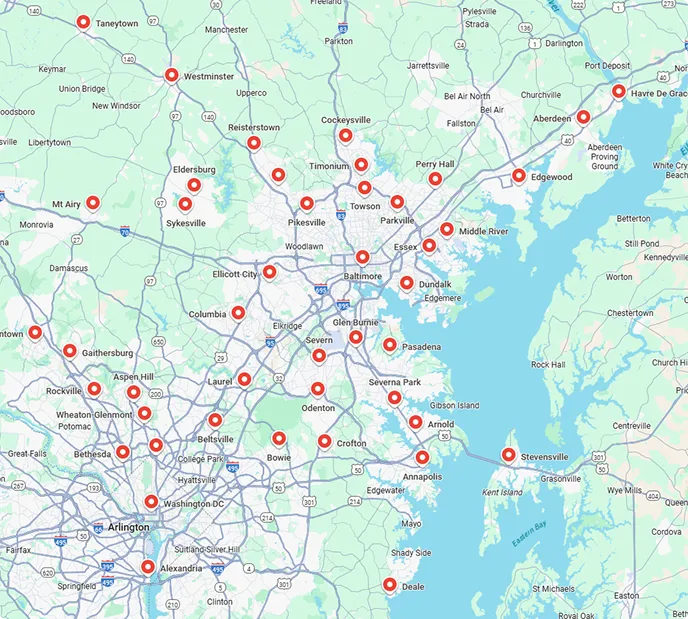
Service areas