

Smart Thermostats Installation in Laurel, MD
Tario HVAC offers smart thermostat installation in Laurel, MD, enabling precise temperature control, detailed energy monitoring, and convenient remote access. We specifically address local humidity and seasonal comfort challenges. Our comprehensive process starts with thorough compatibility checks and personalized model recommendations, then moves to expert wiring, secure mounting, reliable Wi-Fi setup, and on-site training. We understand common Laurel-specific issues and guide you through every installation step, showing you exactly how to maximize energy savings through smart scheduling, geofencing, and seamless app integration. We also provide clear information on warranties, robust post-install support, and local incentives that can reduce upfront costs and significantly enhance your long-term comfort.
.webp)
Smart Thermostats Installation in Laurel, MD
Smart thermostats installation in Laurel, MD brings modern temperature control, energy tracking, and remote access to homes facing humid summers and cold winters. Upgrading to a smart thermostat can solve common comfort complaints, improve HVAC efficiency, and make it easier to manage energy use across the varied housing stock found in Laurel. This page explains what to expect from a professional smart thermostat installation: compatibility checks, recommended models and features, wiring and mounting, Wi Fi and app setup, training, warranty and support, and typical energy savings and incentives for Laurel homeowners.
Why upgrade in Laurel, MD
Laurel experiences high humidity in summer and periods of freeze in winter, which puts additional load on both cooling and heating systems. Older thermostats often lack scheduling and remote control, contributing to higher bills and uneven comfort. A professionally installed smart thermostat addresses these issues by enabling precise scheduling, adaptive control for heat pumps and multi-stage systems, and alerts that prevent wasted energy or equipment damage.
Common smart thermostat issues in Laurel, MD
- Incompatible wiring or no C wire, preventing power-hungry Wi Fi thermostats from functioning reliably.
- Weak home Wi Fi or separation between HVAC equipment and router, causing intermittent remote access.
- Misconfigured heat pump or multi-stage systems leading to short-cycling or incorrect auxiliary heat activation.
- Confusion about learning features and schedules that produce unexpected temperature patterns.
- Lack of humidity control integration in high-humidity months causing comfort complaints despite correct thermostat settings.
Typical services included in a professional installation
- Consultation and compatibility check with your existing HVAC system, including furnace, air handler, heat pump, or boiler.
- Assessment for C wire or installation of a power extender or transformer when needed.
- Recommendations on models and features matched to your system and lifestyle.
- Professional wiring, mounting, and configuration on the HVAC control board.
- Wi Fi and mobile app integration plus smart home voice assistant setup where requested.
- In-home demonstration and user training to make controls intuitive.
- Documentation of settings and warranty information for both device and workmanship.
Compatibility checks and system diagnostics
A technician first inspects the HVAC control board and thermostat wiring to determine system type and identify the presence of a common wire. They will confirm whether the system is:
- Low voltage forced air systems (single-stage or multi-stage)
- Heat pump systems with auxiliary or emergency heat
- Boiler or hydronic systems requiring relay interfaces
- Line-voltage systems which typically require different thermostat solutions
If a C wire is missing, installers can use a compatible power adapter, install a dedicated C wire, or recommend models that operate reliably without it. The technician also checks for any preexisting control issues such as loose connections, corroded terminals, or failing relays that would affect thermostat performance.
Recommended models and features
When selecting a smart thermostat, the right model depends on HVAC complexity and desired features. Commonly recommended capabilities include:
- Programmable schedules for weekday and weekend routines
- Learning thermostats that adapt to your habits for hands-off comfort
- Geofencing to adjust temperature based on the homeowner’s location for energy savings
- Remote temperature sensors for better temperature balance in larger homes
- Detailed energy reports and usage history to identify savings opportunities
- Integration with Alexa, Google Home, Apple HomeKit, or other smart home platforms for voice control
Installers will recommend specific models and feature sets that match your system, from basic Wi Fi programmable models to advanced learning thermostats with remote sensors.
Professional wiring and mounting procedures
Professional installation ensures safe and reliable operation. Steps include:
- Turning off power at the appropriate service panel to prevent damage and ensure safety.
- Labeling and photographing existing wires for reference.
- Mounting the thermostat level and at an appropriate height away from direct sunlight and drafts.
- Connecting wires to the new thermostat and verifying correct terminal placement on the HVAC control board.
- Installing a C wire or power extender if required.
- Restoring power and running initial tests of the HVAC stages to confirm correct operation.
Proper wiring avoids common problems like short-cycling, failure to call for auxiliary heat, or damage to the HVAC board.
Wi Fi configuration, mobile app integration, and smart home linking
After physical installation, the technician configures Wi Fi settings and links the thermostat to the homeowner’s mobile app. This typically includes:
- Connecting the thermostat to the home network and verifying signal strength at the thermostat location.
- Creating or linking the account in the manufacturer’s app and enabling features like geofencing, schedules, and energy reports.
- Integrating with voice assistants or other smart home platforms if desired.
- Setting preferred temperature ranges, vacation or hold modes, and alert thresholds for high/low temperatures or filter changes.
If Wi Fi coverage is weak near the furnace or thermostat, installers recommend solutions like relocating the router, adding a range extender, or using thermostats with better built-in antennas.
Demonstration and user training
A quality installation includes an on-site demonstration covering:
- How to use manual and scheduled controls in the app and on the device.
- How learning modes and geofencing work and when to override them.
- Reading energy reports and interpreting usage suggestions.
- How to respond to alerts for temperature extremes or equipment faults.
This training focuses on making the thermostat intuitive so the homeowner can confidently manage comfort and savings.
Warranty, support, and post-install care
Most smart thermostat setups include two layers of protection: manufacturer warranty and installer workmanship warranty. Installations typically come with guidance on firmware updates and how to reach support channels for remote troubleshooting. Technicians can perform follow-up checks to tune schedules or resolve connectivity issues after the initial installation.
Expected energy savings and local incentives
Smart thermostats commonly yield energy savings by reducing runtime during unoccupied periods and optimizing temperature setbacks. Typical savings often cited are in the range of 8% to 15% on heating and cooling bills depending on usage patterns and system efficiency. In Laurel, MD, those savings can be amplified by coordinating thermostat schedules with seasonal humidity control and leveraging smart scheduling to avoid peak energy periods.
Homeowners in Maryland may also qualify for utility rebates or state-level energy efficiency incentives that apply to smart thermostat purchases and installations. Local rebate availability varies by utility and program year, so checking eligibility with your utility provider or energy office can reveal additional savings opportunities.
Maintenance tips to keep a smart thermostat performing well
- Keep thermostat firmware and mobile apps up to date for security and feature improvements.
- Periodically check Wi Fi signal strength and network credentials.
- Maintain clean air filters and regular HVAC tune ups to ensure accurate readings and efficient operation.
- Replace thermostat batteries when prompted and inspect wiring annually for corrosion or loosened terminals.
- Adjust seasonal schedules based on actual occupancy and comfort needs instead of relying solely on learning modes.
A properly installed smart thermostat in Laurel, MD reduces energy waste, improves comfort control during humid summers and cold winters, and provides actionable data to manage household energy use. Professional installation minimizes compatibility problems, ensures safe wiring, and delivers the training needed to get the most from smart thermostat features and local incentives.

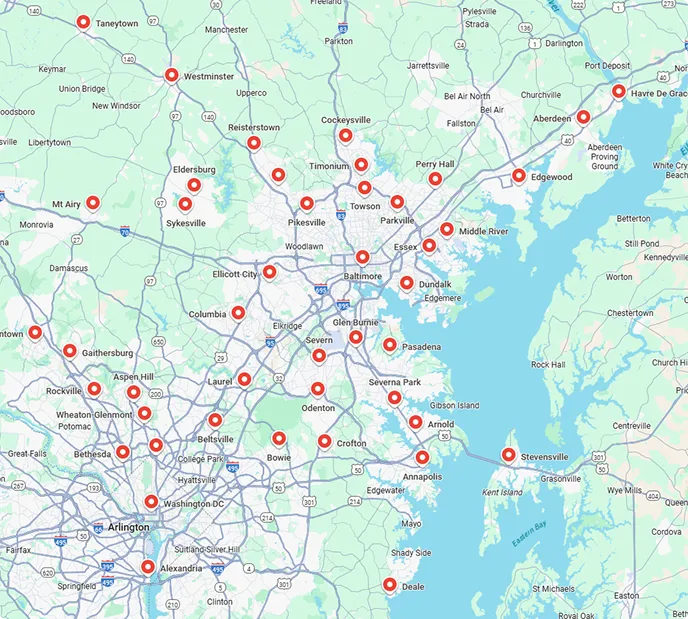
Service areas