

Furnace Installation in Baltimore, MD
Installing a new furnace is one of the most impactful home upgrades for comfort, safety, and long-term energy savings. For Baltimore homeowners, a professional furnace installation from Tario HVAC addresses not only colder winters but also regional factors like older rowhome construction, aging duct systems, and local building code requirements. We'll walk you through the full furnace installation process in Baltimore, MD — from pre-install assessment and load calculations to safety testing, permit compliance, warranties, and a realistic project timeline.
-min.webp)
Furnace Installation in Baltimore, MD
Installing a new furnace is one of the most impactful home upgrades for comfort, safety, and long-term energy savings. For Baltimore homeowners, a professional furnace installation addresses not only colder winters but also regional factors like older rowhome construction, aging duct systems, and local building code requirements. This page explains the full furnace installation process in Baltimore, MD — from pre-install assessment and load calculations to safety testing, permit compliance, warranties, and a realistic project timeline.
Why a proper furnace installation matters in Baltimore
- Baltimore winters bring sustained cold spells where furnace reliability matters for health and comfort.
- Many Baltimore homes have older ductwork, tight basements, or shared chimneys that complicate venting and combustion air.
- An incorrect furnace size or poor ductwork can cause short cycling, higher bills, uneven heating, and increased wear.
A correct, code-compliant installation maximizes efficiency, reduces operating costs, and ensures safe operation around combustion gases.
Common furnace problems and reasons homeowners replace systems
- Undersized or oversized systems causing poor comfort and inefficiency.
- Worn-out heat exchangers or frequent breakdowns in older units.
- Leaky, undersized, or poorly insulated ducts producing uneven rooms and energy loss.
- Incompatible or outdated thermostats preventing modern control and zoning.
- Safety concerns such as carbon monoxide risk from cracked heat exchangers or improper venting.
Pre-install assessment and load calculations
A professional Baltimore furnace installation begins with a detailed pre-install assessment:
- Home survey: Evaluate square footage, insulation, window types, orientation, and occupancy. Rowhomes and attached houses common in Baltimore require special attention to shared walls and neighboring heat transfer.
- Load calculation (Manual J): Precise heating load calculations determine the correct furnace capacity. This prevents the inefficiency of oversized units and the underperformance of undersized units.
- Fuel and venting evaluation: Inspect gas supply, shutoff locations, chimney conditions, and potential need for direct venting or sealed combustion.
- Electrical and space constraints: Check available electrical capacity and the physical space for the new furnace and associated components.
Ductwork inspection and required modifications
Ductwork often dictates installation complexity in Baltimore homes.
- Duct inspection: Leak testing, measuring trunk and branch sizes, and checking insulation levels determine if repairs or redesigns are needed.
- Common duct issues: collapsed sections in crawlspaces, undersized runs to bedrooms, and unsealed joints that leak heated air into unconditioned spaces.
- Typical modifications: Adding return pathways, resizing ducts per Manual D guidelines, sealing and insulating ducts, and installing transition pieces for new furnace flanges. Proper ductwork improves comfort and system efficiency significantly.
Step-by-step installation and system commissioning
A typical furnace installation sequence:
- Prepare the work area and remove the old unit, disposing of components according to local regulations.
- Install the new furnace, including proper mounting, leveling, and clearance adherence.
- Connect gas line and perform leak tests to ensure safe fuel delivery.
- Attach supply and return duct connections or transition adapters; seal joints with code-approved methods.
- Make electrical connections, including power and control wiring for the thermostat and any zone controls.
- Set up venting or chimney connections and test draft for proper flue performance.
- Commissioning: Start the system through several cycles, verify heat output, measure airflow, and check combustion efficiency where applicable. Commissioning ensures the system performs to manufacturer specifications.
Thermostat integration and calibration
Thermostat selection and setup are critical to getting the most from a new furnace:
- Compatibility: Verify the thermostat type matches the furnace controls (millivolt, low-voltage, or communicating systems).
- Smart thermostats and zoning: Modern thermostats add scheduling, remote control, and multi-stage control for two-stage or modulating furnaces. Zoning can be integrated where ductwork modifications accommodate dampers.
- Calibration: Proper calibration and differential settings ensure accurate temperature control and minimize short cycling.
Safety and carbon monoxide testing
Safety testing is non-negotiable:
- Combustion analysis: Measure flame characteristics and flue gases to confirm safe combustion and efficiency.
- Carbon monoxide (CO) testing: Test indoor air levels at startup and after run cycles, especially in homes with shared chimneys or tight construction common in Baltimore neighborhoods.
- Pressure testing: Check for negative pressure/blowback that could cause backdrafting of combustion products.
- CO detector placement: Install or verify CO alarms near sleeping areas and on each floor per local code guidance.
Permits, inspections, and code compliance in Baltimore
Baltimore installations must meet local and state requirements:
- Permits: Furnace replacements typically require permits through Baltimore City or Baltimore County permitting offices depending on location. Permit requirements cover gas connections, mechanical installation, and electrical work.
- Code compliance: Installations must conform to applicable Maryland and local building and mechanical codes, including clearances, venting standards, combustion air, and combustion appliance zone rules.
- Inspections: Allow additional time for permit review and municipal inspections; inspectors verify safe gas work, proper venting, and code-compliant installation.
Manufacturer warranties and service guarantees
- Manufacturer warranties: New furnaces come with parts warranties that vary by model and brand. Proper installation, including correct sizing and commissioning, is often required to keep warranties valid.
- Service guarantees: Look for workmanship guarantees that cover installation-related issues for a defined period. Proper documentation and warranty registration help protect long-term value.
Typical project timeline
- Simple direct replacement (same location, compatible duct connections): 4 to 8 hours; many standard change-outs are completed in one business day.
- Moderate installation (minor ductwork adjustments, venting changes, thermostat wiring): 1 to 2 days.
- Complex projects (major duct redesign, zoning, structural work, or chimney relining): 2 to 5 days or longer; permit processing and municipal inspections may extend overall timeline. Plan for contingencies in older Baltimore homes where hidden issues can surface during removal.
Long-term benefits and maintenance advice
- Benefits: A properly sized and installed furnace improves comfort, reduces energy bills, extends equipment life, and enhances indoor air quality.
- Seasonal maintenance: Annual professional tune-ups before winter, regular filter changes, and periodic duct inspections keep performance and warranties intact.
- Safety upkeep: Test CO detectors monthly, ensure basement vents are clear, and monitor for unusual odors or soot that could indicate venting issues.
FAQs
Q: How do I know if my Baltimore home needs a full furnace replacement or just repairs?
A: If your furnace is over 12–15 years old, has recurring breakdowns, a cracked heat exchanger, or lacks efficiency despite repairs, replacement is often the most dependable and cost-effective choice. A professional assessment with a load calculation will clarify whether repair or replacement is the right decision.
Q: Will a new furnace require ductwork changes in older Baltimore rowhomes?
A: Many older rowhomes have undersized or leaky ducts. An inspection will reveal whether sealing, resizing, or adding returns is necessary to optimize comfort and efficiency.
Q: How long does permitting and inspection add to the installation timeline in Baltimore?
A: Permit and inspection timing varies by jurisdiction and workload; installations should allow extra days to a couple of weeks for permit approval and scheduled inspections. Plan accordingly, especially during peak seasons.
Q: Are carbon monoxide detectors required after furnace installation?
A: Yes. CO detectors should be installed on each floor and near sleeping areas. Professional installers verify detector placement and operation as part of safety testing.
Q: What should I expect during system commissioning?
A: Commissioning includes start-up, multiple operating cycles, measuring temperature rise, airflow checks, combustion testing where necessary, thermostat calibration, and verification of safe venting and condensate drainage.

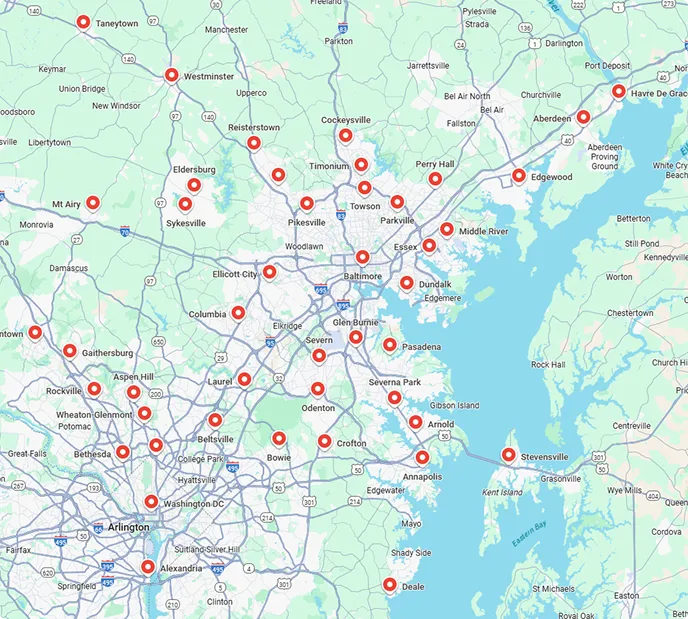
Service areas