

Tankless Water Heater Installation in Stevensville, MD
Upgrading to a tankless water heater delivers reliable on-demand hot water, smaller equipment footprints, and potential energy savings for Stevensville, MD homes. Whether you live on Kent Island near the Chesapeake Bay or inland in Queen Anne’s County, choosing the right tankless system requires careful sizing, attention to local climate and water quality, and a proper installation that meets electrical, gas, and plumbing codes. Tario HVAC explains the consultation and sizing process, installation steps, equipment considerations, expected timelines, warranty options, and post-installation testing tailored to homeowners in Stevensville.
.webp)
Why Tankless makes sense in Stevensville, MD
- On-demand hot water eliminates standby heat loss from storage tanks, which can be useful for smaller coastal homes and cottages.
- Stevensville’s seasonal use patterns (summer visitors, winter low occupancy) benefit from a system that heats only when needed.
- Coastal salt air and variable water hardness increase corrosion and scale risk; modern tankless units with appropriate materials and water-treatment options are better suited for longevity in this environment.
Common tankless system types and local suitability
- Gas condensing tankless (natural gas or propane): Highest flow rates for multiple simultaneous showers; good for larger homes. Requires proper venting and gas line capacity.
- Non-condensing gas tankless: Simpler venting but slightly lower efficiency.
- Electric tankless: Easier to install where gas is unavailable, but needs substantial electrical service capacity and may be better for point-of-use or smaller households.
- Hybrid systems: Combine small buffer tanks with on-demand units to smooth flow for very high-demand homes.
Consultation and sizing: what to expect
A professional consultation in Stevensville will cover:
- Current and anticipated hot water demand: peak simultaneous uses (showers, dishwasher, laundry).
- Incoming groundwater temperature and seasonal fluctuations in Maryland. Colder source water requires higher required temperature rise and affects unit selection.
- Fuel availability: municipal natural gas, propane, or electric panel capacity. Many Stevensville homes use propane or electric; confirm service and line sizing.
- Water quality: mineral content and corrosive salt air. A hardness test may be recommended to determine if a water softener or inline scale filter is needed to protect the heat exchanger.
- Space and venting options: outdoor-mounted units, sidewall venting, or chimney conversions. Condensing units require condensate drainage.
The outcome is a recommended model and precise flow rate (GPM) and temperature rise calculations for your household.
Electrical and plumbing requirements
- Gas units: Verify gas meter and supply line capacity; larger units may need gas line upsizing. Proper venting with stainless steel or approved PVC (for condensing units) is critical. Handle condensate per code.
- Electric units: Typically require 240V dedicated circuits and significant amperage. Multiple high-capacity breakers are common; an electrical service upgrade may be necessary.
- Plumbing: Dedicated cold and hot shutoff valves, pressure relief measures, and isolation valves for routine maintenance are standard. Anti-scald mixing valves may be required to protect against temperature spikes.
- Water treatment: Hard water protection via softeners or scale inhibitors extends heat exchanger life in Stevensville’s mineral-rich conditions.
Installation process and timeline
- Day 1: Site survey, final measurements, removal of old unit if present, and permitting if required by local code.
- Day 2: Mechanical and electrical work: install mounting hardware, venting, gas or electrical hookups, condensate drains, and plumbing connections. Upgrade gas lines or electrical panel if needed (may extend timeline).
- Day 3: Commissioning and testing. Typical straightforward installs take 1 to 2 days; projects requiring service upgrades or complex venting can extend to 3 to 5 days.
Recommended models and features to consider
When evaluating units for Stevensville homes look for:
- High turndown ratio and accurate modulation to match variable household demand.
- Corrosion-resistant heat exchangers and stainless venting for coastal durability.
- Built-in recirculation options or compatibility with recirculation pumps for instant hot water at remote fixtures.
- Proven brands commonly used by professionals: Rinnai, Navien, Noritz, Rheem, Bosch, Stiebel Eltron. Choose model based on calculated GPM, temperature rise, and fuel type.
Energy savings and rebates
- Many homeowners see measurable energy savings with tankless systems because they eliminate standby losses; actual savings vary by household size and usage pattern. Typical reductions in water-heating energy range widely, often between 10 and 30 percent compared to older storage tanks, depending on usage and fuel.
- Federal, state, and utility incentives or rebates for high-efficiency appliances may be available in Maryland. Incentive eligibility can depend on model efficiency ratings and local programs. Check local utility offerings and energy-efficiency programs for potential rebates and tax incentives.
Warranties and reliability
- Manufacturer warranties commonly cover components and the heat exchanger for a range from 5 to 15 years depending on brand and model. Labor warranties vary by installer.
- In coastal environments like Stevensville, following recommended maintenance (descaling, filter changes) preserves warranty coverage and extends unit life.
Post-installation testing and commissioning
A professional installation includes:
- Flow and temperature verification at multiple fixtures to confirm required GPM and temperature rise.
- Gas pressure test and leak checks for gas models.
- Electrical load testing and breaker verification for electric models.
- Vent and condensate integrity inspection for safe combustion and drainage.
- Safety checks including carbon monoxide monitoring and proper air intake clearances where applicable.
- Demonstration of unit controls, user settings, and maintenance access.
Maintenance and long-term benefits
- Annual or biannual descaling and inlet filter maintenance is recommended in areas with hard water. This is especially important in Stevensville to combat mineral buildup from local groundwater.
- Regular inspections of venting, gas connections, and electrical panels reduce the risk of failures and keep efficiency high.
- Benefits include reliable endless hot water for typical household patterns, reduced energy waste, space savings, and longer service life when properly maintained.
Q: How do I know if my Stevensville home needs a gas line or electrical upgrade for a tankless water heater?
A: A professional evaluation will check your existing gas meter capacity or electrical panel amperage. Gas condensers often require larger supply lines; electric units frequently need multiple high-amperage 240V circuits. The consultation includes recommendations and any necessary upgrade scope.
Q: Will salt air on Kent Island shorten a tankless water heater’s life?
A: Salt air can increase corrosion risk for external components and venting. Choosing corrosion-resistant materials, stainless venting, and keeping outdoor units in protected locations helps mitigate exposure. Regular inspections are recommended.
Q: How often should a tankless unit be descaled in Stevensville?
A: Frequency depends on water hardness and usage, but many homeowners schedule descaling every 6 to 12 months when hardness is moderate to high. A water hardness test during consultation provides a tailored maintenance schedule.
Q: Can a tankless water heater handle multiple showers and laundry at once?
A: It depends on the unit’s rated flow (GPM) and the required temperature rise. Proper sizing during consultation matches the system to simultaneous demands; gas condensing models are often best for multiple high-flow uses.
Q: Are there financing or rebate options available in Maryland?
A: State and utility rebate programs and occasional federal incentives may apply to high-efficiency units. Availability varies over time and by program; eligibility often depends on model efficiency ratings and local program rules.

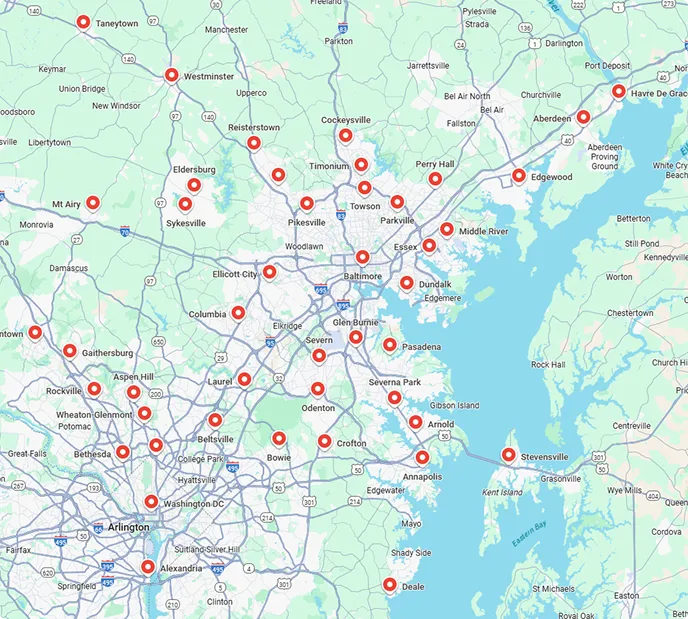
Service areas