

Tankless Water Heater Installation in Pikesville, MD
Upgrading to a tankless water heater in Pikesville, MD delivers on-demand hot water, energy savings, and valuable space savings—advantages that matter for both older rowhomes and newer suburban properties in Baltimore County. At Tario HVAC, we'll explain why tankless systems are an excellent fit for Pikesville homes, how sizing and site assessment work, what to expect during installation, and the comprehensive maintenance and post-installation support that keeps your system running efficiently.
.webp)
Why choose a tankless water heater in Pikesville, MD
- On-demand hot water only heats what you use, which reduces standby energy loss common with traditional tanks.
- Space savings are significant for homes where basements and utility closets are compact.
- Cold Maryland winters increase hot water demand; tankless systems deliver steady temperature-controlled output when sized correctly.
- For homes with hard or moderately hard water in the Baltimore area, reduced tank scale buildup lowers the long-term risks associated with storage tanks.
Common tankless water heater scenarios in Pikesville homes
- Replacing an aging storage tank to free up basement or closet space.
- Adding capacity for a home addition or remodeled kitchen/bathroom.
- Transitioning from electric tank systems to gas tankless to improve recovery during heavy winter use.
- Installing a point-of-use electric unit to serve a single bathroom or laundry area.
Site assessment and sizing guidelines
A professional site assessment ensures your new tankless system meets real household demand. Key factors evaluated:
- Peak simultaneous hot water demand (how many showers, dishwasher, laundry run at once).
- Required temperature rise (incoming groundwater temp in Pikesville is lower in winter, so needed rise is higher).
- Fuel availability and preference: natural gas, propane, or electric. Many Pikesville homes on municipal services have natural gas available but some may need propane or all-electric solutions.
- Water quality: moderate hardness near Baltimore influences scale management and may require water softening or regular descaling.
Sizing basics explained simply:
- Determine the total gallons per minute (GPM) required at peak usage.
- Calculate temperature rise: target outlet temp minus incoming groundwater temp in winter.
- Match a unit whose rated GPM at that temperature rise meets or exceeds your peak demand. Proper sizing avoids shortfalls during simultaneous use.
Electric vs gas tankless: which fits Pikesville homes
- Electric tankless: simpler venting, smaller footprint, faster installation in homes with adequate electrical service. Best for point-of-use or smaller whole-house needs. May require service panel and circuit upgrades for larger electric units.
- Gas tankless: higher flow rates and better performance for whole-house demand, especially in cold climates. Requires proper venting, combustion air, and a gas line sized for the unit. Homes with existing natural gas are often well-suited, but older gas lines may need upgrading.
Installation process
Installation follows clear steps to ensure safety and code compliance with Baltimore County regulations:
- Site preparation and final sizing confirmation.
- Permitting: submit plans and obtain necessary permits from Baltimore County or the local authority having jurisdiction. Inspections are scheduled as required.
- Fuel and electrical work: gas line sizing and hookups, or electrical service and dedicated circuit installation for electric units. Any service upgrades are coordinated with local inspectors.
- Venting and combustion air: gas units require proper venting type based on model (direct vent, concentric, or power vent). Electric units generally do not require venting.
- Mounting and plumbing connections: secure wall- or floor-mounted units, tie into existing hot and cold lines, install necessary isolation valves, pressure relief devices, and condensate drains if applicable.
- Permitted inspections and final commissioning: inspector sign-off, startup, and performance testing.
Expected timeline and cost breakdown components
Typical timeline phases:
- Site assessment and permit submission.
- Permitting and any utility coordination.
- Installation and inspections.
- Commissioning and testing.
Cost breakdown components to expect on estimates (no prices provided here):
- Equipment cost for the selected brand and model.
- Materials such as venting, gas piping, electrical components, valves, and condensate drains.
- Labor for plumbing, gas, electrical, and any required structural work.
- Permit and inspection fees required by Baltimore County.
- Additional work: gas service upgrades, panel upgrades, or water treatment installation.
- Removal and disposal of the old tank if applicable.
Brands and warranties
Common, reliable tankless brands available for Pikesville installations include major manufacturers known for durability and parts availability. Warranties typically vary by manufacturer and by component:
- Heat exchanger warranties and component warranties differ; check each model for coverage periods and conditions.
- Manufacturer registration and following recommended maintenance schedules are often required to keep warranty coverage valid.
Maintenance requirements and longevity
Proper maintenance extends system life and maintains efficiency, especially with local water conditions:
- Annual descaling or flushing to remove mineral buildup is recommended for homes with moderate hardness.
- Clean or replace inlet filters and check for leaks, corrosion, and venting integrity.
- Gas units should have combustion air and vent paths inspected; electric units should have electrical connections checked.
- Keep a record of maintenance visits to preserve warranty coverage.
Rebates and financing options
- Energy efficiency rebates and incentives are often available through federal, state, or local programs and through some utilities. Pikesville homeowners may find manufacturer rebates and utility incentives that offset upgrade costs.
- Financing options can include energy-efficiency loans, home improvement financing, or equipment leasing. Review terms and eligibility specific to your program or lender.
Post-installation testing and support
After installation the system is tested and documented:
- Functional testing of hot water output at typical fixture loads and at expected temperature rise.
- Leak and pressure testing, and for gas units, combustion and CO safety checks.
- Documentation of model, serial numbers, maintenance recommendations, and warranty registrations.
- Training on basic operation, how to run a descaling cycle if required, and troubleshooting common alerts.
Q: How long does a tankless water heater installation typically take?
A: Timeline varies by project complexity; a standard replacement often involves assessment, permit processing, and a day of on-site work for installation and testing, while homes that need gas or electrical upgrades may require additional coordination and time.
Q: Will a tankless unit handle multiple showers running at the same time?
A: It can if properly sized. During a site assessment, your installer will calculate peak simultaneous demand and recommend a model with sufficient flow rate at the needed temperature rise.
Q: Do I need a water softener with a tankless in Pikesville?
A: Many Pikesville homes have mineral content that can increase scale. A water softener or routine descaling maintenance helps protect a tankless heat exchanger and maintain efficiency.
Q: Are permits required for tankless water heater installation in Pikesville?
A: Yes. Permits and inspections through Baltimore County or the local jurisdiction are typically required to ensure code compliance for gas, venting, and electrical work.
Q: What maintenance should I plan for after installation?
A: Annual inspection and descaling for mineral buildup, periodic filter cleaning, and checks of venting and gas/electrical connections keep performance reliable and protect warranty coverage.

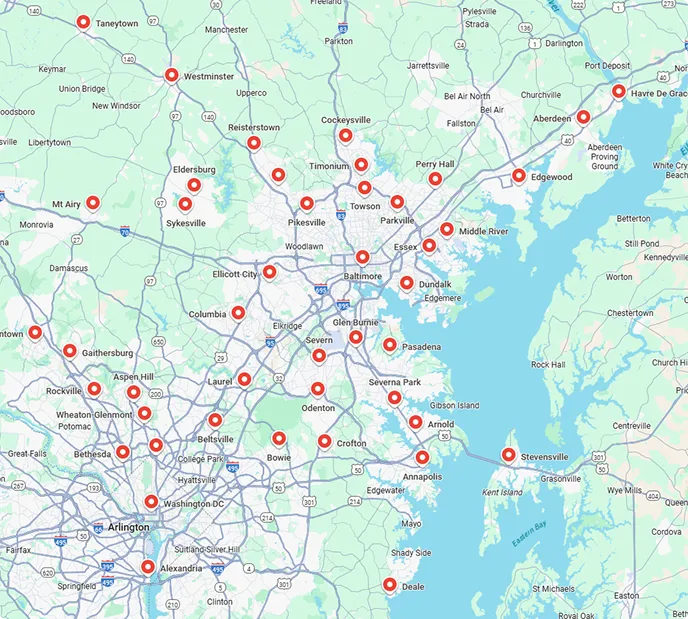
Service areas