

Tankless Water Heater Installation in Baltimore, MD
Installing a tankless water heater in Baltimore, MD converts your home from tank-based hot water delivery to on-demand performance that can lower energy use, free up space, and deliver virtually unlimited hot water when sized and installed correctly by Tario HVAC. For Baltimore homeowners dealing with aging infrastructure, narrow utility closets in rowhouses, or the desire to reduce monthly energy bills, a properly selected and installed tankless system addresses common pain points like running out of hot water, high standby losses, and limited installation space.
.webp)
Common Tankless Water Heater needs and issues in Baltimore homes
- Replacing an old storage tank in older rowhouses or renovated properties where space is tight
- Upgrading from electric tank heaters to high-efficiency gas or condensing electric tankless units to reduce energy bills
- Fixing poor hot water flow or inconsistent temperatures caused by undersized units or improper pipe runs
- Addressing venting or combustion air challenges in homes with limited exterior access
- Managing mineral scaling from local hard water that shortens unit life and reduces efficiency
- Bringing systems up to current local code and permit requirements during remodels
Site assessment: what we check before installation
A thorough site assessment prevents surprises and ensures the tankless system performs as expected in Baltimore homes. Typical checks include:
- Fuel type and supply: natural gas line capacity, meter size, or electrical panel and breaker capacity for electric models
- Venting routes and clearance: evaluating whether direct vent, power vent, or concentric venting is required and if chimney conversion is feasible
- Water quality and piping: detecting hard water risk, existing pipe material, and length of hot water runs that affect sizing
- Installation footprint: interior location options, outdoor wall-mounted units, and whether condensate drainage is accessible
- Permit and code constraints: confirming local permit needs, combustion air requirements, and electrical or gas code updates that may be required
System selection and sizing for Baltimore properties
Correctly sizing a tankless unit is the single most important decision for reliable on-demand hot water. Key considerations:
- Flow rate needs (GPM): calculate simultaneous fixture use (shower plus dishwasher, etc.) to determine required gallons per minute at the desired temperature rise
- Temperature rise: Baltimore winters require higher temperature rise than mild climates, so select a unit that can meet higher inlet-to-outlet temperature increases during cold months
- Fuel choice: natural gas is common in many Baltimore neighborhoods and offers strong performance for whole-house demand, while electric models can be suitable for smaller demand loads or homes without gas
- Hard water mitigation: in areas with mineral-rich water, choose units with scale-inhibition features or plan for water softening to protect the heat exchanger
- Venting options and installation constraints: condensing units are more efficient but require appropriate condensate management and materials compatible with acidic condensate
Step-by-step installation process
- Pre-install inspection and permit review: document site conditions, confirm required permits and code compliance, and finalize system model and accessories
- Prep and remove old equipment: safely disconnect and remove old tank or tankless unit, cap and test lines as required
- Upgrade utilities as needed: increase gas line size, add dedicated electrical circuits, or upgrade the electrical panel to support the chosen unit
- Mounting and venting: install mounting hardware, route venting according to manufacturer and code requirements, and seal wall penetrations to prevent air leakage
- Water connections and condensate: install stainless or approved piping, pressure-test water lines, and connect condensate drains for condensing units
- Commissioning: configure unit settings for local conditions, run system through full demand scenarios, check for temperature stability, gas tightness, and proper vent draft
- User orientation and documentation: provide instructions on operation, maintenance intervals, and warranty registration information
Cost and financing considerations
Costs vary depending on unit capacity, fuel type, venting complexity, and necessary utility upgrades. Factors that typically influence total investment:
- Unit type and efficiency rating
- Required gas line or electrical service upgrades
- Venting length and materials, or need for chimney modification
- Additional plumbing or water treatment to reduce scaling
- Permit and inspection fees specific to Baltimore
- Many homeowners in Baltimore factor long-term energy savings, reduced maintenance from no tank corrosion, and extended equipment life into financing decisions. Check for available local incentives or utility rebates that can improve the payback timeline. Financing and payment options may be available through third-party programs tailored to home energy improvements.
Maintenance needs and longevity in Baltimore conditions
A tankless water heater can last 15 to 25 years when properly maintained. Regular maintenance is especially important for Baltimore homes because local water mineral content and seasonal temperature swings can affect performance.
- Annual flush and descaling: remove scale buildup to maintain heat exchanger efficiency and flow rates
- Inlet filter and screen cleaning: clear debris to prevent damage and preserve water pressure
- Combustion inspection and vent check: verify burners and vent terminations are free of obstructions and operating safely
- Check pressure relief and condensate traps: ensure drainage lines are clear and traps are functioning
- Routine maintenance extends life, preserves efficiency, and protects manufacturer warranties.
Expected performance gains for Baltimore homeowners
- Energy efficiency: on-demand heating eliminates standby losses found in tanks, often reducing energy use for water heating
- Continuous hot water: properly sized systems deliver near-unlimited hot water for families with overlapping usage
- Space savings: wall-mounted units free basement or closet space in tight Baltimore rowhouses and apartments
- Longer equipment life: fewer corrosion issues mean extended service life when maintained
- Reduced risk of tank failure and water damage: no large storage tank reduces catastrophic leak potential
FAQs
Q: How do I know if my Baltimore home is a good candidate for a tankless water heater?
A: Check fuel availability, expected peak demand (GPM), venting possibilities, and whether the existing gas or electrical service can support a tankless unit. Older homes often benefit from the space savings and efficiency but may need utility upgrades.
Q: Will a tankless heater still provide hot water during Baltimore winters?
A: Yes, if sized correctly for the higher temperature rise required during cold months. Installers should factor winter inlet water temperatures into the sizing calculation to ensure reliable delivery.
Q: How often does a tankless water heater need maintenance in Baltimore?
A: Annual inspection and a descaling/flush are recommended, more frequently if your water is hard. Regular inlet filter cleaning should also be performed.
Q: Do tankless units require special venting in city rowhouses?
A: Venting must meet code and manufacturer specifications. Rowhouses with limited exterior access may require specific venting solutions such as concentric or power vents. A site assessment will reveal the best approach.
Q: What reduces the lifespan of a tankless water heater in the Baltimore area?
A: Mineral scaling from hard water, insufficient maintenance, improper sizing, and inadequate venting or combustion air are common causes of premature failure. Addressing these during installation and maintenance helps ensure longevity.

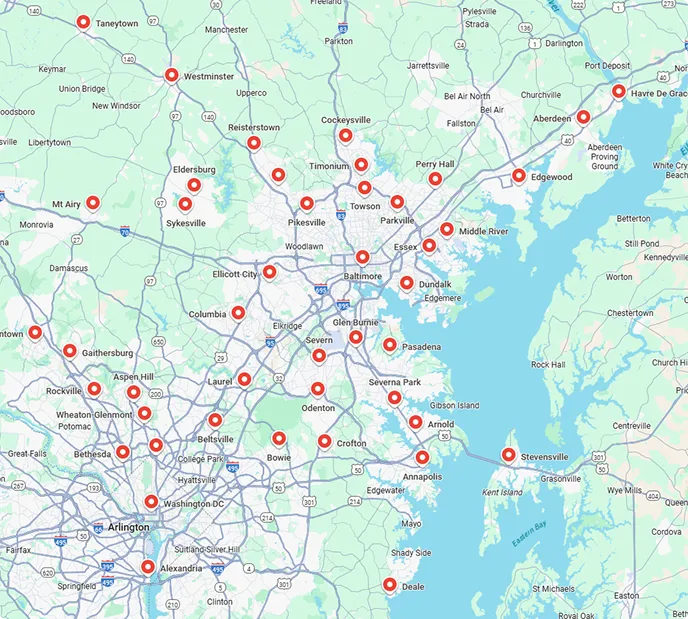
Service areas