

Whole House Humidifiers in Gaithersburg, MD
For Gaithersburg, MD homeowners, Tario HVAC helps you explore whole-house humidifier options like bypass, fan-powered, and steam, guiding you on how to size, integrate, and maintain a system with your existing HVAC. We cover every detail: installation steps, control strategies, important water quality considerations, routine maintenance, and common troubleshooting, especially for mineral buildup from local water. We'll also discuss warranties, service plans, and cost drivers, ensuring you choose a reliable solution from Tario HVAC that protects your wood, health, and comfort throughout Maryland winters. Our goal is to ensure optimal humidity balance and energy efficiency for your Maryland home.
.webp)
Whole House Humidifiers in Gaithersburg, MD
Keeping indoor humidity between 35% and 45% makes homes in Gaithersburg, MD more comfortable, healthier, and more energy efficient. Whole house humidifiers integrate with your existing HVAC system to manage humidity for the entire living space, eliminating dry air problems that are common during Maryland winters—dry skin, static electricity, wood floor shrinkage, sore throats, and increased susceptibility to respiratory irritation. This page explains the available humidification options (bypass, fan-powered, and steam), sizing and integration, the installation and maintenance process, common troubleshooting, and what to expect from warranties and service plans specifically for Gaithersburg homes.
Types of Whole House Humidifiers and which fits Gaithersburg homes
- Bypass humidifiers
- How they work: Use furnace air to evaporate water through a humidifier pad as air moves between return and supply ducts.
- Best for: Homes with a reliable furnace airflow and moderate humidification needs.
- Pros: Lower first cost, simple design, low operating noise.
- Considerations for Gaithersburg: Effective in many local homes, but performance can drop in houses with low furnace run time or limited airflow.
- Fan-powered humidifiers
- How they work: Built-in fan forces air through a water panel for faster, more consistent humidification.
- Best for: Larger homes or situations where stronger humidification is required.
- Pros: Higher output than bypass units, more consistent humidity.
- Considerations: Slightly louder, higher electrical draw, and may be better for homes that need higher humidity during cold spells.
- Steam humidifiers
- How they work: Create steam electrically and inject it directly into the supply duct or air handler.
- Best for: Very dry climates, large homes, or homes with tight building envelopes that require precise control.
- Pros: High output, precise control, can handle any furnace runtime.
- Considerations for Gaithersburg: Ideal for homes with hard water or where other systems cannot meet demand. Regular maintenance is important due to mineral buildup common with local water hardness.
Sizing: how humidification capacity is calculated
Sizing a whole house humidifier is about matching output to the home’s volume and heat loss characteristics, not just square footage. Key factors include:
- Home volume (square feet x ceiling height)
- Envelope tightness and air changes per hour (older Gaithersburg homes often have higher air leakage)
- Desired indoor relative humidity during design winter conditions
- Furnace runtime or HVAC runtime patterns
Technicians use the home’s cubic footage and design outdoor temperature to determine required gallons per day or pounds of steam per hour. Proper sizing ensures effective humidity without overworking the system or creating condensation problems on windows and exterior walls.
Integration with existing HVAC systems and controls
Whole house humidifiers typically mount to the furnace or air handler. Integration details:
- Mounting options: On return duct, supply plenum, or air handler cabinet depending on unit and system.
- Controls: Humidistats (mechanical or digital) or smart home-compatible controls that integrate with thermostats. Many modern systems adjust humidity based on outdoor temperature to prevent condensation.
- Plumbing and drainage: Require a cold water feed and a condensate or drain connection. For Gaithersburg homes with hard water, consider inline filters, water softening, or choosing a model designed for mineral management.
- Electrical: Fan-powered and steam units need electrical supply; wiring to the furnace control board is common for synced operation.
Installation process — what to expect
- Home assessment: Measure home volume, inspect HVAC equipment, evaluate duct layout, and test water quality.
- System selection: Choose bypass, fan-powered, or steam based on output needs and water quality.
- Mounting and ductwork: Install the humidifier, create necessary duct openings, and secure the unit to the furnace or plenum.
- Water and drain connections: Tap into an appropriate water line, install a shutoff valve and flexible supply tubing, and connect a drain.
- Electrical and controls: Wire the humidistat or connect to existing thermostat/controls and configure outdoor reset settings if available.
- Startup and calibration: Fill, test, and run the system; measure humidity levels and adjust setpoints for local winter conditions.
- User orientation: Explain operation, maintenance tasks, and seasonal considerations specific to Gaithersburg climate.
Routine maintenance and winterization
Regular maintenance keeps performance high and prevents issues common in Maryland homes:
- Replace pads or wicks: Frequency depends on model and water quality; hard water often shortens pad life.
- Clean mineral deposits: Fan-powered and bypass units need periodic cleaning; steam humidifiers require decalcification and cylinder replacement as recommended.
- Flush water lines: Prevents stagnation and mineral buildup.
- Winterization: For systems not used year-round, shut off water, drain the unit, and protect against freeze risk. For systems used through winter, monitor for condensation on windows and lower humidity if necessary.
Common troubleshooting — quick explanations
- Low humidity output: Check pad condition, airflow, furnace run time, water supply valve, and humidistat settings.
- Leaks: Inspect water line fittings, drain connection, and housing for cracks or loose fittings.
- Over-humidifying or condensation: Humidistat miscalibration, oversized unit, or incorrect setpoints for outdoor temperature.
- Noisy operation: Loose mounting, fan issues in fan-powered units, or scale buildup.
- Mineral buildup in steam units: Frequent in Gaithersburg due to hard water; requires routine cylinder cleaning and possible water treatment.
Expected costs and cost drivers
Rather than fixed prices, expect costs to vary based on:
- Type of system (bypass, fan-powered, steam)
- Unit capacity and brand
- Complexity of installation (duct modifications, electrical work, plumbing)
- Water treatment needs for hard water
- Local building conditions and home accessibility
Budget to mid-range units are common for typical Gaithersburg homes; steam solutions and larger capacity fan-powered systems represent higher-end options. Ongoing operating costs include water usage and replacement parts such as pads or steam cylinders.
Warranty and service plans
Manufacturer warranties differ by model and component. Common patterns:
- Limited parts warranty on humidifier body and components
- Shorter coverage on consumable items like pads or steam cylindersMaintaining the system per manufacturer guidelines is often required to keep warranties valid. Many homeowners choose annual service plans that include inspection, cleaning, pad replacement, valve checks, and system calibration to maintain performance, reduce breakdown risk, and extend equipment life.
Gaithersburg’s cold, dry winters make whole house humidification especially valuable for comfort, health, and protecting wood finishes. At the same time, local water hardness and summertime humidity patterns mean careful selection, sizing, and control strategies are important to avoid mineral issues and condensation. Properly sized and maintained whole house humidification integrated with your HVAC system delivers consistent indoor comfort through the season while minimizing the common issues homeowners face in Montgomery County.

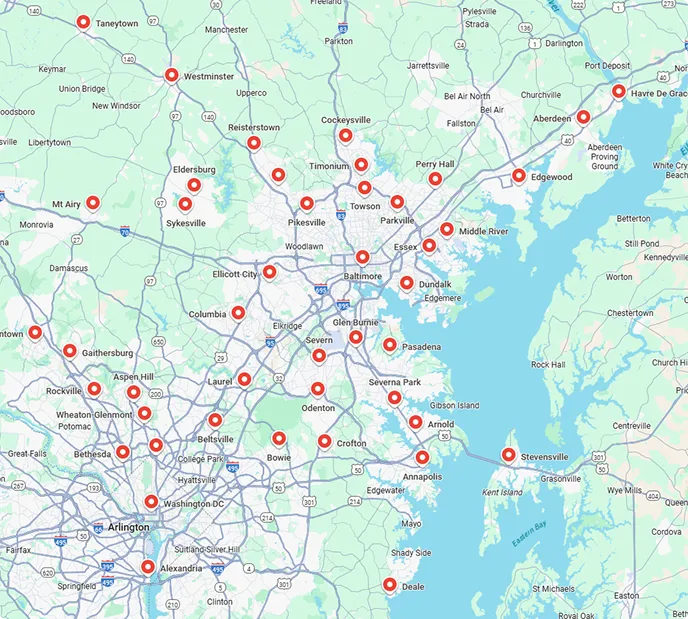
Service areas