



Whole House Dehumidifiers in Gaithersburg, MD
At Tario HVAC, we offer full-service guidance for choosing and installing a whole-house dehumidifier in Gaithersburg, MD, emphasizing the perfect balance of capacity, location, and drainage. We'll outline ducted and standalone options, typical pint-per-day ranges, and sizing considerations based on your home size and moisture sources. Our service includes installation steps, condensate management, controls integration, and energy implications, highlighting significant improvements in mold reduction, allergen control, and overall comfort. With Tario HVAC's careful planning, proper installation, and routine maintenance, you'll enjoy reliable humidity control year-round while preserving indoor air quality and building integrity.
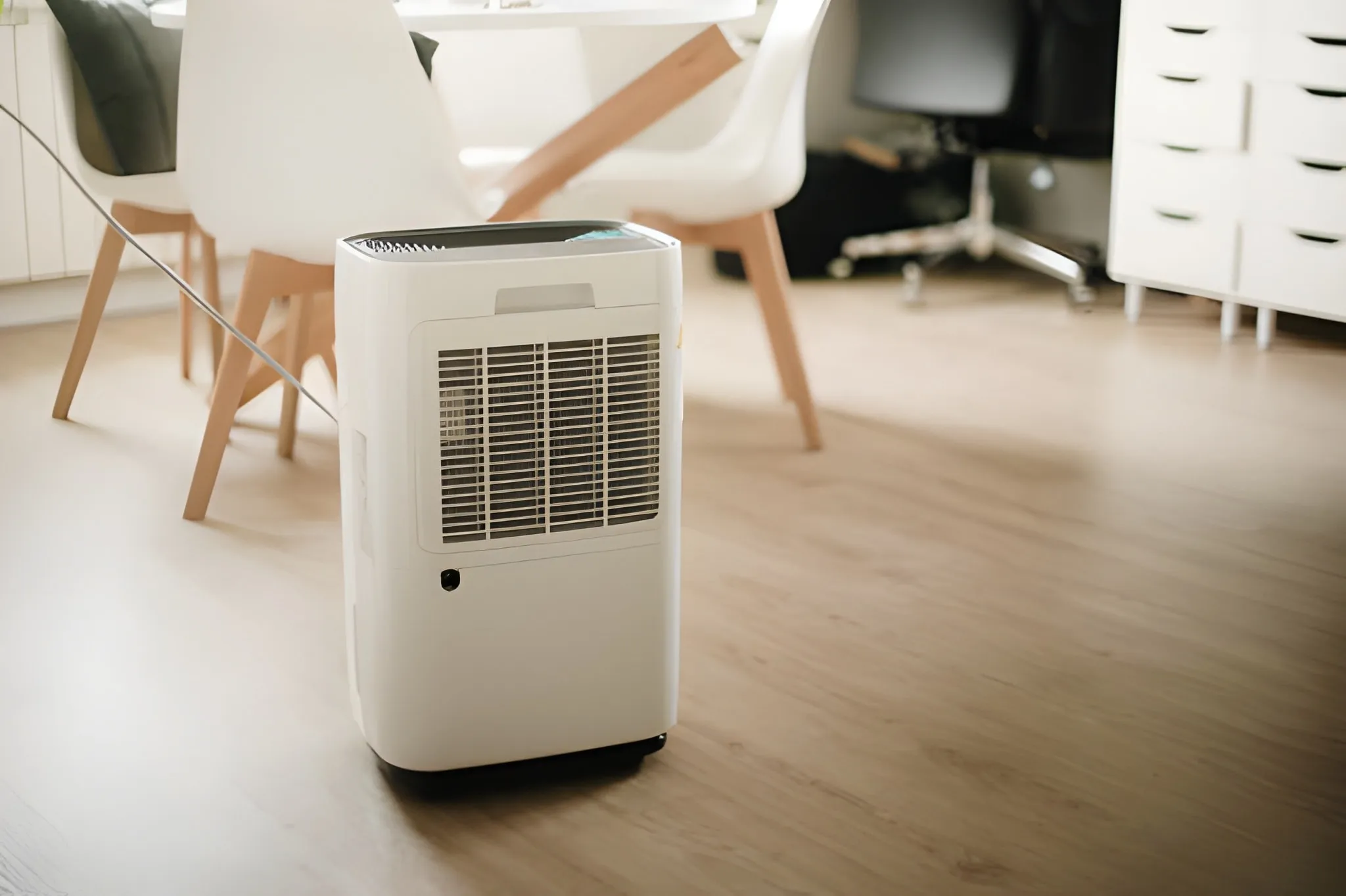
Whole House Dehumidifiers in Gaithersburg, MD
Excess indoor moisture is a common problem in Gaithersburg, MD. Hot, humid summers and older homes with basements or crawlspaces make it easy for relative humidity to climb, creating conditions that promote mold, dust mites, musty odors, and damage to wood floors and stored belongings. Whole house dehumidifiers in Gaithersburg, MD offer a targeted, energy-aware way to control humidity across every room, improving comfort and indoor air quality while protecting your home.
Why whole house dehumidification matters in Gaithersburg
- Summers are warm and humid; outdoor dew points often drive indoor humidity above recommended levels.
- Many Gaithersburg homes have basements or slab-on-grade foundations that trap moisture.
- Controlling relative humidity to roughly 45 to 50 percent year-round limits mold growth, reduces allergens, and makes conditioned air feel cooler without lowering thermostat setpoints.
Common whole house dehumidifier issues in Gaithersburg, MD
- High basement humidity and visible mold on walls or stored items.
- Persistent musty odors despite regular cleaning.
- Frequent allergy symptoms tied to dust mites and mold spores.
- Condensation on windows and HVAC ducts during warm months.
- Overworked air conditioning and high cooling bills when humidity is unmanaged.
Equipment types and how to choose
Whole house dehumidifiers broadly fall into two categories:
- Ducted whole house dehumidifiers that integrate with your central HVAC system. They remove moisture from return air and distribute drier air through existing ducts. Best for consistent, whole-home control and greater energy efficiency when sized correctly.
- Standalone whole house units that may include their own fan and duct connection points. These are often used where HVAC integration is impractical or in retrofit situations.
Capacity and performance
- Capacity is measured in pints per day (pints/day). Residential whole house units typically range from 30 to 130 pints per day.
- Sizing depends on square footage, ceiling height, moisture loads, and home characteristics. General starting points:
- Small homes or tight 1,000 to 1,500 sq ft spaces: 30 to 50 pints/day
- Medium homes 1,500 to 2,500 sq ft: 50 to 80 pints/day
- Large homes 2,500+ sq ft or homes with basements and high moisture loads: 80 to 130+ pints/day
- In Gaithersburg, because outdoor humidity and indoor loads are typically higher, choose the upper end of the capacity range or account for additional moisture sources such as frequent occupancy, many houseplants, aquariums, or drying laundry indoors.
Sizing considerations beyond square footage
- Occupant count: More occupants means more moisture from respiration and activities.
- Ventilation and air leaks: Leaky envelopes or frequent ventilation with humid outdoor air increase load.
- Basement or crawlspace presence: Unfinished basements often require higher capacity to combat soil moisture.
- HVAC cooling capacity: If the air conditioner is undersized the dehumidifier may need to handle larger loads during cooling season.
Installation locations and options
- Mechanical room or basement: Most common for easy access to drains and existing ductwork.
- Attic installs are possible but require proper insulation and service access due to heat and condensation risk.
- Near the air handler: For ducted systems, locating near the return plenum is ideal for integration and control.Key installation decisions
- Ducted vs standalone: Choose ducted units for integrated HVAC control and better whole-home distribution. Standalone units are useful for retrofit projects or supplemental needs.
- Access and serviceability: Place units where filters, coils, and pumps can be reached easily for routine maintenance.
- Noise and vibration: Consider mounting and isolation if near living spaces.
Drain and condensate management
- Gravity drain to a floor drain or condensate line is the simplest approach when elevation allows.
- Condensate pump is required when gravity drainage is not possible. Pump location and accessible check valves are important.
- Condensate lines should be insulated where condensation could form or where they pass through cold areas to prevent freezing.
- Provide an accessible cleanout and check the line slope for proper drainage during installation.
Controls and integration
- Dedicated humidistat allows setting target relative humidity (commonly 45 to 50 percent).
- Integration with existing HVAC thermostats and control systems allows coordinated operation to avoid conflicts with AC or ventilation.
- Variable speed compressors and smart controls improve efficiency by matching output to current humidity load.
Energy considerations
- Whole house dehumidifiers use electricity; efficiency varies by model and by whether the unit runs with the HVAC fan.
- Integrated ducted units typically use less energy per pint of moisture removed compared with portable condensers when properly matched to the home.
- Dehumidifying to a comfortable level can reduce air conditioner runtime and perceived temperature, which can offset some operating cost.
- Look for units with efficient compressors, variable speed fans, and good airflow design when prioritizing operating cost.
Maintenance tasks
- Replace or clean intake filters monthly to maintain airflow.
- Inspect and clean coils annually to prevent efficiency loss and microbial buildup.
- Check condensate lines and pumps quarterly for clogs and proper operation.
- Verify humidistat calibration and control integration once per heating or cooling season.
- Have a qualified technician perform annual inspections for refrigerant levels, electrical connections, and overall performance.
Typical outcomes for Gaithersburg homes
- Reduced mold and mildew risk, especially in basements and bathrooms.
- Fewer allergy triggers from dust mites and mold spores.
- Less condensation on windows and structural elements, protecting paint, woodwork, and finishes.
- Improved comfort with lower perceived temperature and less sticky air, often enabling slightly higher thermostat setpoints.
- More consistent indoor air quality across the entire home rather than spot treatment with portable units.
Diagnostic and installation process overview
- Baseline assessment: Measure whole-home relative humidity, inspect moisture sources, and evaluate HVAC capacity.
- Load calculation: Determine moisture load based on area, occupants, and building features to select appropriate pints/day capacity.
- Equipment selection: Choose ducted or standalone unit, controls, and condensate management suited to home layout and local climate.
- Installation: Mount unit, connect to ducts or supply/return, install drain or pump, wire controls, and insulate lines as needed.
- Commissioning: Balance airflow, set humidistat, verify condensate removal, and confirm system meets design humidity targets.
Whole house dehumidifiers in Gaithersburg, MD provide a long-term solution to persistent moisture problems, improving indoor air quality, protecting structures, and increasing year-round comfort. Proper sizing, correct installation location, effective condensate management, and routine maintenance are the keys to reliable performance and energy-efficient operation in the Mid Atlantic climate.

Service areas
