


Whole House Dehumidifiers in Pikesville, MD
In Pikesville, MD, whole-house dehumidification from Tario HVAC directly addresses those frustrating region-specific humidity challenges. We provide continuous, energy-efficient moisture control that makes a real difference. If your home struggles with recurring basement dampness, musty odors, or humidity-related health concerns, our system-level approach delivers consistent comfort, noticeably better indoor air quality, and long-term protection for your property.
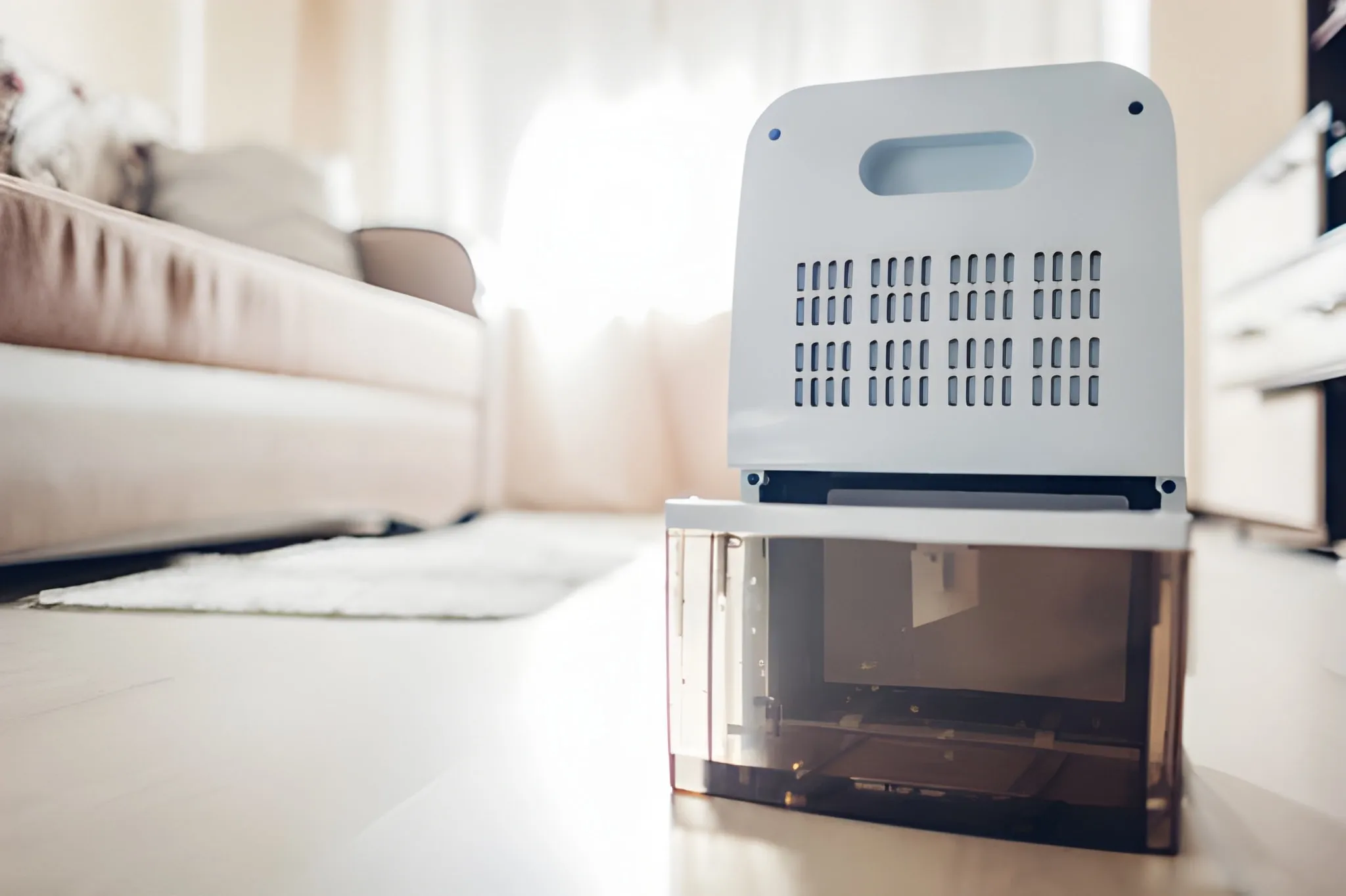
Whole House Dehumidifiers in Pikesville, MD
Indoor humidity is one of the most overlooked threats to home comfort and building health in Pikesville, MD. Summers in the Baltimore metropolitan area bring prolonged high humidity that can leave basements musty, drywall and trim vulnerable to swelling, and occupants more susceptible to allergy and respiratory irritation. A properly sized and installed whole house dehumidifier protects your home year-round by controlling moisture at the system level, preventing mold growth, reducing HVAC load, and improving indoor air quality.
Signs you need a whole house dehumidifier in Pikesville homes
- Persistent musty or mildew odor in basements, closets, or crawlspaces despite cleaning.
- Condensation on windows, pipes, or basement walls during warm months.
- Visible mold or mildew on walls, trim, or stored items.
- Allergy or asthma symptoms that worsen at home.
- Peeling paint, warped wood floors, or rust on appliances and tools.
- HVAC running constantly to maintain comfort — high humidity makes air feel warmer.
If you see several of these signs in your Pikesville house, especially in older homes with limited ventilation or slab-on-grade foundations, whole-house dehumidification is often the most effective solution.
Portable vs whole-home dehumidifiers: key differences
- Portable dehumidifiers
- Best for single rooms or isolated spaces like finished basements.
- Easier to move but require frequent emptying unless connected to a drain.
- Less efficient for long-term, whole-home moisture control and can create uneven humidity.
- Whole-house dehumidifiers
- Integrate with your HVAC system to control humidity across all living spaces.
- Drain continuously, use central airflow for even distribution, and maintain stable setpoints.
- More energy efficient for whole-home applications and reduce strain on air conditioning systems.
Sizing for basements and whole houses
Proper sizing is critical. Undersized equipment will run continuously and fail to control humidity; oversized equipment can short-cycle and be inefficient. Sizing depends on:
- Square footage and ceiling height.
- Baseline moisture load (finished basement, pool, frequent laundry, or wet crawlspace increase load).
- Local climate: Pikesville’s humid summers mean design should account for higher outdoor dew points and extended dehumidification periods.
For basement-only solutions, capacity is matched to the basement’s cubic footage and how damp it gets. For whole-house systems, technicians use the home’s conditioned volume, duct capacity, and typical occupant/ventilation moisture loads to select a unit rated in pints per day or by AHRI dehumidification performance. Targeting an indoor relative humidity around 45% is common for comfort and mold prevention in this region.
Integration with the HVAC system
Whole-house dehumidifiers can be installed in two primary ways:
- Bypass or duct-mounted units that connect to the return and supply ducts, using the furnace blower for distribution.
- Coil-mounted models that work in tandem with the air handler, removing moisture at the evaporator level and using HVAC airflow to move drier air.
A properly integrated system includes a humidity control (humidistat) that communicates with the dehumidifier and, if needed, the HVAC system to balance temperature and humidity. This eliminates the common issue where dehumidifying makes air feel cool and the thermostat calls for heat, creating cycling inefficiencies.
Condensate drainage and electrical requirements
- Drainage: Whole-house units usually require a permanent drain connection. Options include gravity drains to a floor drain, condensate pump for uphill routing, or connection to a condensate disposal line. Drain line slope and trap location must meet local code to prevent sewer gas.
- Electrical: Many whole-house dehumidifiers run on standard 120V dedicated circuits, while larger models may need 240V and a dedicated breaker. Installations often require proper grounding, a disconnect if mounted away from service access, and safe routing for condensate lines. Float switches or secondary drain pans protect against overflow and water damage.
Energy efficiency considerations
Modern whole-house dehumidifiers are far more efficient than running multiple portable units. Look for models with:
- Variable-speed or ECM motors for tighter humidity control and lower electricity use.
- High latent removal efficiency (pints removed per kWh) especially important during long humid seasons in Pikesville.
- Controls that integrate with the HVAC system to avoid unnecessary heating or cooling cycles.
Energy-conscious operation includes setting the humidistat to the lowest comfortable level (often 45%) and ensuring the home envelope is sealed to reduce infiltration of humid outdoor air.
Mold and moisture prevention benefits
Controlling relative humidity prevents many moisture-related problems:
- Inhibits mold and mildew growth on building materials and stored items.
- Protects wood floors, cabinets, and furniture from warping and decay.
- Reduces dust mite populations and allergen loads, improving indoor air quality.
- Lowers perceived temperature, helping reduce HVAC runtime and improving seasonal comfort in Pikesville’s humid climate.
Installation and maintenance procedures
Installation typically follows these steps:
- Home assessment: measure volumes, inspect ductwork, identify drain and electrical access, and note moisture sources.
- Equipment selection and placement: position where airflow and drainage are optimal, often near the air handler or in a conditioned mechanical room.
- Mechanical hookup: connect to ducts or coil, route condensate to an appropriate drain or pump, and make electrical connections per code.
- Commissioning: set humidistat, verify airflow and drainage, and demonstrate controls.
Ongoing maintenance keeps performance high:
- Clean or replace filters monthly to quarterly.
- Inspect condensate lines and traps monthly; flush as needed to prevent clogging.
- Clean coils and check refrigerant annually.
- Verify humidistat calibration and test float switches and pumps yearly.
Consistent maintenance extends lifespan and protects warranty coverage.
Warranties and long-term value
Whole-house dehumidifiers typically include manufacturer warranties covering parts and, for some models, extended compressor protection. Warranty terms vary, so review what is included for parts, compressor, and labor coverage. Investing in a quality installation and following recommended maintenance preserves warranty eligibility and maximizes the system’s return by reducing mold remediation risk, protecting home materials, and lowering HVAC stress.

Service areas