

Whole House Dehumidifiers in Baltimore, MD
Tario HVAC demonstrates why whole-house dehumidification is crucial in Baltimore, outlining various system types, expert sizing guidance, and precise installation steps. We handle seamless integration with your existing heating and cooling system, provide optimal drainage options, and ensure thorough commissioning to prevent short cycling and poor humidity control. You'll gain insights into energy efficiency considerations, essential maintenance routines, and the significant indoor air quality improvements you can expect, such as stable relative humidity and a reduced mold risk. Tario HVAC offers practical guidance for selecting the right unit size, ideal placement, and ongoing maintenance to protect your home's materials and enhance your comfort.
.jpg)
Whole House Dehumidifiers in Baltimore, MD
High indoor humidity is one of the most common comfort and health complaints in Baltimore homes. Whole house dehumidifiers in Baltimore, MD provide a reliable, energy-smart way to control moisture across every room, reducing mold and mildew risk, protecting wood and finishes, and making your HVAC system more efficient. This page explains why whole-house dehumidification matters in Baltimore, how systems are sized and installed, what integration and drainage options look like, energy and maintenance considerations, and the measurable indoor air quality improvements you can expect.
Why whole house dehumidification matters in Baltimore
Baltimore experiences hot, humid summers and year-round moisture challenges from proximity to the Chesapeake Bay, urban runoff, and older masonry foundations that retain dampness. Common outcomes of uncontrolled humidity include:
- Mold and mildew growth in basements, bathrooms, and crawl spaces
- Musty odors and allergen growth, aggravating asthma and allergies
- Condensation on windows, causing paint and trim damage
- Warped hardwood floors and swollen doors in older rowhouses
- Increased cooling costs as air conditioners work harder to remove moisture
A whole-house dehumidifier treats the entire conditioned space, not just a single room, which is essential for continuous control and preventing moisture moving from one area to another.
Common whole house dehumidifier issues in Baltimore homes
Homeowners looking for solutions should be aware of typical problems that lead to poor performance:
- Undersized units that cannot keep up with Baltimore summer humidity loads
- Improper integration with existing HVAC leading to short cycling or bypassed airflow
- Inadequate condensate drainage causing backups or leaks in basements
- Poor sensor placement that gives inaccurate relative humidity readings
- Infrequent maintenance causing reduced capacity and higher energy use
Identifying these issues early during system selection and installation ensures consistent performance.
System types and sizing for Baltimore homes
Whole-house dehumidifiers come in several configurations. Choosing the right type depends on home size, construction, and humidity sources.
System types
- Ducted integrated units: Installed in the HVAC ductwork or plenum and treat air circulated by your furnace or air handler.
- Bypass units: Use the central air handler to move air through the dehumidifier via a bypass duct.
- Standalone whole-house units: Mounted in basements or mechanical rooms and connected to supply and return ducts.
Sizing guidanceSizing is based on square footage, building envelope, and local humidity loads. Typical guidance for Baltimore conditions:
- Up to 1,500 sq ft: 50 to 70 pints per day capacity
- 1,500 to 2,500 sq ft: 70 to 90 pints per day capacity
- 2,500 to 4,000+ sq ft: 90 to 140+ pints per day capacity
Homes with high moisture sources such as finished basements, indoor pools, frequent cooking, or chronic condensation may need a higher capacity than square footage alone suggests. A professional load assessment that considers local climate, occupancy, and building materials yields the most accurate sizing.
Integration with existing HVAC and drainage options
Integration
- Proper integration with your furnace or air handler ensures continuous circulation and efficient dehumidification. Many modern dehumidifiers modulate based on humidity demand and can communicate with HVAC controls or a smart humidistat.
- Avoid placing the unit downstream of the evaporator coil in a way that causes icing or bypass inefficiencies. A qualified installer will determine the best duct connections and controls to prevent short cycling and ensure even humidity control.
Drainage options
- Gravity drain to a floor drain or utility sink where available
- Condensate pump to lift water to a nearby drain or exterior outlet when gravity is not possible
- Connection to a dedicated sump or to the HVAC condensate line, ensuring proper backflow prevention and code compliance
Baltimore basements often require pumped drainage due to slab levels and floor drain locations. Ensure condensate plumbing is sloped correctly and equipped with accessible cleanouts.
Installation and commissioning steps
A thorough installation includes:
- Site assessment and humidity load calculation specific to Baltimore climate and the home structure
- Selecting proper unit size and location with adequate clearance and airflow
- Duct connections or bypass installation following manufacturer guidelines
- Electrical hookup to a dedicated circuit and proper disconnects
- Condensate plumbing with trap and pump if required
- Control installation: wall-mounted humidistat or integration with HVAC controls
- Commissioning: verify airflow, run through full operating cycles, test condensate removal, calibrate humidistat, and confirm target relative humidity setpoint
Commissioning is critical to prevent common problems like short cycling, poor airflow, and inconsistent humidity control.
Energy efficiency considerations
Energy efficiency matters for long-term cost and environmental impact. To maximize efficiency:
- Choose Energy Star rated or high-efficiency models with variable-speed fans and efficient compressors
- Look for units with automatic humidity control and integrated defrost for year-round operation
- Properly sized systems run longer at efficient levels instead of short, wasteful cycles
- Coordinating dehumidification with cooling can reduce overall AC runtime because drier air feels cooler, allowing slightly higher thermostat setpoints without losing comfort
Well-designed whole-house dehumidification can lower cooling costs in Baltimore summers while improving comfort.
Maintenance, filter and coil care
Regular maintenance preserves capacity and prevents failures:
- Replace or clean the dehumidifier filter every 3 months, or as the manufacturer recommends; homes with pets or heavy dust may need more frequent attention
- Inspect and clean coils annually to prevent reduced heat transfer and icing
- Flush condensate lines and check pump operation seasonally, especially before the humid season
- Verify humidistat calibration and sensor placement to avoid false readings
- Schedule an annual service check to test electrical connections, refrigerant levels if applicable, and overall performance
Routine maintenance extends equipment life and keeps indoor humidity in the target range.
Expected indoor air quality improvements
When properly selected and installed for Baltimore homes, whole-house dehumidifiers deliver measurable IAQ benefits:
- Stable relative humidity in the recommended 40 to 50 percent range that minimizes mold growth and dust mite populations
- Reduced musty odors and fewer visible mold spots on walls, ceilings, and in basements
- Less condensation on windows and framed openings, protecting paint and trim
- Better perceived comfort that may allow higher thermostat setpoints for energy savings
- Protection for wooden floors, instruments, and furniture from moisture-related damage
Homes with chronic basement dampness or multiple high-humidity areas often see the greatest health and property protection benefits.
Final notes on choosing the right solution in Baltimore
Baltimore’s humid climate and diverse housing stock make a site-specific approach essential. Accurate sizing, correct integration with existing HVAC, and reliable drainage solutions are the foundation of a successful whole house dehumidifier installation. With the right model and regular maintenance, homeowners can expect improved comfort, lower mold risk, and protected building materials throughout the year.

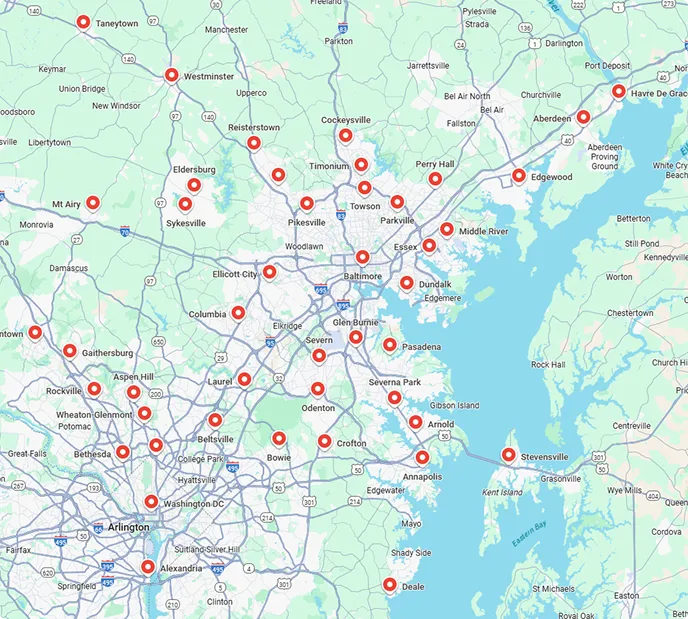
Service areas