

Whole House Dehumidifiers in Aspen Hill, MD
Tario HVAC's whole-house dehumidifiers in Aspen Hill, MD provide centralized moisture control that actively protects your basements, finishes, and all living spaces. We'll review ducted refrigerant, desiccant, and integrated coil options, discussing typical capacities and the key factors that influence your system selection. Tario HVAC covers comprehensive diagnostic approaches, various installation and drainage choices, seamless HVAC integration, and user-friendly controls. We also provide recommended humidity targets and seasonal guidance, focusing on energy efficiency, crucial maintenance, and the long-term benefits for your home's durability, indoor air quality, and comfort, especially during humid summers. Let Tario HVAC help you choose the ideal system for your specific climate needs.
.jpg)
Whole House Dehumidifiers in Aspen Hill, MD
Keeping indoor humidity in a healthy range is one of the most effective ways to prevent mold, protect finishes, and improve comfort in Aspen Hill, MD homes. Whole house dehumidifiers provide continuous, centralized moisture control for basements, finished living spaces, and entire HVAC-served homes. This page explains system types and capacities, common moisture problems in Aspen Hill, installation and drain options, HVAC integration and controls, energy considerations, recommended setpoints, and routine maintenance to ensure reliable humidity reduction.
Why whole house dehumidification matters in Aspen Hill, MD
Aspen Hill experiences hot, humid summers and frequent storm events that raise indoor moisture levels. Many homes have basements or crawl spaces with below-grade humidity, older building envelopes with air leaks, and high indoor moisture from cooking and showers. Excess humidity causes:
- Mold and mildew growth in basements, closets, and behind walls
- Musty odors and allergy triggers from dust mites and spores
- Condensation on windows and pipes that can lead to rot and corrosion
- Degraded wood floors, furniture, and paintA whole house dehumidifier addresses these problems more effectively and economically than multiple portable units.
Common whole house dehumidifier issues in Aspen Hill homes
- Persistent basement dampness or musty smell despite running the AC
- Condensation on windows, especially in spring and summer
- HVAC short-cycling because the air is cooled but remains humid
- High indoor relative humidity (above 60%) in finished basements or first-floor living areas
- Mold visible on drywall or stored items in basements
Types of whole house dehumidifiers and capacities
- Ducted refrigerant dehumidifiers: Installed in the return or supply plenum of your HVAC system. Common capacities range from about 30 to 130+ pints per day (PPD), rated at standard test conditions. Most single-family Aspen Hill homes use 50 to 90 PPD models; larger or very damp basements may need 90 to 130 PPD.
- Desiccant dehumidifiers: Best for lower temperature spaces or specialty applications; they remove moisture using a drying medium and are less common for standard residential whole-house installations.
- Integrated HVAC coil dehumidification: Some systems add a separate dehumidification coil or use advanced variable-speed systems with dehumidification modes. These options provide precise control and reduce simultaneous cooling energy.
System selection should be based on actual humidity load, house size, basement condition, and typical summertime outdoor humidity in Aspen Hill.
Diagnosing humidity problems
A proper assessment includes:
- Measuring relative humidity and temperature in multiple zones (basement, main living, bedrooms)
- Checking for sources of moisture: ground water intrusion, leaky plumbing, roof or wall leaks, poor ventilation
- Inspecting insulation, vapor barriers in crawlspaces, and HVAC duct insulation
- Evaluating HVAC capacity and current humidity control behavior
This diagnostic step ensures the selected unit capacity and installation location will resolve the problem rather than simply masking symptoms.
Installation and drain solutions
Whole house dehumidifiers are typically mounted in the furnace or air handler closet, utility room, or basement mechanical area. Drain options include:
- Gravity drain to a floor drain or standpipe: preferred where elevation allows
- Condensate pump: required when a gravity drain is not possible; pumps move condensate to a household drain or outside
- Tying into HVAC condensate drain: common when dehumidifier is near existing drain plumbing; includes trap, float switch, and backflow prevention
- Outdoors discharge: possible if local codes permit and freezing is addressed
Electrical requirements vary by model; many require a dedicated 120V or 240V circuit. Proper installation includes a condensate safety switch, accessible service clearance, and insulated condensate lines to prevent sweating.
Integration with HVAC systems and controls
Best performance comes from coordinating the dehumidifier with your central HVAC:
- Installation in the return plenum uses the furnace blower to distribute dehumidified air.
- Dedicated dehumidification controls or a humidistat maintain target humidity independent of thermostat cooling cycles.
- Advanced systems support a “dehum call” from a thermostat to prioritize moisture removal without overcooling the space.
- Integration lets the dehumidifier run during off-peak hours or when cooling demand is low, improving comfort and efficiency.
Smart humidistats and some modern thermostats can log humidity trends and allow zone-specific control. For homes with multiple HVAC zones, consider zoning implications to avoid over-dehumidifying one area while leaving another humid.
Recommended setpoints and seasonal guidance
- Summer target: 45% relative humidity is a practical balance for preventing mold and dust mites while avoiding over-dry air.
- Acceptable range: 40% to 50% in most living spaces. Bedrooms can be at the lower end for comfort.
- Avoid running RH below 30% long term to prevent dry skin and damage to wood finishes.
- In shoulder seasons, balance ventilation needs with dehumidification. Bringing in humid outdoor air may require occasional dehumidifier operation even when heating or cooling is off.
Energy considerations and efficiency
- Dehumidifiers consume electricity, but modern whole-house models with efficient compressors, variable-speed fans, and EC motors reduce operating costs.
- Look at the energy factor or integrated energy efficiency ratings when choosing equipment. Units that allow on-demand dehumidification reduce run time and energy use.
- Properly sized equipment reduces unnecessary runtime. Oversized units cycle frequently and waste energy.
- Combining dehumidification with efficient HVAC operation prevents the air conditioner from running continuously just to remove moisture.
- Consider ventilation solutions like ERV/HRV to control fresh air intake without excessive humidity load during muggy months.
Routine maintenance to ensure reliable performance
Maintaining a whole house dehumidifier keeps it efficient and prolongs lifespan:
- Check and clean or replace the air filter every 1-3 months.
- Inspect the condensate drain line and trap for clogs; flush annually.
- Test condensate pump and float switches semiannually.
- Clean coils and the condensate pan annually to prevent mold growth.
- Verify electrical connections and controls during annual HVAC service.
- Check insulation on ducts and condensate lines to prevent sweating and energy loss.
Final considerations for Aspen Hill homeowners
Whole house dehumidification is a long-term investment in home durability, indoor air quality, and comfort. For Aspen Hill homes with humid summers, finished basements, or persistent musty odors, selecting the right type and capacity, ensuring proper drain routing, and integrating controls with your HVAC system will deliver consistent moisture control. Regular maintenance keeps the system operating efficiently and prevents surprises during the peak humidity months. Properly designed and installed, a whole house dehumidifier protects your home from mold, preserves finishes, and improves livability year after year.

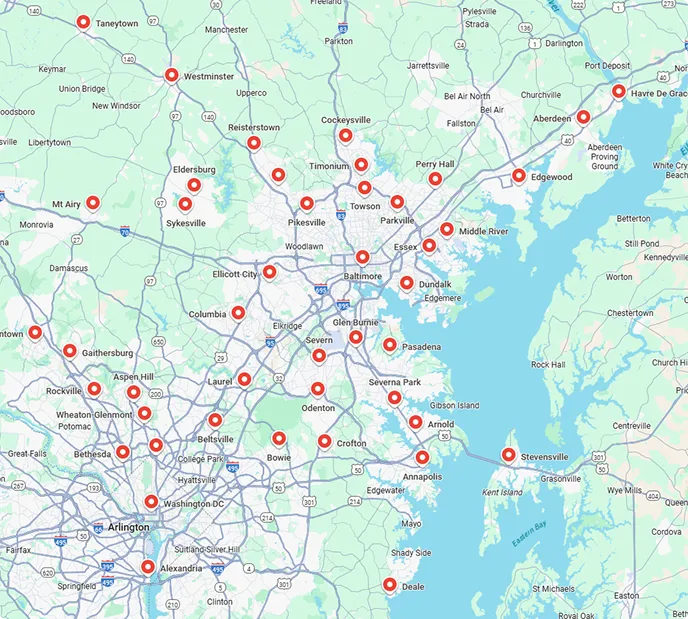
Service areas