


Ventilation in Aspen Hill, MD
Aspen Hill, MD homeowners can enjoy healthier indoor air and more durable homes with carefully designed and installed whole-home ventilation from Tario HVAC. We'll show you when to opt for ERV, HRV, exhaust, or supply systems, explaining how to size them based on your home's volume and occupancy, and how to integrate ventilation seamlessly with your existing ductwork. Our expertise covers everything from installation steps, balancing, and controls, to critical energy and moisture considerations, ongoing maintenance, and ensuring code compliance. We emphasize how balanced ventilation effectively reduces mold, allergens, and odors, all while boosting the efficiency of your heating and cooling systems.
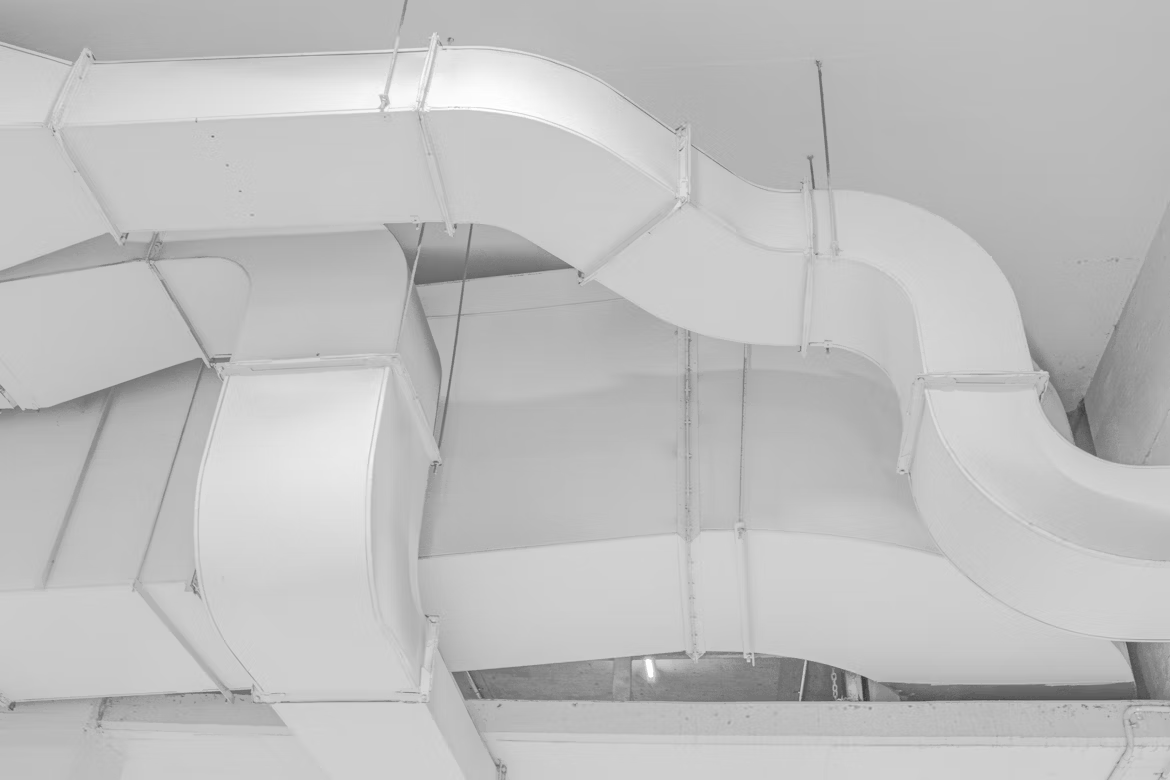
Ventilation in Aspen Hill, MD
Proper whole-home ventilation is one of the most effective ways to control indoor air quality, manage moisture, and protect building durability in Aspen Hill, MD. With humid summers, cold winters, and many homes that have been recently air-sealed or retrofitted, controlled mechanical ventilation prevents mold, reduces allergens, and keeps combustion appliances operating safely. Below is a clear, practical guide to whole-home ventilation types, sizing, installation, balancing, energy and moisture tradeoffs, maintenance, and code/health compliance tailored to Aspen Hill homes.
Why whole-home ventilation matters in Aspen Hill
- Aspen Hill’s summer humidity and pollen seasons increase indoor allergen and moisture loads when outdoor air is brought in uncontrolled.
- Winter weather and energy retrofits make homes tighter; without added ventilation, indoor pollutants concentrate.
- Basements and crawlspaces common to the area can contribute elevated moisture and VOCs, requiring balanced ventilation strategies.
- Proper ventilation reduces health risks from mold, dust, and indoor-generated contaminants while protecting finishes and insulation.
Common ventilation issues in Aspen Hill homes
- Inadequate fresh air after air sealing or insulation upgrades.
- High indoor humidity in summer causing condensation, mold, and musty basements.
- Odors and VOC buildup from cleaning products, paints, and building materials.
- Backdrafting or combustion safety concerns in homes with older atmospheric gas appliances.
- Uneven ventilation: some rooms feel stale while others are over-ventilated.
Types of whole-home systems (what they do and when they work best)
- ERV (Energy Recovery Ventilator): Transfers heat and some moisture between incoming and outgoing air. Good for mixed climates like Maryland because it conserves energy while moderating humidity. Often preferred where both heating and humid summers are factors.
- HRV (Heat Recovery Ventilator): Transfers sensible heat only. Best in colder, dry climates where moisture transfer is not desired. In Aspen Hill, HRV can work in homes that experience very dry winter seasons or where separate dehumidification is in place.
- Exhaust ventilation: Uses exhaust fans to pull air out of wet rooms (bathrooms, kitchens). Simple and lower-cost but can create negative pressure and draw pollutants from crawlspaces or combustion appliances if not designed carefully.
- Supply ventilation: Fans introduce filtered, conditioned outside air into the living space, often using the HVAC return to distribute. Good for positive-pressure control and filtering pollen and particulates before distribution.
How systems are sized and integrated with existing ductwork
- Sizing is based on house volume, occupancy, and standards like ASHRAE 62.2 (the common method used to determine required ventilation rates). A practical approach is: required CFM = (floor area x CFM per 1000 sq ft) + (CFM per occupant), producing continuous or intermittent ventilation rates.
- Typical whole-home ventilation rates vary; small homes may need 40-80 CFM continuous, larger homes more. Exact numbers require a calculation using house size and occupancy.
- Integration options:
- Connect intake to the HVAC return plenum to use existing ductwork for distribution, with appropriate controls and filtration.
- Use dedicated ductwork with supply and exhaust terminations to avoid short-circuiting and ensure room-by-room distribution.
- Inline duct fans or central units can be added where existing ducts cannot be repurposed.
- Placement and duct routing matter: intakes should be away from exhaust outlets, dryer vents, or areas that could pull in contaminated air. Roof or sidewall terminations require clearance and weather protection.
Typical installation process
- Assessment: Home inspection for envelope tightness, existing ducts, combustion appliances, and moisture sources.
- Sizing and selection: Calculate ventilation needs and choose ERV, HRV, supply, or exhaust approach based on climate, moisture, and existing systems.
- Ductwork layout: Plan intake and exhaust locations, run ducts or tie to return plenum, and specify filters and backflow prevention where needed.
- Install unit and controls: Mount unit in conditioned or protected space, connect ducts, drain lines, and condensate management if required. Install control panel and sensors.
- Commissioning: Measure airflow, balance supply and exhaust, verify pressure relationships, and set control strategies. Provide documentation on maintenance and filters.
Balancing, controls, and smart ventilation
- Balancing ensures incoming and outgoing air flows match the design to avoid unwanted depressurization or over-pressurization. Commissioning often uses flow hoods, pitot tubes, or calibrated fans.
- Controls options:
- Continuous low-flow or intermittent boost schedules for bathrooms/kitchens.
- Demand-controlled ventilation using CO2, humidity, or VOC sensors to increase ventilation when needed and conserve energy when not.
- Integration with HVAC for staged operation, dehumidification override, or seasonal modes.
- Proper controls improve comfort, reduce energy use, and limit unnecessary moisture transfer.
Energy and moisture considerations
- ERV vs HRV: In Aspen Hill’s mixed climate, ERVs often provide the best balance by recovering both heat and some moisture, which helps in cold winters and humid summers. HRVs do not transfer moisture and can increase humidity load in summer if outside air is humid.
- Running ventilation continuously increases energy use unless heat/energy recovery is used. Recovery ventilators offset much of that by exchanging heat between outgoing and incoming air.
- In summer, ventilation without dehumidification can introduce moisture. Combining an ERV with a properly sized central AC or whole-house dehumidifier is often necessary.
- Avoid creating negative pressure in homes with atmospheric appliances to prevent backdrafting of combustion gases. Make-up air provisions and safety testing are essential.
Maintenance and long-term performance
- Routine tasks:
- Replace or clean filters every 3 to 12 months depending on filter type and local pollen/particulate loads.
- Inspect and clean the heat/energy exchange core annually or per manufacturer recommendations.
- Check fans, condensate drains, and damper operation seasonally.
- Verify sensor calibration and control logic for demand ventilation periodically.
- Proper maintenance preserves energy performance, prevents odors, and extends equipment life.
Code and health compliance
- Ventilation should meet local building codes and common standards like ASHRAE 62.2; local inspectors in Montgomery County may reference the Maryland Residential Code or IECC for airflow and combustion safety requirements.
- Designs must avoid creating unsafe pressure differences that could interfere with combustion appliance venting, and must address radon and other local air quality concerns when present.
- For homes with known radon issues, mechanical ventilation can be part of a mitigation strategy but should be coordinated with radon mitigation professionals.
Properly designed and installed whole-home ventilation protects indoor air quality, reduces allergy and mold problems, stabilizes indoor humidity, and helps HVAC systems run more efficiently. For Aspen Hill residents facing humid summers, cold winters, and older or recently-sealed homes, a balanced ventilation solution such as an ERV with appropriate controls and maintenance offers the best combination of comfort, durability, and energy performance.

Service areas