

Whole House Air Purifiers in Essex, MD
Whole-house air purifiers from Tario HVAC for Essex, MD homes offer integrated filtration, adsorption, and microbial control to effectively treat air across your entire house. We cover common indoor pollutants specific to the region, explaining powerful in-duct technologies like HEPA, UV, activated carbon, and electrostatic options, and detailing essential installation considerations when working with your HVAC system. We provide accurate sizing guidance, helpful diagnostic checklists, and comprehensive maintenance schedules, including essential filter replacements and UV upkeep. And we also outline important warranty considerations and the significant benefits for allergy and asthma sufferers when these systems are paired with proper humidity control and regular service.
Whole House Air Purifiers in Essex, MD
Keeping indoor air clean is essential for health and comfort, especially for homes in Essex, MD where humid summers, cold winters, seasonal pollen from the Chesapeake Bay corridor, and nearby traffic can increase indoor pollutants. Whole house air purifiers that integrate with your HVAC system treat the air for the entire home, reducing allergens, odors, VOCs, and microbial contaminants. This page explains the technologies, how systems are sized and installed in ducted systems, expected performance, maintenance schedules, and warranty/service considerations relevant to Essex homeowners.
Common indoor pollutants and why Essex, MD homes need whole-home air purification
- Seasonal pollen and outdoor allergens driven by regional vegetation and proximity to the bay.
- Mold spores and microbial growth encouraged by summer humidity and basements or poorly ventilated crawlspaces.
- Fine particulate matter (PM2.5 and PM10) from nearby roads, commuter traffic, and winter combustion (heating systems).
- Volatile organic compounds (VOCs) from paints, cleaning products, building materials, and new furnishings.
- Pet dander, dust mite allergen, and household odors that accumulate in ducted systems.
Whole-house air purification addresses these problems consistently throughout the home, avoiding the room-by-room limitations of portable units.
Whole-house air purifier technologies explained
Understanding each technology helps match the right system to your home and indoor air concerns.
- HEPA (High Efficiency Particulate Air)
- Captures particles down to 0.3 microns with high efficiency (typically 99.97% at 0.3 microns in properly rated systems).
- Excellent for pollen, dust, pet dander, and many fine particulates.
- In-duct HEPA installations often require considerations for pressure drop and HVAC fan capacity.
- UV (Ultraviolet germicidal irradiation)
- Inactivates airborne bacteria, viruses, and mold spores when air receives sufficient UV exposure.
- Most effective when combined with filtration that removes larger particles so microbes are exposed in the UV treatment zone.
- UV systems require bulb replacement on a regular schedule to maintain effectiveness.
- Activated carbon / adsorption media
- Adsorbs odors and VOCs that filtration alone cannot remove.
- Useful for pet odors, cooking smells, off-gassing from materials, and some chemical odors.
- Media life depends on concentration of pollutants; replacement intervals vary accordingly.
- Electronic air cleaners / electrostatic precipitators
- Use ionization or charged plates to capture particles.
- Can be highly effective for fine particulates but require regular cleaning of collector plates.
- Some designs can produce low levels of ozone; choose systems that meet safety standards and verify ozone emissions.
- Combined or whole-system solutions
- Many whole-home systems combine HEPA filtration, activated carbon, and UV for broad-spectrum treatment.
- Integrated systems deliver both particle removal and control of gases/microbes for comprehensive indoor air quality (IAQ).
How whole-house systems integrate with HVAC ducts
Whole-house purifiers are typically installed at the air handler or in the return plenum where they treat the air before it is distributed. Key integration aspects for Essex homes:
- Placement: return duct, furnace/air handler cabinet, or dedicated bypass housings are common locations.
- Pressure drop: high-efficiency filters like HEPA create additional resistance; HVAC fans may need to be evaluated or upgraded to maintain airflow.
- Compatibility: some furnaces and air handlers are not designed for direct HEPA installation without modifications or a dedicated bypass.
- Zoning and duct layout: long runs, multiple zones, or older ductwork may impact distribution and require balancing or duct improvements.
- Controls: many in-duct purifiers integrate with thermostats or HVAC controls for run cycles, UV timing, and maintenance reminders.
A professional assessment of your HVAC capacity, ductwork, and typical indoor pollutant load determines the optimal installation approach.
Sizing, installation, and diagnostic checklist
Proper sizing and installation maximize purifier performance:
- Calculate home volume: square footage × ceiling height = cubic feet to estimate air changes per hour (ACH) needed.
- Target ACH: for general comfort 1–2 ACH may suffice; for allergy or asthma concerns aim for higher turnover (consult a pro for a specific target).
- CADR and airflow: ensure the purifier’s effective Clean Air Delivery Rate aligns with your home volume and HVAC airflow.
- Static pressure review: measure existing static pressure and confirm the HVAC system can handle added resistance from filters or media.
- Duct and return assessment: locate return air paths, inspect for leaks, and confirm even distribution across living spaces.
- Combustion appliance considerations: ensure any ionizing systems do not negatively interact with combustion appliances; maintain proper ventilation.
Diagnostics often include airflow testing, static pressure measurement, and particle counts before and after installation to validate performance.
Maintenance and filter replacement schedules
Regular maintenance keeps whole-house systems operating at rated performance:
- Pre-filters (if installed): inspect monthly; replace every 3–6 months depending on dust load.
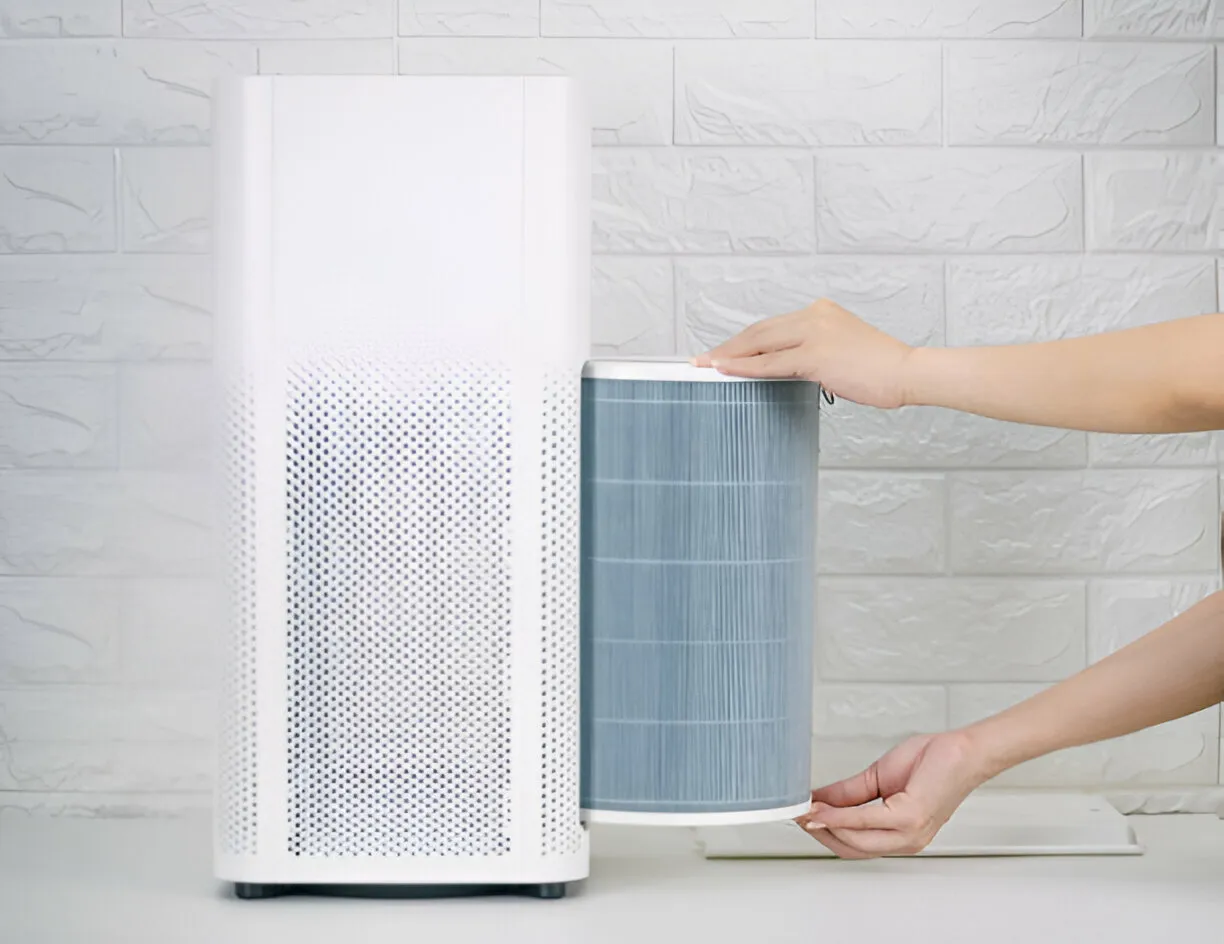
- HEPA/media filters: typical replacement ranges from 1–3 years depending on use, loading, and manufacturer. High-pollutant environments may require sooner replacement.
- Activated carbon cartridges: replace every 6–12 months or when odors return.
- UV bulbs: replace annually or per manufacturer life rating (effectiveness diminishes even if bulb still lights).
- Electronic collector plates: clean monthly to quarterly depending on loading; never operate without cleaning if designed that way.
- Annual professional inspection: verify airflow, check seals, test UV output, and confirm control settings.
Keep records of replacements and inspections to preserve warranty coverage and maintain consistent IAQ.
Benefits for allergy and asthma sufferers in Essex
Whole-house purification offers measurable benefits for residents with respiratory sensitivities:
- Reduced exposure to pollen and dust mite allergens that trigger seasonal and year-round symptoms.
- Lower concentrations of mold spores, especially important during humid months common to the Chesapeake region.
- Decreased indoor particulate matter from traffic and heating sources, improving breathability and lung function for sensitive individuals.
- Consistent treatment throughout all living areas — bedrooms, living rooms, and basements — prevents symptom shifts when moving between rooms.
When paired with humidity control (dehumidifiers in summer, proper ventilation in winter) and routine cleaning, whole-house purifiers can significantly reduce symptom frequency and severity.
Warranty and service considerations for Essex homeowners
When evaluating systems and service plans, consider:
- Manufacturer warranty length: many components carry 1–5 year limited warranties; confirm what parts and labor are covered.
- Service agreements: look for annual inspections, filter replacement options, UV bulb replacement, and performance testing included in plans.
- Local service availability: choose installers or service providers familiar with Maryland building codes and local climate impacts (humidity-driven mold control, winter combustion systems).
- Performance guarantees: reputable providers may offer performance verification (pre/post particle counts) as part of commissioning.
- Documentation: retain installation reports, filter change dates, and warranty paperwork for future reference.
Proper documentation and consistent servicing protect your investment and ensure reliable long-term IAQ.
Keeping indoor air healthy year-round in Essex, MDWhole-house air purifiers, when properly selected, sized, installed, and maintained, deliver continuous indoor air quality improvements across the entire home. For Essex homeowners, addressing seasonal pollen, summertime humidity-driven mold, and local particulate sources through a combined approach of filtration, adsorption, and microbial control provides the most comprehensive protection. Regular maintenance, periodic professional inspections, and attention to HVAC compatibility will preserve system performance and maximize benefits for allergy and asthma relief as well as overall home comfort.

Service areas