

Whole House Air Purifiers in Deale, MD
For homes in Deale, MD, Tario HVAC provides comprehensive whole-house air purifiers with in-duct filtration that treats your indoor air right at the source, protecting every single room. We explain the various purifier types: HEPA, activated carbon, UV-C, and electronic cleaners, detailing how they seamlessly integrate with your HVAC system to significantly reduce pollen, unpleasant odors, VOCs, mold, and fine particulates throughout your entire home. We also cover crucial performance metrics, flexible installation options, essential maintenance needs, and practical coastal considerations, all to help homeowners like you choose an effective, long-term solution for truly healthier living environments. We emphasize proper sizing and consistent maintenance for optimal results.
.webp)
Whole House Air Purifiers in Deale, MD
Whole-house air purifiers are built to protect every room in your home by treating indoor air at the HVAC level, not just in a single room. In Deale, MD, where humid summers, coastal salt air, seasonal pollen from the Chesapeake Bay region, and occasional wood or boat-fuel smoke can degrade indoor air quality, a properly designed whole-house system reduces allergens, odors, smoke particles, volatile organic compounds (VOCs), and biological contaminants throughout your home.
Why whole-house purification matters in Deale, MD
- Coastal humidity and warm summer temperatures increase indoor mold and dust mite pressure, making filtration and microbial control more important.
- Proximity to the Bay and boating activity can introduce fine particulates and fuel-related VOCs that portable units don’t reliably remove.
- Seasonal pollen and regional smoke events travel inland; whole-house systems reduce the load on surfaces and lungs by lowering particle concentrations across the entire living space.
- Integrating purification with your forced-air HVAC means continuous treatment and fewer stagnant zones versus standalone purifiers.
Common whole-house air purifier types and their strengths
- HEPA filtration (true HEPA): Removes 99.97% of particles down to 0.3 microns. Excellent for pollen, pet dander, dust, and fine smoke particulates.
- Activated carbon adsorption: Targets odors and many VOCs (solvents, paints, off-gassing) by trapping gases on a carbon bed. Effectiveness depends on carbon quantity and contact time.
- UV-C germicidal irradiation: Reduces airborne and surface microorganisms (mold spores, bacteria, viruses) by damaging DNA/RNA. Best used with filtration to remove particles that shield microbes.
- Electronic air cleaners (electrostatic precipitators/ionizers): Charge and collect particles; can be highly efficient for fine particles but may produce small amounts of ozone if not certified. Choose CARB-compliant or UL-listed models when concerned about ozone.
How whole-house systems integrate with HVAC
Most permanent systems are installed in the ductwork or the air handler (furnace/air handler plenum). Common integration options:
- Inline in-duct cabinet placed on the return air before the air handler for maximum capture.
- Filter cabinet replacement in the furnace plenum for true HEPA-level solutions (requires compatible fan capacity and sealing).
- Fan-powered modules that boost airflow through high-efficiency filters when static pressure would otherwise reduce heating/cooling performance.Integration considerations:
- Static pressure and fan capacity: High-efficiency or HEPA filters create more pressure drop. Modern variable-speed ECM fans often handle the load; older systems may need an upgrade.
- Duct sealing and layout: Leaky ducts reduce effectiveness. Proper sealing directs all return air through the purifier.
- Zoned systems: Homes with multiple zones may need a whole-house strategy sized to the conditioned volume or supplemental units for isolated zones.
Performance metrics homeowners should understand
- HEPA efficiency: 99.97% removal of 0.3 micron particles is the standard performance marker to expect for true HEPA media.
- MERV rating: ASHRAE MERV 8–13 are common for whole-house filtration. Higher MERVs capture smaller particles but increase pressure drop; MERV 13 or higher is recommended for improved allergy and smoke protection when the system supports it.
- Air Changes Per Hour (ACH): For whole-house impact, professionals calculate ACH based on home volume and system airflow. Higher ACH means faster removal of contaminants.
- CADR/third-party testing: Portable CADR is less applicable to in-duct systems, but look for independent lab testing or manufacturer data validated by recognized standards and third-party labs.
- UV log reduction values: UV systems are rated by log reductions (e.g., 1-log = 90% reduction) for specific organisms; expect modest reductions for continuous airborne control when combined with filtration.
Installation and placement details
- Assessment: A professional assessment determines HVAC capability, duct layout, filtration cabinet size, and the right combination of HEPA, carbon, UV, or electronic modules.
- Preferred placement: Typically in the return plenum or upstream of the air handler so all return air passes through the purifier.
- Electrical needs: UV and electronic units require nearby power; installations should follow code and use GFCI protection where applicable.
- Space and corrosion concerns: In Deale’s coastal environment, select corrosion-resistant components and follow recommended clearances for marine-influenced homes.
Maintenance and filter replacement guidance
- Pre-filters: Replace or clean every 1–3 months to protect finer media and maintain airflow.
- HEPA or high-efficiency media: Replacement intervals vary by home pollutant load; typical ranges are 12–24 months, faster in homes with heavy smoke, renovation activity, or pets.
- Activated carbon cartridges: Replace every 6–12 months for odor/VOC control; high VOC exposure can shorten life.
- UV lamps: Replace annually to maintain germicidal output; lamp effectiveness declines with time even if visible light remains.
- Electronic collector cells: Clean per manufacturer guidance (often every 3–6 months) to maintain efficiency and avoid arcing.
- System monitoring: Watch static pressure and airflow; rising pressure drop indicates filters need service. Regular HVAC filter checks and duct inspections prolong purifier performance.
Health benefits for allergy and asthma sufferers
- Reduced exposure to pollen, dust mite fragments, pet dander, and mold spores can lower symptoms and medication reliance for many allergy and asthma patients.
- Removal of fine particulates and smoke reduces respiratory irritation and can improve indoor air for young children, elderly residents, and those with chronic lung conditions.
- VOC and odor reduction contributes to fewer headaches and irritation when combined with proper ventilation strategies.
Certifications and testing to look for
- HEPA standard: Expect true HEPA media rated to 99.97% at 0.3 microns.
- ASHRAE 52.2 / MERV: Use MERV ratings to compare particle-capture performance; MERV 13+ is recommended for enhanced protection.
- UL listings: Look for UL safety listings on electrical components and UV units.
- CARB compliance or UL 2998: For electronic cleaners, confirm compliance with ozone emission limits; look for UL 2998 (zero ozone emission) when applicable.
- Independent lab validation: Prefer systems with third-party testing data for particle removal and VOC reduction.
Practical considerations for Deale homeowners
- Combine purification with humidity control: High humidity promotes mold growth; pairing a whole-house purifier with a properly sized dehumidifier or HVAC humidity strategy improves results.
- Seasonal maintenance: Expect more frequent filter changes during spring pollen season and during any regional smoke events.
- Corrosion prevention: Choose materials and components rated for coastal conditions to avoid premature failure from salt air.
- Balanced approach: Filtration plus source control (venting combustion appliances, using low-VOC materials, controlling humidity) provides the best indoor air quality outcome.
Whole-house air purifiers in Deale, MD are a long-term investment in family health and home comfort. When sized and installed correctly, integrated with your HVAC, and maintained on schedule, they significantly reduce allergens, smoke, VOCs, and biological contaminants that matter most in coastal Maryland homes.

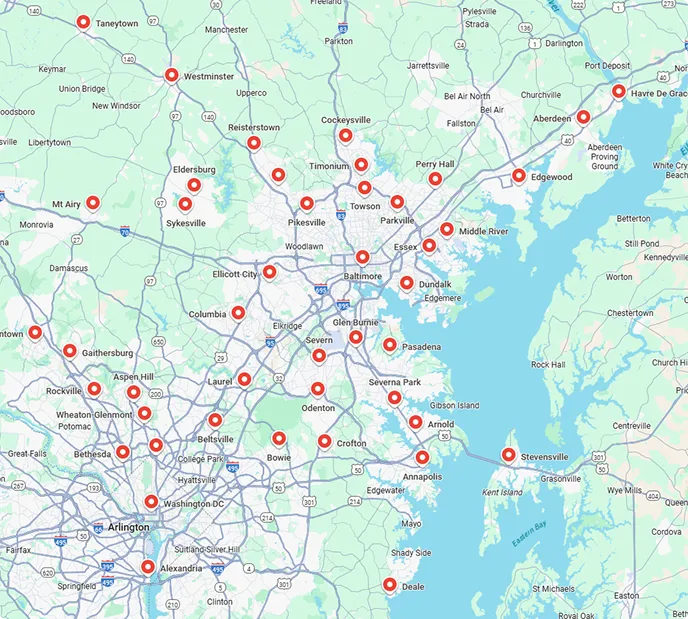
Service areas