



Ventilation in Deale, MD
Tario HVAC provides top-tier ventilation services in Deale, MD, covering residential options for both whole-house and spot ventilation. We begin by expertly diagnosing airflow and pollutant sources, then move on to recommending the ideal HRV/ERV and exhaust systems for your home. Our comprehensive services include thorough ductwork inspection and upgrades, precise installation procedures, and clear maintenance timelines, always emphasizing critical moisture control, effective odor management, and superior indoor air quality. We meticulously explain how Tario HVAC assesses humidity levels, airflow (CFM), and your home's tightness. Additionally, we outline practical timelines for installation, commissioning, and post-installation follow-up, ensuring lasting comfort and healthy indoor environments for years to come.
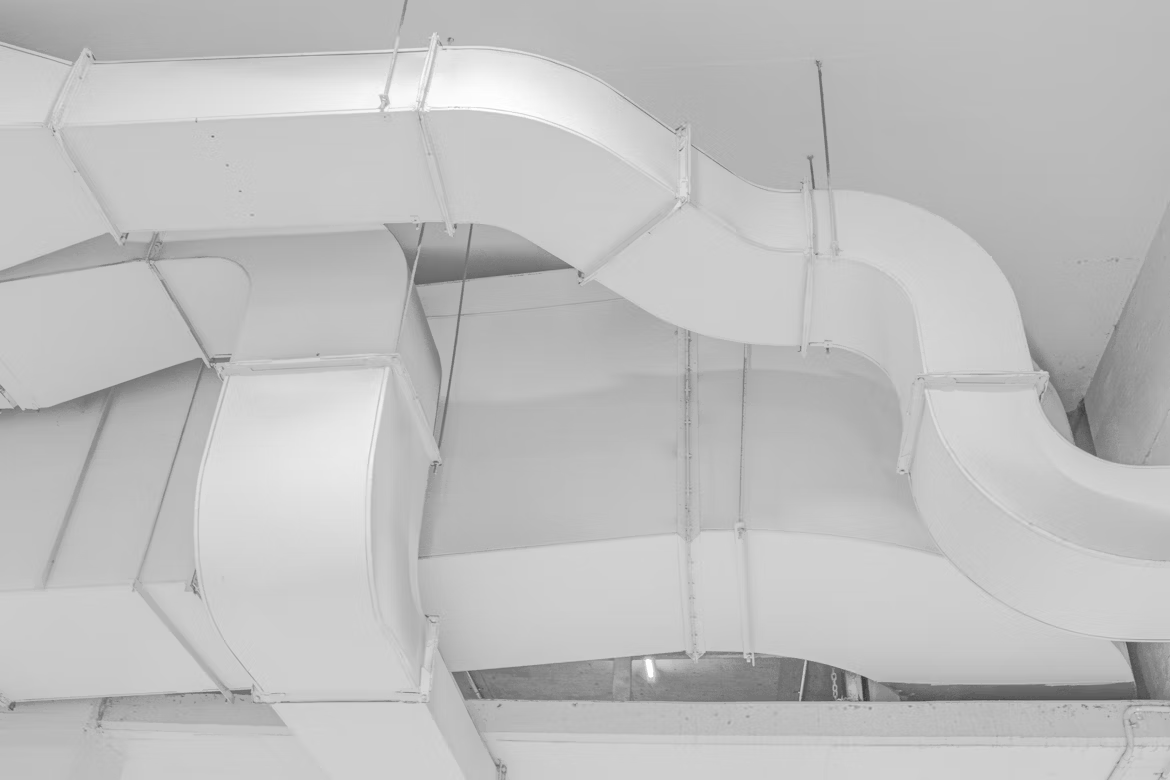
Ventilation in Deale, MD
Good indoor ventilation is one of the most effective ways to protect your home from moisture, odors, allergens, and indoor pollutants. In Deale, MD, the coastal climate, humid summers, and seasonal temperature swings make tailored ventilation solutions essential for healthy, comfortable homes. This page explains residential ventilation options—whole-house and spot ventilation—how we diagnose airflow and pollutant sources, recommendations for HRV/ERV and exhaust systems, ductwork inspection and upgrades, the installation process, benefits for moisture and odor control and indoor air quality, and maintenance and timelines to expect.
Why ventilation matters in Deale, MD
Deale sits on the Chesapeake Bay with high relative humidity in spring and summer, salt air that accelerates outdoor equipment wear, and seasonal pollen. These local factors increase the risk of:
- Persistent indoor humidity and condensation on windows
- Musty odors and mold growth in crawlspaces, attics, and basements
- Stale indoor air with elevated volatile organic compounds (VOCs), cooking and cleaning odors
- Corrosion concerns for exterior fans and vents
Proper ventilation reduces these problems by exchanging indoor air, controlling moisture sources, and filtering or diluting pollutants before they concentrate.
Common residential ventilation issues in Deale
- Insufficient whole-house ventilation leading to high humidity, especially in older, tightly sealed homes
- Poor kitchen and bathroom exhaust—cooking and shower moisture not vented to the exterior
- Unbalanced or leaky ductwork causing uneven airflow, hot/cold spots, and pressure imbalances
- Backdrafting of combustion appliances when negative pressure draws exhaust back into living spaces
- Corroded outdoor fan housing and damp attic spaces due to salt-laden air and condensation
Types of ventilation solutions
- Whole-house mechanical ventilation: balanced systems that provide controlled fresh air intake and exhaust, often combined with heat or energy recovery.
- HRV (Heat Recovery Ventilator): Transfers heat between outgoing and incoming air; effective in colder months to retain warmth.
- ERV (Energy Recovery Ventilator): Transfers both heat and moisture; can help manage humidity across seasons when paired correctly with HVAC and dehumidification strategy.
- Spot ventilation: targeted exhaust for bathrooms, kitchens, laundry rooms, and utility spaces to remove moisture and odors at the source.
- Continuous low-rate ventilation: a modest, constant exchange of air to prevent pollutant buildup without large energy penalties.
- Hybrid systems: whole-house ventilation integrated with HVAC, dehumidifiers, and smart controls to respond to indoor conditions.
How we assess indoor airflow and pollutant sources
A professional assessment typically includes:
- Visual inspection of attics, crawlspaces, mechanical rooms, and ducts for moisture, mold, and corrosion
- Measurement of relative humidity and temperature in key rooms and cavities
- Airflow testing at vents and fans (CFM measurement) to evaluate exhaust and supply performance
- Blower door or pressure diagnostics in some cases to understand house tightness and pressure imbalances
- Identification of pollutant sources: cooking, cleaning products, pet dander, off-gassing materials, or combustion appliances
This diagnostic step is crucial in Deale homes where seasonal humidity and salt exposure can complicate ventilation choices.
Ductwork inspection and upgrades
Proper ductwork is the backbone of whole-house ventilation:
- Inspect for leaks, disconnected runs, and inadequate insulation—common sources of energy loss and poor airflow
- Seal and insulate ducts, especially in unconditioned attics or crawlspaces, to prevent moisture and energy transfer
- Evaluate sizing and balancing: undersized ducts or improperly located vents can cause pressure issues and poor exhaust performance
- Recommend corrosion-resistant exterior terminations and properly routed exhausts to avoid recirculation and salt-related deterioration
Upgrades may include replacing flexible ducting with rigid or insulated lined ducts, adding return pathways, or rebalancing vents.
Recommended equipment and system design for Deale homes
- For tight, energy-efficient homes: a balanced HRV or ERV sized to the home’s occupancy and square footage, combined with the HVAC system for coordinated humidity control.
- For homes with high summer humidity: consider ERV plus dedicated dehumidification, or HRV with active humidity controls to avoid introducing excess moisture.
- For older or intermittently occupied homes: demand-controlled ventilation tied to humidity or CO2 sensors to ventilate only when needed.
- Corrosion-resistant fan housings and exterior caps to withstand coastal air.
Equipment selection should be based on the assessment results and local climate considerations to avoid creating unwanted moisture issues in summer.
Installation process and typical timelines
Installation follows a clear sequence:
- On-site assessment and system design (1 visit)
- Equipment selection and material procurement (timing varies)
- Ductwork modifications, sealing, and mounting of ventilation unit (small homes: 1–2 days; larger or complex retrofits: several days)
- Electrical connection, controls integration, and outdoor terminations
- Commissioning: airflow balancing, humidity/CO2 sensor calibration, and homeowner walkthrough
- Follow-up inspection after a few weeks to confirm performance
Smaller spot-vent installs can be completed in a single day. Whole-house HRV/ERV installations typically take a few days to a week depending on complexity and whether significant ductwork changes are needed.
Benefits for moisture, odor control, and indoor air quality
- Reduced indoor relative humidity and condensation, minimizing mold and structural moisture damage
- Faster removal of cooking and bathroom odors, improving comfort and livability
- Lower concentrations of airborne allergens, VOCs, and particulate matter through controlled fresh air exchange and filtration
- Balanced indoor pressures that reduce backdrafting risk and improve combustion safety
- Better long-term durability for building materials by preventing chronic moisture exposure
These benefits are especially valuable in Deale homes that face seasonal humidity and waterfront-related air quality challenges.
Maintenance and long-term care
- Replace or clean filters regularly per manufacturer guidance; dirty filters reduce airflow and recovery efficiency
- Inspect and clean core heat/energy exchangers annually
- Check exterior terminations for debris, bird nests, or corrosion, and ensure proper sealing
- Verify fan operation and measure airflow annually or after major house changes
- Coordinate ventilation maintenance with HVAC servicing to maintain humidity and temperature control
With routine maintenance, ventilation systems deliver consistent indoor-air benefits year-round.
Selecting the right ventilation approach in Deale requires understanding local humidity patterns, home tightness, and pollutant sources. A targeted assessment followed by balanced design and proper ductwork is the most reliable path to better indoor air, moisture control, and lasting comfort.

Service areas
