

Whole House Air Purifiers in Bethesda, MD
Bethesda, MD homeowners can improve indoor air quality with whole-house air purification that works seamlessly with your HVAC system. Tario HVAC explains in-duct HEPA filtration, UV germicidal lights, activated carbon, and electronic air cleaners, detailing how each technology reduces allergens, VOCs, and pathogens, and how to select a system perfectly suited for Bethesda homes. We cover installation, testing, and maintenance schedules, typical warranties, and service options, plus expected performance, timeframes for noticeable improvements, and guidance to choose a reliable, energy-efficient solution tailored to your home.

Whole House Air Purifiers in Bethesda, MD
Clean indoor air is a critical part of healthy homes in Bethesda, MD. Local factors like high spring pollen, humid summers that encourage mold growth, and traffic-related exhaust from nearby corridors make whole-house air purification an important investment for allergy and asthma sufferers, families with young children, and anyone sensitive to volatile organic compounds (VOCs). This page explains whole-house air purifier options (in-duct HEPA, UV germicidal lights, activated carbon, and electronic cleaners), how each technology works against allergens, VOCs, and pathogens, selection criteria for Bethesda homes, installation and testing expectations, maintenance schedules, and typical warranty/support patterns.
Why whole-house purification matters in Bethesda, MD
Bethesda’s seasonal pollen peaks and humid summers increase indoor allergens and mold risk when outdoor air infiltrates a home. In winter, forced-air systems circulate dust and pet dander. Whole-house systems work with your HVAC to treat the air for the entire living space rather than just a single room, reducing exposure to common triggers and improving overall indoor air quality (IAQ) consistently.
How each technology reduces allergens, VOCs, and pathogens
- In-duct HEPA filtration: True HEPA captures 99.97% of particles down to 0.3 microns in a sealed system. In an in-duct configuration, HEPA media removes dust, pollen, pet dander, and many mold spores. Expect lower lab-rated efficiency in real-world duct systems due to leakage and airflow path, but significant particulate reduction across the home when sized and installed properly.
- UV germicidal lights: UV-C lamps installed near the coil or in the ductwork inactivate bacteria, viruses, and mold spores by damaging their DNA/RNA. UV reduces biological growth on coils (improving system efficiency) and lowers airborne pathogen load when the UV dose and lamp placement are correct.
- Activated carbon: Carbon beds and cartridges adsorb gases and odors, including many VOCs from household products, paints, and vehicle exhaust. Effectiveness depends on bed size and contact time; thicker beds with proper flow rates remove more VOCs for longer.
- Electronic air cleaners (electrostatic precipitators/ionizers): These systems charge and capture particles on collection plates. High-efficiency models remove fine particles effectively, but some designs can produce ozone as a byproduct. Choose certified low-ozone units and plan for regular cleaning of collection cells.
Common whole-house air purifier issues in Bethesda homes
- Reduced HVAC airflow due to improperly sized filters or excessive pressure drop
- Inadequate VOC removal when carbon bed is undersized
- Diminished UV effectiveness from incorrect lamp placement or aging bulbs
- Ozone concerns with some electronic cleaners and portable ionizers
- Increased maintenance needs in homes with high dust loads or active renovations
Selecting the right system for your home
Consider these criteria to match a system to your Bethesda home:
- Home size and central HVAC capacity: Match purifier capacity to airflow (CFM) and number of HVAC zones.
- Ductwork condition: Leaky or poorly insulated ducts reduce whole-house purifier effectiveness; address sealing or balancing first.
- Primary concerns: Particulate reduction (HEPA), biological reduction (UV), VOC/odor control (activated carbon), or combined needs favor hybrid systems.
- Pressure drop and fan capacity: HEPA media increases resistance; ensure the furnace/air handler can handle added static pressure or add a booster fan when necessary.
- Ozone certification: For electronic cleaners, choose models certified for low ozone emissions.
- Energy and noise: Evaluate electrical draw and any additional fan noise.
- Certifications and independent test data: Look for third-party performance claims and safety approvals.
Typical installation process
- Site assessment: Inspect HVAC layout, duct size, return locations, and homeowner IAQ priorities. Identify where to place filtration, UV, and carbon units for optimal performance.
- Pre-install prep: Seal and mechanically assess ducts, confirm furnace/air handler capacity, and determine access for service.
- Component installation:
- HEPA: Installed in-line at the return plenum or a dedicated bypass with proper sealing and pressure monitoring.
- UV: Mounted upstream of the air handler coil or inside the duct where sufficient dwell time exists.
- Activated carbon: Installed as a canister or filter stage adjacent to the HEPA or return grille for maximum contact.
- Electronic cleaner: Installed in the return or supply side with attention to collection cell accessibility.
- Commissioning: Check airflow, measure static pressure, verify UV lamp current and placement, and ensure electrical safety.
- Baseline testing: Measure pre-treatment IAQ parameters for comparison.
Testing and performance expectations
- Baseline and verification testing: Typical tests include PM2.5 and PM10 particle counts, total volatile organic compounds (TVOCs) in ppb, relative humidity, and sometimes microbial surface or air sampling. Conduct measurements before and after installation to quantify improvement.
- Realistic performance:
- HEPA: Up to 99.97% capture of 0.3 micron particles in a sealed environment; whole-house systems often achieve 70-95% reduction in airborne particulates depending on duct integrity and run time.
- Activated carbon: Significant reductions in many VOCs; percent reduction varies widely based on carbon bed size and VOC concentration.
- UV: Can achieve 1-3 log reductions (90-99.9%) for susceptible bacteria/viruses at appropriate doses; effectiveness depends on exposure time and lamp intensity.
- Electronic cleaners: High particulate removal efficiency with properly maintained cells; verify low ozone output.
- Timeframe: Residents often notice reduced dust and allergy symptoms within days to weeks; VOC odor reductions and microbial improvements may be immediate or take several days depending on air exchange and pollutant load.
Maintenance and filter replacement schedules
- Prefilters: Replace or clean every 1-3 months, depending on dust load and local pollen counts.
- HEPA filters: Replace every 6-24 months depending on system design, prefiltering, and household conditions. Monitor pressure drop to determine replacement timing.
- Activated carbon: Replace every 3-12 months; heavy VOC environments require more frequent replacement.
- UV lamps: Replace annually or per manufacturer hours to maintain germicidal output; mid-season cleaning of quartz sleeves is recommended in humid or dusty environments.
- Electronic cleaner cells: Clean every 3-12 months; inspect for corrosion and check ozone output if applicable.
- Annual professional inspection: Verify airflow, static pressure, UV intensity, and overall system integrity—especially important in Bethesda’s humid summers to prevent mold growth on coils.
Health benefits for allergy and asthma sufferers
Whole-house systems reduce exposure to pollen, dust mite debris, pet dander, mold spores, and many airborne bacteria and viruses, which can:
- Decrease symptom frequency and severity for allergy and asthma sufferers
- Improve sleep quality by reducing nighttime allergen exposure
- Reduce reliance on rescue medications in some users
- Lower indoor odor and chemical irritation from VOCs, which can benefit those with chemical sensitivities
Warranty and support considerations
- Typical warranties: Filters are consumables and not usually covered; mechanical components like housings, blowers, and electronic cleaners often carry 1-5 year warranties. UV lamps and bulbs commonly have shorter warranty periods.
- Service options: Look for providers or manufacturers that offer clear replacement schedules, documented performance specifications, and support for annual maintenance. Remote monitoring options may be available for some units to track filter life and performance metrics.
- Documentation: Keep installation records, baseline IAQ reports, and maintenance logs to validate warranty claims and to measure long-term performance.
Whole-house air purification in Bethesda, MD provides measurable benefits for homes affected by seasonal pollen, higher humidity, and urban pollutants. Selecting the right combination of in-duct HEPA, activated carbon, UV germicidal lights, or electronic cleaners—matched to your HVAC system and household priorities—delivers sustained improvements in indoor air quality and health outcomes when paired with a regular maintenance plan and periodic performance testing.

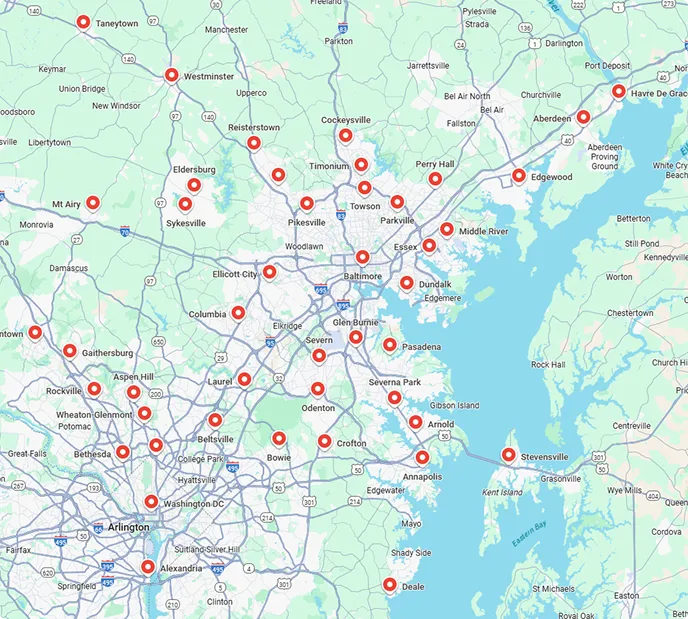
Service areas