

Whole House Air Filters in Mount Airy, MD
Whole-house air filters in Mount Airy, MD are essential for improving indoor air quality by filtering air through your central HVAC return, thereby protecting both your family's health and your valuable equipment. Tario HVAC will explain the various filter types and MERV ratings, helping you choose safe, compatible options specifically for Mount Airy conditions. We'll cover installation, crucial replacement schedules, and ongoing maintenance, alongside troubleshooting common problems and helping you weigh OEM versus aftermarket choices. By carefully aligning your filter selection with your family's health needs and your system's compatibility, you'll maximize comfort, energy efficiency, and the long-term life of your equipment.
.jpeg)
Whole House Air Filters in Mount Airy, MD
Clean indoor air is one of the most effective ways to protect your family’s health and extend the life of your HVAC system. Whole house air filters in Mount Airy, MD are installed inside the central HVAC return and filter air for the entire home, removing dust, pollen, pet dander, mold spores, and many airborne particles before they circulate through living spaces. For homeowners in Mount Airy, with humid summers, cold winters, and strong seasonal pollen, the right whole-house filtration strategy reduces allergies, limits HVAC wear, and can improve comfort year-round.
Common whole house air filter issues in Mount Airy, MD
- Reduced airflow and higher energy use from clogged filters or incorrect filter size.
- Persistent allergy symptoms during spring and fall pollen seasons when filters are underspecified.
- Increased dust accumulation and HVAC coil soiling when filters are low-efficiency or bypass air.
- Odors and mold growth in humid months when filters do not address moisture-related particulates.
- Shorter filter life and inconsistent performance when aftermarket filters are mismatched to equipment.
Filter types and MERV ratings explained
Understanding filter media and MERV ratings helps you match performance to needs:
- Fiberglass disposable filters: Low-cost, low MERV (typically 1-4). Good for basic HVAC protection but poor at removing allergens and small particles.
- Pleated synthetic filters: Mid-range efficiency (MERV 7-12). Common whole-house choice for homes with allergy concerns and moderate particle filtration.
- High-efficiency pleated or synthetic filters: Higher MERV (13-16). Capture finer particles including many bacteria-sized aerosols and fine smoke; may be appropriate for homes with strong health needs but require HVAC compatibility.
- HEPA-style or true HEPA integration: True HEPA requires specialized housings or whole-house systems and provides the highest capture of submicron particles.
- Activated carbon or specialty media: Added to reduce odors, VOCs, and some gases—useful in areas affected by smoke or strong odors.
MERV ratings indicate particle capture efficiency. Higher MERV means finer filtration but also greater resistance to airflow. Choosing the correct MERV balances indoor air quality goals with HVAC performance.
How to choose the right filter for health and system efficiency
- Prioritize health needs: If household members have moderate to severe allergies, asthma, or immune concerns, aim for MERV 11-13 or a true whole-house HEPA solution. For general dust and HVAC protection, MERV 8-11 is often sufficient.
- Check HVAC manufacturer recommendations: Many systems are rated for a maximum MERV to avoid undue strain. Mixing a high-MERV filter with a system not designed for it can reduce airflow and shorten equipment life.
- Consider local conditions: In Mount Airy, seasonal tree pollen and summer humidity increase biological particles; in years with wildfire or nearby urban smoke, higher efficiency or activated carbon options help reduce fine particulates and odors.
- Evaluate home tightness and occupants: Tighter, newer homes often benefit more from higher filtration because less natural air exchange occurs. Older, leakier homes may experience more dust and require more frequent filter changes.
Installation and replacement schedules
- Professional installation: Whole-house filter housings or upgrades to higher-efficiency systems are best installed by HVAC pros to ensure proper airflow, sealing, and system compatibility.
- Filter replacement frequency: Varies by MERV and home conditions. Typical recommendations:
- Low-efficiency disposable: replace monthly to every 3 months.
- Pleated mid-range (MERV 8-11): every 2-3 months.
- Higher-efficiency (MERV 13+): monitor monthly, often every 1-3 months depending on load.
- Inspect monthly during high pollen or heavy use seasons. Replace immediately if visibly clogged or causing pressure drop.
Impacts on HVAC performance and energy usage
- When properly matched, whole-house filters protect coils, blowers, and ductwork, improving long-term efficiency and reducing maintenance.
- Oversized MERV filters or filters installed improperly can restrict airflow, forcing the blower to work harder, increasing energy consumption, and potentially shortening equipment life.
- Balanced approach: Use the highest filter efficiency your system supports, maintain a strict replacement schedule, and perform periodic airflow checks to ensure nominal pressure drop.
OEM vs aftermarket options
- OEM filters: Designed to meet original equipment manufacturer specs and often match size and airflow characteristics precisely. They generally carry clearer compatibility guidance and warranty alignment.
- Aftermarket filters: Offer a wider range of media types and price points. Quality varies by brand—high-quality aftermarket filters can equal OEM performance when properly specified.
- What to consider: Verify actual MERV test data, material quality, frame rigidity to prevent bypass, and any claims about particle capture. Also confirm that using a particular aftermarket product will not void HVAC manufacturer warranties.
Common problems and troubleshooting
- Problem: Noticeable drop in airflow after installing a higher-MERV filter.
- Troubleshooting: Confirm filter is correctly installed and sized. Check blower motor setting and clean return grilles. If airflow remains low, consult HVAC spec sheet for maximum allowable MERV.
- Problem: Frequent filter clogging.
- Troubleshooting: Inspect for sources of heavy dust (attic, renovation, pets). Increase replacement frequency or consider pre-filter stages to extend life.
- Problem: Dust and allergens persist despite filtration.
- Troubleshooting: Check for duct leaks, unfiltered returns, or gaps around filter housings. Evaluate whether a higher-efficiency media or added air-cleaning technologies (UV, air purifiers) are needed.
- Problem: Odors or chemical smells persist.
- Troubleshooting: Consider activated carbon media or specialty VOC filters; identify and remove onsite odor sources where possible.
Cost and warranty considerations
- Cost factors to weigh: filter media type, MERV level, replacement frequency, installation complexity, and any necessary HVAC modifications. Higher-efficiency systems and true HEPA installations carry higher upfront and maintenance costs but may deliver substantial health benefits in certain homes.
- Warranty aspects: Review both filter and HVAC warranties. Using filters outside manufacturer recommendations can sometimes affect HVAC warranties. Look for warranties or performance guarantees on specialty media and for manufacturer support documentation.
- Long-term value: Factor in reduced HVAC maintenance, fewer duct cleanings, and improved occupant health when assessing lifecycle costs. A properly specified whole-house filter often pays back through lower repair needs and extended system life.
Maintenance tips for Mount Airy homes
- Inspect filters monthly during spring pollen peaks and late summer humidity. Replace more frequently if you have pets, renovations, or nearby smoke events.
- Seal gaps in filter housings and ensure return registers are clean to prevent bypass.
- Combine filtration upgrades with routine HVAC maintenance (coil cleaning, duct inspection) to maximize benefits.
- If you live near roadways or experience smoke events, consider a higher-MERV filter plus activated carbon media during high-pollution periods.
Selecting and maintaining the right whole-house air filter in Mount Airy, MD protects indoor air quality, reduces allergy and respiratory triggers, and helps your HVAC system run efficiently. Careful selection based on MERV rating, system compatibility, local seasonal conditions, and consistent maintenance delivers the best balance of health benefits and equipment performance.

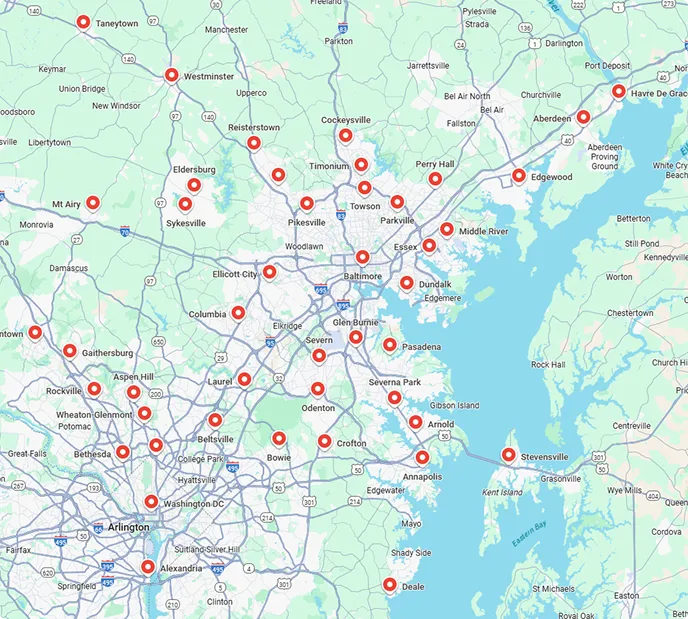
Service areas