

Ventilation in Beltsville, MD
Beltsville, MD homes truly benefit from a well-planned, whole-home ventilation strategy provided by Tario HVAC, designed to significantly improve indoor air quality, control humidity, and reduce mold risk. We explain precisely when to consider ventilation, outline the pros and cons of supply, exhaust, and balanced systems (HRV/ERV), and help you confidently decide between an HRV or ERV based on your local climate and home tightness. Our services cover expert sizing, key installation considerations, energy recovery, routine maintenance, adherence to local codes, and the many typical benefits you'll experience. We always emphasize professional assessment and proper commissioning to guarantee efficient, healthy fresh-air delivery.
Ventilation in Beltsville, MD
Proper whole-home ventilation in Beltsville, MD is one of the most effective ways to improve indoor air quality, manage humidity, and protect homes from mold and allergens common to our Mid-Atlantic climate. Whether your home is a newer, tightly sealed build or an older Colonial with drafty areas, a planned ventilation strategy using supply, exhaust, or balanced systems (HRV/ERV) addresses persistent problems like stale air, high summer humidity, winter dryness, and odors from cooking or basements.
Why Beltsville homes need whole-home ventilation
- Summers are humid and spring brings heavy pollen; without controlled ventilation, indoor humidity and allergens concentrate, worsening allergies and mold risk.
- Energy-efficient upgrades and new windows reduce natural air leakage, so mechanical ventilation becomes essential to meet indoor air quality goals.
- Basements and crawlspaces in this area often contribute moisture and radon risk; a ventilation system designed for whole-home ventilation helps dilute pollutants and control humidity throughout the living space.
Types of whole-home ventilation systems
- Supply ventilation: introduces filtered, tempered outdoor air into the home and forces indoor air out through leaks and passive exhaust points. Good for homes that need positive pressure to keep basement or soil gases out.
- Exhaust ventilation: removes indoor air and relies on make-up air entering through passive openings. Simpler and lower cost, but can draw air from undesirable places like attics or crawlspaces.
- Balanced ventilation (HRV / ERV): uses equal supply and exhaust fans with an energy recovery core. Heat Recovery Ventilators (HRV) transfer sensible heat, while Energy Recovery Ventilators (ERV) also transfer moisture exchange—often the best choice for Beltsville’s humid summers and cold winters.
Choosing HRV vs ERV for Beltsville, MD
- ERV is typically recommended in humid climates because it moderates moisture transfer from outdoors into conditioned space, reducing the load on air conditioning and lowering mold risk.
- HRV performs well in very cold, dry conditions by preserving indoor humidity; given Beltsville’s humid summers and moderate winters, an ERV often provides the best year-round balance.
- The final choice depends on your home’s envelope tightness, existing HVAC design, and indoor humidity goals.
System selection and sizing (how professionals decide)
- Proper sizing is essential. A ventilation professional will calculate your home’s conditioned volume, occupancy patterns, and pollutant sources, and then determine required airflow in CFM to meet ventilation standards.
- Standards commonly referenced include ASHRAE 62.2 and local building code requirements. Typical whole-home systems for single-family homes often range from roughly 40 to 150 CFM depending on size and occupancy, but exact numbers vary by house.
- Selection factors include: continuous vs intermittent ventilation modes, integration with existing HVAC, noise levels, energy recovery efficiency, and filtration level for pollen and fine particles.
Installation and ductwork considerations
- Balanced systems require two dedicated ducts: a supply and an exhaust. Proper placement of intake and exhaust grills is crucial to avoid short-circuiting airflow and to ensure whole-house distribution.
- Insulated duct runs in unconditioned attics or crawlspaces reduce condensation and energy loss. Short, straight runs with fewer bends improve performance and lower noise.
- Intake locations must be away from pollutant sources (garages, dryer vents, trash areas). Exhaust discharge should be sited so it does not re-enter the building or affect neighbors.
- Integration with your HVAC can allow whole-house distribution through the existing ductwork, but sometimes separate distribution is preferred to avoid overloading systems or redistributing contaminants.
Energy recovery and efficiency
- Modern ERV/HRV units recover a large portion of sensible heat and some latent energy, lowering heating and cooling penalties of bringing in outdoor air.
- Look at sensible recovery efficiency, electrical fan power, and controls (humidity sensors, CO2-based demand control) when evaluating units. Demand-controlled ventilation saves energy by increasing ventilation only when needed.
- Proper commissioning and balancing at installation ensure the system operates efficiently — measuring supply and exhaust CFM to meet design targets.
Maintenance requirements
- Routine maintenance keeps performance high and prevents odors or microbial growth. Typical tasks include:
- Replace or clean filters every 1 to 3 months depending on use and pollen seasons.
- Clean the heat/energy recovery core annually and inspect for dust or moisture buildup.
- Check fans, belts (if present), and condensate drains for proper operation.
- Verify outdoor intakes and exhausts are clear of debris, leaves, or snow, especially after storms or seasonal leaf drop.
- Regular maintenance prolongs equipment life and preserves energy recovery performance.
Local code and rebate considerations in Beltsville, MD
- Local building codes and permit requirements in Prince George’s County often reference ventilation requirements consistent with national standards like ASHRAE 62.2. Permits and inspections may be required for whole-home systems and any significant ductwork changes.
- Energy efficiency programs and utility incentives are commonly available in Maryland for energy recovery ventilation and energy-efficient HVAC upgrades. Homeowners should review state and local utility rebate programs when planning upgrades to identify potential incentives that reduce installation costs.
- When planning work, ensure compliance with county codes for intake/exhaust placement and any requirements for mechanical ventilation in renovations.
Common problems solved by whole-home ventilation
- Persistent musty smells and visible mold in bathrooms, basements, and closets.
- High indoor humidity in summer that makes cooling less effective and increases AC runtime.
- Allergies and respiratory irritation from pollen, VOCs, and living-room odors.
- Winter dryness combined with stale air from low fresh-air exchange.
Investing in a properly selected and installed whole-home ventilation system improves indoor air quality and occupant comfort, reduces mold and moisture issues common to the Beltsville climate, and preserves the performance of heating and cooling systems. Energy recovery options like ERVs provide fresh air with minimal energy penalty, and when sized, installed, and maintained correctly, whole-home ventilation becomes a practical, long-term solution for healthier indoor environments.
For a reliable outcome, homeowners should work with a local ventilation professional who can assess your home, reference local codes, size and commission the right system, and explain available utility or state incentives that may apply.

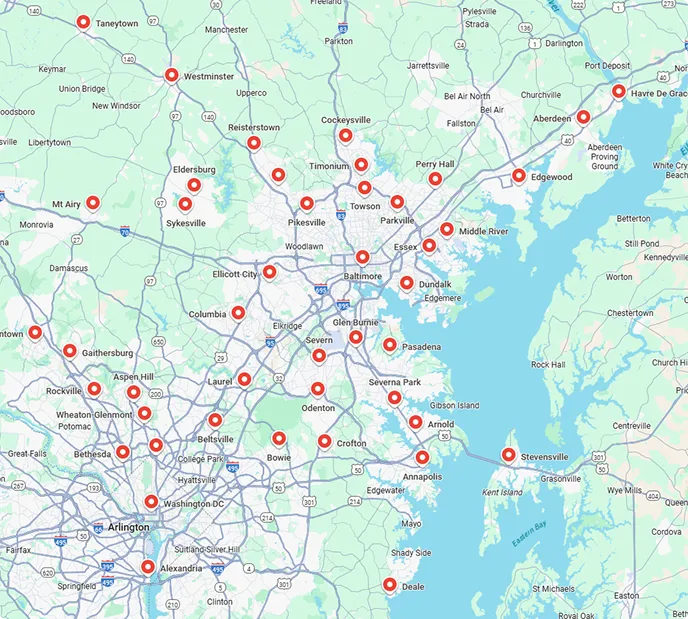
Service areas