

Furnace Maintenance in Towson, MD
Keeping your furnace running reliably throughout Towson winters absolutely requires regular, professional care. At Tario HVAC in Towson, MD, we focus on preventative furnace maintenance programs that not only reduce breakdown risk but also improve your comfort and lower energy bills. We understand that Towson homes face cold snaps, variable winter temperatures, and often older housing stock with vintage ductwork. Our tailored maintenance plan addresses those specific local factors, preserving equipment life and ensuring safe operation for years to come.

Furnace Maintenance in Towson, MD
Keeping your furnace running reliably throughout Towson winters requires regular, professional care. Furnace Maintenance in Towson, MD focuses on preventative furnace maintenance programs that reduce breakdown risk, improve comfort, and lower energy bills. Towson homes face cold snaps, variable winter temperatures, and older housing stock with vintage ductwork. A tailored maintenance plan addresses those local factors and preserves equipment life while ensuring safe operation.
Why preventative furnace maintenance matters in Towson
Towns near Baltimore often see heavy use of heating systems from late fall through early spring. That workload accelerates wear on components such as burners, the heat exchanger, and the blower. Regular maintenance:
- Maintains safe combustion and reduces carbon monoxide risk.
- Restores furnace efficiency for lower fuel costs during long heating seasons.
- Identifies worn parts early to prevent emergency failures on the coldest days.
- Extends equipment life by minimizing corrosion, soot buildup, and mechanical wear.
For homes in Towson with older furnaces or tight schedules, predictable seasonal tune-ups reduce the chance of inconvenient breakdowns and costly midwinter repairs.
Common furnace maintenance issues in Towson homes
Residents commonly encounter these issues that maintenance programs are designed to prevent:
- Dirty or clogged filters that restrict airflow and strain the blower.
- Soot or debris on burners causing poor ignition and inefficient combustion.
- Cracked or corroded heat exchanger that presents a safety hazard.
- Loose or dirty blower wheels and belts that reduce airflow and increase energy use.
- Faulty controls, relays, or thermostats leading to short cycling or erratic operation.
- Blocked vents or exhaust flues due to falling leaves, pests, or ice buildup.
Addressing these items during a tune-up prevents performance loss and safety risks associated with neglected equipment.
What a seasonal furnace tune-up includes
A comprehensive seasonal tune-up for Furnace Maintenance in Towson, MD typically follows a clear, step-by-step process to evaluate and optimize the system:
Visual inspection
- Check furnace cabinet, burners, flame pattern, and visible duct connections for obvious problems or corrosion.
Combustion and safety checks
- Verify proper flame color and stability.
- Test for carbon monoxide presence and measure draft in the flue.
- Inspect heat exchanger for cracks or signs of stress.
Burner and ignition service
- Clean burners and pilot assembly or electronic ignition components.
- Adjust fuel-air mixture for complete combustion and efficient operation.
Blower and airflow maintenance
- Clean blower wheel and housing, check belt condition and tension, lubricate motor bearings if serviceable.
- Measure airflow and static pressure where needed to ensure proper distribution.
Controls, electrical, and thermostat
- Inspect wiring, relays, and safety switches.
- Check thermostat calibration and control logic to prevent short cycling.
Filter replacement and system cleaning
- Replace or recommend the correct filter for the home and furnace.
- Remove sediment, dust, and debris from accessible plenum and return air pathways.
Venting and flue inspection
- Ensure exhaust vent and intake pathways are clear and properly sealed.
- Verify termination points are unobstructed and meet safety norms.
Performance and efficiency checks
- Record operating temperatures, pressures, and run cycles to establish a baseline for future visits.
- Provide a clear findings summary and recommended next steps.
Each step targets the typical failure points for furnaces used heavily during Towson winters, combining safety and efficiency priorities.
Repairs and solutions commonly recommended
When maintenance identifies problems, common solutions include:
- Replacing filters and cleaning the blower assembly to restore airflow.
- Replacing worn belts, bearings, or motors to eliminate noise and restore efficiency.
- Repairing or replacing burners, ignition assemblies, or control boards to ensure reliable starting.
- Sealing or replacing damaged flue connections and addressing heat exchanger issues when detected.
- Balancing ductwork and recommending insulation improvements to reduce heat loss in older Towson homes.
Repair decisions are based on age of equipment, extent of damage, and cost-to-replace considerations so homeowners can decide with full information.
Maintenance agreement options and what to expect
Preventative furnace maintenance programs in Towson typically offer several agreement levels to fit different needs:
- Single seasonal tune-up: One comprehensive visit focused on safety and performance before peak heating season.
- Annual maintenance plan: Includes an annual tune-up plus priority scheduling during the heating season.
- Multi-season or multi-year agreements: Scheduled visits each fall with added benefits like discounted repair labor or parts.
- Full service agreements: Include two visits per year, filter replacement service, periodic system diagnostics, and ongoing record-keeping of system performance.
Typical benefits in these programs are priority appointment windows during cold snaps, documented service history for resale value, and predictable maintenance budgeting.
Long-term benefits of regular maintenance
Regular Furnace Maintenance in Towson, MD delivers measurable gains over time:
- Lower monthly energy bills through restored heat transfer efficiency.
- Fewer emergency service calls and reduced risk of midwinter outages.
- Longer equipment lifespan due to reduced mechanical stress and cleaner combustion.
- Improved indoor air quality from proper filter selection and dust reduction.
- Enhanced safety through routine combustion and carbon monoxide checks.
For Towson homeowners, these benefits translate to better comfort during long winters and less uncertainty about heating reliability.
Maintenance tips for Towson homeowners
- Change disposable filters every 1 to 3 months during heavy use; consider higher MERV ratings only if compatible with your furnace.
- Keep vents and returns clear of furniture and seasonal storage.
- Schedule a professional tune-up in early fall before the heating season begins.
- Note any unusual sounds, odors, or cycling patterns and record occurrence times to help technicians diagnose problems.
- Consider duct sealing or insulation upgrades for older homes to reduce heat loss and improve system performance.
Q: How often should I have furnace maintenance performed in Towson, MD?
A: Annual professional maintenance in the fall is recommended, with filter checks every 1 to 3 months during the heating season.
Q: What if a heat exchanger crack is found during inspection?
A: A cracked heat exchanger is a serious safety concern. It requires evaluation for repair or replacement based on severity and furnace age to eliminate combustion gas or carbon monoxide risk.
Q: Will a tune-up lower my utility bills?
A: Yes. Tune-ups restore proper combustion and airflow, improving efficiency and typically reducing fuel consumption compared to an unmaintained system.
Q: Are maintenance agreements worth it for Towson homes?
A: Maintenance agreements provide predictable service scheduling, priority access during cold periods, and often cost savings on repairs, making them valuable for households that rely heavily on their furnace.
Q: What local factors in Towson affect furnace performance?
A: Towson experiences cold winters, occasional rapid temperature swings, and many older homes with less insulated ductwork. These conditions increase heating demand and make regular maintenance more important for efficiency and safety.

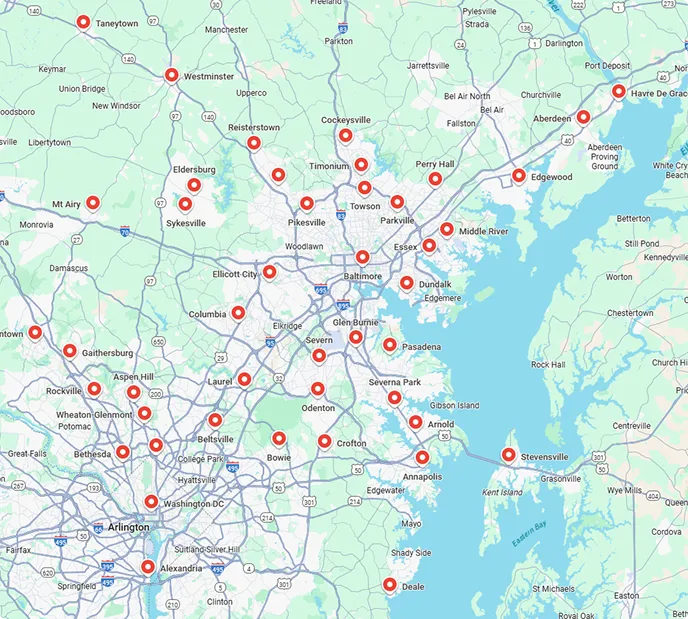
Service areas