

Furnace Installation in Towson, MD
For Towson, MD homes, replacing or installing a new furnace is a vital investment in comfort, safety, and energy efficiency. Given our cold winters, humid transitional seasons, and the presence of many older houses with varied duct systems, Tario HVAC ensures that the correct furnace installation prevents cold spots, significantly reduces utility bills, and eliminates serious safety risks such as carbon monoxide exposure. We’re here to detail the complete furnace installation process, from the initial site evaluation through final commissioning, discuss common issues that a new installation effectively resolves, and outline the service plans and typical warranties specifically relevant to Towson homeowners.
-min.webp)
Furnace Installation in Towson, MD
Replacing or installing a new furnace is one of the most important investments for comfort, safety, and energy efficiency in Towson, MD homes. With cold winters, humid transitional seasons, and many older houses with mixed duct systems, the right furnace installation prevents cold spots, reduces utility bills, and eliminates safety risks like carbon monoxide exposure.
Why a professional furnace installation matters in Towson, MD
- Towson winters demand a reliably sized and installed heating system to maintain comfort and prevent frozen pipes.
- Older homes often have undersized or leaky ductwork that undermines modern high-efficiency furnaces.
- Local code and safety requirements for gas appliances, venting, and combustion air must be followed to protect your household.Professional installation delivers correct sizing, proper venting, safe combustion, and optimized efficiency for Maryland climate needs.
Common furnace issues and why replacement may be the best solution
- Uneven heating or persistent cold rooms despite recent repairs
- Rapid cycling, short system life, or frequent breakdowns
- High heating bills despite thermostat adjustments
- Noisy operation, rattles, or vibration that indicate worn components
- Safety concerns: cracked heat exchanger or elevated carbon monoxide readingsAddressing these with a properly scoped replacement prevents repeated service calls and restores reliable warmth.
Typical installation types for Towson homes
- High-efficiency gas furnaces (common choice for Baltimore County homes)
- Condensing furnaces for maximum efficiency where existing venting can be adapted
- Two-stage or modulating furnaces for improved comfort and reduced cycling
- Hybrid systems combining a furnace with a heat pump for year-round efficiencySelection depends on fuel availability, ductwork condition, budget, and desired efficiency.
Detailed furnace installation process
Site evaluation and load calculation
- Conduct a room-by-room heat loss calculation (Manual J) to determine the correct capacity.
- Inspect existing furnace location, clearances, combustion air availability, venting routes, and gas or electrical service.
- Review duct design and register layout to confirm airflow can meet the new unit requirements.
Unit selection and sizing
- Match capacity to calculated load to avoid oversized or undersized systems that waste energy or fail to heat properly.
- Consider AFUE rating, staging, variable-speed blowers, and compatibility with programmable or smart thermostats.
- Evaluate venting type: standard flue, power vent, or direct vent/condensing options based on home layout and efficiency goals.
Ductwork inspection and recommended modifications
- Measure static pressure and evaluate return air pathways to ensure balanced airflow.
- Identify leaks, disconnected sections, or insufficient insulation that lower efficiency.
- Recommend sealing, adding return or supply registers, enlarging trunk lines, or insulating ducts in attics and crawlspaces.
Professional installation steps
- Safely disconnect and remove the old system with attention to gas, electrical, and refrigerant containment if applicable.
- Install new furnace on a properly prepared pad or platform with required clearances.
- Connect gas line with proper fittings and pipe sealant, and verify gas pressure and leak-free joints.
- Complete venting and combustion air installation per code including proper draft control and termination.
- Wire electrical service, controls, and thermostat interfaces including any zoning or control panels.
- Install condensate drainage for condensing models and ensure proper trap and slope.
Code and safety compliance
- Obtain required Baltimore County permits and schedule inspections where applicable.
- Install or verify placement of carbon monoxide detectors and combustion air pathways per Maryland and county standards.
- Ensure flue termination and clearances meet local building code to prevent back drafting or flue gas leakage.
System startup and commissioning
- Perform initial startup procedures and verify ignition sequence and flame characteristics.
- Measure temperature rise across the heat exchanger to confirm correct airflow.
- Test blower performance, fan speeds, and static pressures to validate duct compatibility.
- Check gas manifold pressure and combustion efficiency; measure carbon monoxide at appliance and living spaces.
- Program thermostat set points and any smart controls; calibrate zoning dampers if present.
Post-installation testing and homeowner walkthrough
- Provide a clear walkthrough showing filter access, thermostat operation, safety features, and basic troubleshooting tips.
- Explain maintenance tasks such as filter replacement frequency, condensate inspection, and season transition checks.
- Deliver a written summary of work performed, component model numbers, efficiency ratings, and warranty details.
Benefits of a professional installation for Towson homeowners
- Improved comfort with even temperatures and stable humidity control during cold months.
- Lower energy bills by matching efficiency and proper sizing to your home.
- Reduced risk of safety hazards like carbon monoxide and incomplete combustion.
- Longer equipment life and predictable maintenance schedule with fewer emergency repairs.
- Compliance with local codes and smoother permit inspections for resale or insurance purposes.
Service plans and warranties explained
- Manufacturer warranties typically cover major components and heat exchangers for a specified period; registration may be required to maintain full coverage.
- Labor warranties vary and may be offered by the installing contractor for fixed periods following installation.
- Maintenance plans provide annual tune-ups including combustion testing, filter checks, burner cleaning, and safety inspections to preserve efficiency and extend warranty eligibility.
- Priority service programs and diagnostic credits are common features of comprehensive maintenance agreements.
- For Towson homes, seasonal maintenance before winter and after summer helps prevent cold-weather failures and maintains efficient gas combustion.
Maintenance best practices after installation
- Replace or clean filters on recommended intervals to maintain airflow and protect the heat exchanger.
- Schedule annual professional tune-ups in the fall to validate combustion safety and efficiency before heavy use.
- Keep the area around the furnace clear for proper airflow and service access.
- Monitor for unusual noises, cycling behavior, or unexplained energy increases and address them early.
Q: How is a furnace sized for my Towson home?
A: A proper installer performs a room-by-room heat loss calculation to determine required BTU capacity. This accounts for insulation, window area, orientation, and local climate so the unit matches actual needs rather than relying on rule-of-thumb sizing.
Q: Will my existing ductwork work with a new high-efficiency furnace?
A: Duct compatibility depends on static pressure, airflow capacity, and leakage. Duct inspection and testing determine whether sealing, resizing, or additions are needed to achieve proper performance with a modern furnace.
Q: Do installations in Towson require permits or inspections?
A: Yes. Furnace installations typically require permits and inspections through Baltimore County or the applicable local authority to ensure compliance with Maryland and county building and safety codes.
Q: What safety checks are performed during startup?
A: Technicians verify gas pressure, flame quality, combustion efficiency, carbon monoxide levels, heat exchanger condition, venting integrity, and proper electrical and control operation.
Q: How long does a full furnace installation take?
A: Installation time varies by scope. A like-for-like replacement is often completed in one day, while installations requiring duct modifications, venting changes, or permits may take multiple days.
Q: What warranties and service plans should I consider?
A: Look for manufacturer parts and heat exchanger warranties plus a labor warranty from the installer. Annual maintenance plans that include combustion testing and tune-ups help maintain efficiency and warranty validity.

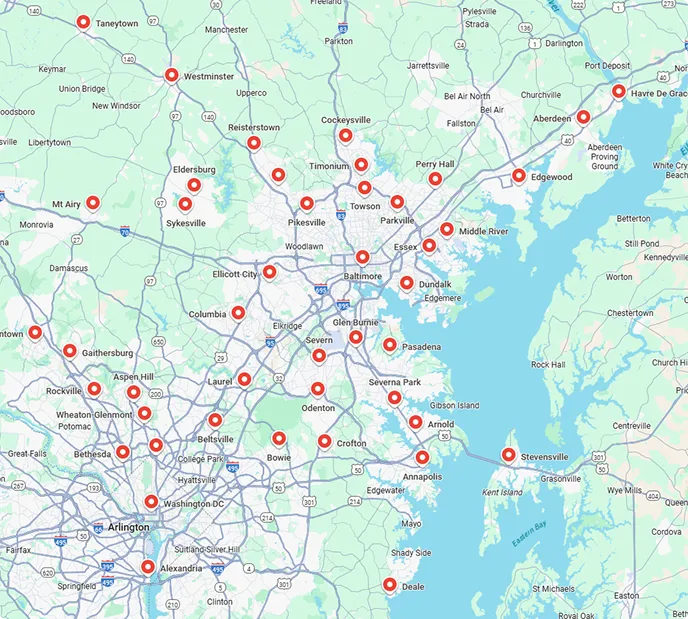
Service areas