

Furnace Installation in Essex, MD
For homes in Essex, MD, a properly installed furnace isn't just a luxury—it's the foundation of a comfortable and safe living space. Tario HVAC knows our local winters bring chilly, damp cold, making reliable heating non-negotiable. Our professional furnace installation goes far beyond simply dropping in a new unit. We start with a comprehensive site assessment, ensure correct sizing, meticulously handle ductwork and venting, and conclude with commissioning, vital safety inspections, warranty registration, and dedicated ongoing support. Here's a look at what you can expect from a complete furnace installation in Essex, MD, and how every step we take safeguards your comfort, safety, and long-term energy savings.
-min.webp)
Furnace Installation in Essex, MD
A properly installed furnace is the backbone of a comfortable, safe home in Essex, MD. Winters in this area bring chilly temperatures and damp cold that make reliable heating essential. A professional furnace installation addresses more than just fitting a new unit: it begins with a thorough site assessment, correct sizing, careful ductwork and venting work, and finishes with commissioning, safety inspections, warranty registration, and ongoing support.
Why proper furnace installation matters in Essex, MD
Essex homes often include a mix of older houses and newer builds. Older ductwork, tight attic spaces, and variable insulation levels can make a one-size-fits-all approach ineffective. Improper installation can cause uneven heating, high utility bills, premature equipment failure, and safety risks such as carbon monoxide exposure. In a humid coastal-plain climate like Essex, controlling airflow and combustion venting is especially important to avoid condensation and ensure reliable performance year after year.
Common furnace installation issues in Essex, MD
- Undersized or oversized units that cycle frequently or fail to keep rooms comfortable
- Leaky, undersized, or poorly insulated ductwork causing heat loss and pressure imbalances
- Inadequate combustion air or poorly routed venting leading to backdrafting or poor efficiency
- Lack of proper clearances in basements or closets common to older Essex homes
- Missing permits or failure to meet Maryland and Baltimore County code requirements
- Improper thermostat placement or control wiring errors that affect comfort and efficiency
Site assessment and system planning
A thorough site assessment establishes the foundation for an effective installation. Expect review of:
- Home size, layout, insulation, window types, and attic conditions to understand heat loss
- Existing ductwork condition, layout, insulation levels, and return locations
- Fuel source and meter location (natural gas, propane, or oil) and gas line routing needs
- Venting options and chimney condition for safe exhaust management
- Mechanical space clearances and access for serviceability
From this assessment a load calculation (Manual J or equivalent) determines the right furnace capacity. Proper sizing ensures efficient runtime, even heating, and longer equipment life.
Proper unit sizing and equipment selection
Correct sizing balances comfort and efficiency. Modern furnaces vary by AFUE rating, blower design, and modulation capabilities. For Essex homes:
- Choose a unit sized from a formal heat loss calculation, not rule-of-thumb square footage estimates
- Consider variable-speed blowers or modulating gas valves for better comfort in older, draftier homes
- Match the furnace to the existing or planned air handler and thermostat for optimal control and integration with air conditioning
Ductwork and venting considerations
Ductwork is as important as the furnace itself. Key elements include:
- Sealing and insulating ducts to prevent energy loss in basements, crawlspaces, and attics
- Correctly sizing supply and return runs to maintain balanced airflow and static pressure limits set by the furnace manufacturer
- Adding or relocating returns and supplies to address cold rooms or pressure imbalances common in retrofits
- Ensuring proper venting and combustion air per Maryland and local codes, including inspection of chimneys and use of direct-vent options when appropriate
- Managing condensate and drainage for high-efficiency condensing furnaces
Step-by-step installation procedure
- Pre-install preparation: obtain necessary permits, verify fuel and venting paths, and protect living areas.
- Remove existing equipment safely, inspecting flue and gas lines for reuse or replacement.
- Modify or install new duct connections, supports, and insulation as planned.
- Set and secure the new furnace on appropriate pads or platforms, maintaining required clearances.
- Connect gas, electrical, and control wiring following manufacturer specifications and code.
- Install venting or chimney adapters and verify secure, code-compliant exhaust paths.
- Start-up and configuration: set blower speeds, safety limits, and thermostat integration.
- Combustion setup and testing for fuel-fired units to verify optimal combustion and draft.
Commissioning and performance testing
Commissioning confirms the system operates as intended:
- Measure airflow, static pressure, and temperature rise across the furnace to match manufacturer specs
- Test gas pressure, burner operation, and combustion efficiency when applicable
- Check thermostat calibration, zone controls, and any integrated smart controls
- Ensure the system cycles properly at different setpoints and fan modes
Documentation of test results and equipment configuration provides a reference for future service and performance checks.
Safety inspections and code compliance
Safety is central to every installation. Inspections cover:
- Gas leak testing and proper shutoff device installation
- Carbon monoxide testing and verification of venting integrity
- Electrical connections, grounding, and service panel load checks
- Compliance with Maryland state and Baltimore County codes, including permit sign-offs and clearances
A finalized installation includes any required municipal inspections and confirmation that the installation meets current safety standards.
Warranty registration and post-installation support
After installation, register equipment warranties to protect your investment. Good post-installation support includes:
- Documentation of model numbers, serial numbers, and warranty terms
- A recommended maintenance schedule such as annual tune-ups and filter changes
- Guidance on seasonal operation tips for Essex winters and humid summers
- Troubleshooting advice for common issues like uneven heat, noisy blowers, or cycling
Routine maintenance extends equipment life, maintains efficiency, and preserves warranty coverage.
Benefits of professional furnace installation in Essex, MD
A correctly planned and executed installation delivers:
- Consistent, comfortable indoor temperatures during cold Essex winters
- Lower energy use through proper sizing and sealed duct systems
- Reduced repair frequency and longer system lifespan
- Improved indoor air quality and safer combustion operation
- Compliance with local codes and documented safety inspections
Q: How long does a typical furnace installation take?
A: Most complete replacements take one to two days depending on duct modifications, venting work, and permit requirements.
Q: Will I need a permit for furnace installation in Essex, MD?
A: Yes. Furnace installations normally require permits and inspections to meet state and Baltimore County codes.
Q: How can I prepare my home before installation day?
A: Clear access to the mechanical area, protect floors and furniture along the work path, and ensure pets and children are kept away from the work zone.
Q: What maintenance is required after installation?
A: Annual tune-ups, seasonal filter changes, and periodic duct inspections help maintain efficiency and safety.
Q: Can a new furnace work with my existing air conditioner?
A: In most cases yes. Proper airflow and matching of equipment controls are verified during the planning and commissioning stages.

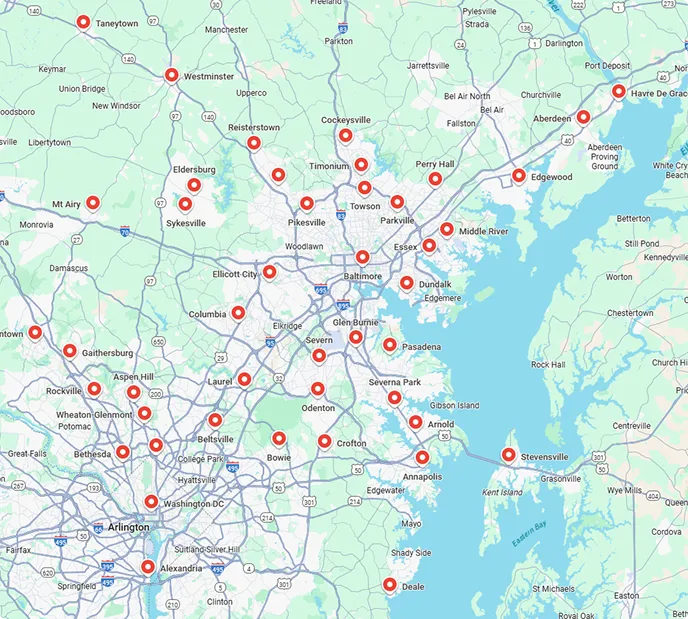
Service areas