

Heat Pump Repair in Baltimore, MD
Heat pump repair page for Baltimore homes outlines common symptoms, diagnostic steps, and effective repair strategies. It explains how to identify issues such as uneven heating or cooling, short cycling, unusual noises, and refrigerant leaks, then details a systematic approach for technicians, including visual inspections, airflow checks, electrical testing, and leak detection. It covers repair options, warranty considerations, emergency service availability, pricing factors, time-to-repair expectations, and scheduling tips to ensure safe, reliable operation and long-term efficiency in Maryland’s climate.
Heat Pump Repair in Baltimore, MD
Heat pumps are a popular, efficient choice for Baltimore homes because they provide both heating and cooling in one system. When a heat pump fails or underperforms, it directly affects comfort and energy bills — especially in Baltimore’s humid summers and chilly, damp winters.
Common heat pump problems and symptoms in Baltimore homes
Baltimore homeowners commonly report the following symptoms. Noting these signs helps prioritize service and speed up diagnosis.
- Loss of heating or cooling: System runs but air is not warm or cool enough.
- Short cycling or frequent on-off cycles: Indicates airflow, control, or refrigerant issues.
- Strange noises: Rattling, buzzing, grinding, or hissing from outdoor or indoor units.
- Reduced airflow: Weak vents often caused by blower motor issues, clogged filters, or duct restrictions.
- Frost or ice on the outdoor unit: Common in winter when defrost cycle malfunctions.
- Refrigerant leaks: Hissing sounds, oil residue on lines, or low refrigerant charge leading to poor performance.
- Higher than normal energy use: Steady increase in electric bills can signal failing components or loss of efficiency.
- System won’t turn on or control board errors: No response from thermostat or visible error codes.
Baltimore’s coastal proximity and seasonal humidity can accelerate corrosion and refrigerant line wear, making issues like outdoor coil degradation and electrical component failure more common than in drier climates.
Diagnostic procedures technicians use
A systematic diagnostic process identifies root causes efficiently and prevents unnecessary part replacements.
- System history and symptom intake: Technician documents when the problem started, recent noises, and any intermittent behavior.
- Visual inspection: Check outdoor unit, indoor air handler, filter, ductwork, refrigerant lines, and electrical connections for signs of damage or corrosion.
- Airflow measurement: Inspect filters, blower operation, and supply/return registers for airflow restrictions.
- Electrical testing: Measure voltages and currents to motors, compressors, and capacitors to find failing components.
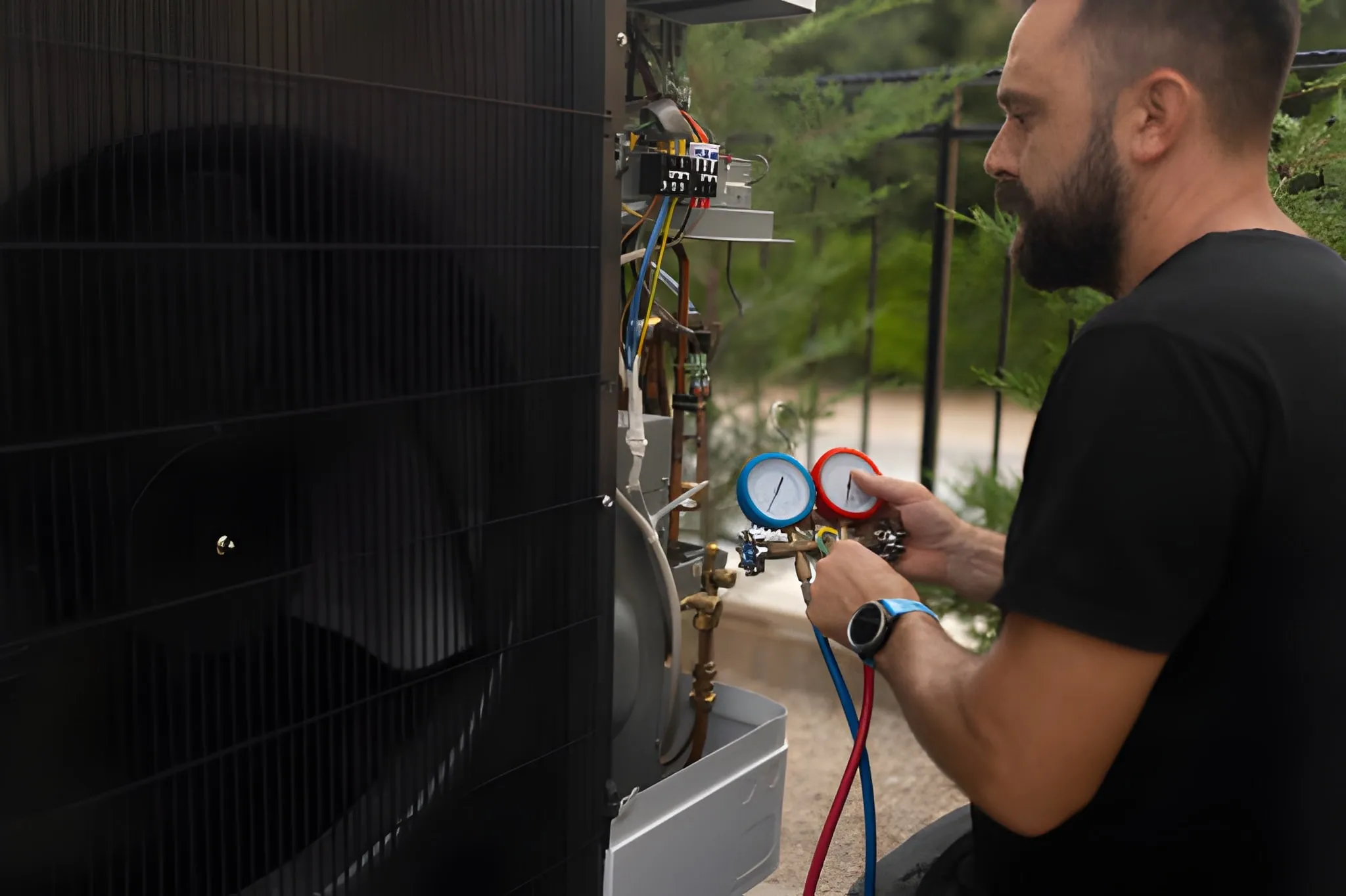
- Refrigerant check: Use gauges to verify system pressures and detect leaks. Dye or electronic leak detectors may be used.
- Control and thermostat verification: Confirm proper signaling and verify thermostat programming and sensors.
- Defrost cycle and reversing valve tests: For winter issues, verify the defrost sequence and reversing valve operation.
Diagnostics are prioritized to protect system components and homeowner safety, including shut down of systems when electrical hazards or refrigerant leaks are found.
Typical repairs and solutions
Once the failure point is identified, common repairs include:
- Compressor repair or replacement: Replacing a failing compressor is major work and often considered only after confirming other causes.
- Reversing valve replacement: Fixes problems when the system will not switch between heating and cooling modes.
- Fan and blower motor repair or replacement: Restores proper airflow when motors or bearings fail.
- Capacitor and contactor replacement: Common electrical fixes that restore reliable starts and operation.
- Control board replacement or reprogramming: Resolves erratic operation or persistent error codes.
- Refrigerant recovery and recharge with leak repair: Includes locating and repairing leaks, properly evacuating and recharging the system, and testing for pressure stability.
- Coil cleaning or fin repair: Restores heat transfer efficiency when outdoor coils are dirty, bent, or corroded.
- Defrost control repair: Corrects icing problems and ensures proper winter operation.
Repairs are performed to industry standards, including proper refrigerant handling and electrical safety checks.
Refrigerant handling and environmental compliance
Technicians follow required procedures for refrigerant recovery, leak repair, and recharge. This includes testing for and repairing leaks prior to recharging, using approved refrigerants, and documenting recovery for regulatory compliance. Proper handling is critical both for system performance and environmental protection.
Parts, warranties, and replacement considerations
- Parts options: Original equipment manufacturer (OEM) parts versus high-quality aftermarket parts. OEM parts preserve manufacturer warranties but may cost more.
- Warranty types: Manufacturer parts and compressor warranties, and separate contractor workmanship warranties. Warranty coverage varies by component and age of the system.
- When to replace vs repair: Technicians weigh repair cost, remaining equipment life, efficiency loss, and frequency of breakdowns. Older systems with repeated compressor or coil failures may be better candidates for replacement.
Ask for clear documentation of any parts warranty and the length of workmanship coverage when a repair plan is presented.
Emergency and priority service availability
Heat pumps can fail suddenly during extreme weather. Priority or emergency service options are available for urgent situations such as complete loss of heating during cold snaps or major refrigerant leaks. Emergency responses typically include a rapid assessment, temporary measures to restore operation if safe, and an expedited repair plan. Response windows vary based on local demand and technician availability.
Pricing guidance and factors that affect repair cost
Repair costs depend on several factors rather than a fixed price. Key influences include:
- The specific failed component and whether it is readily replaceable.
- System age and model — older or obsolete systems can require special parts or extended labor.
- Accessibility of the unit — rooftop or tight urban installations increase labor time.
- Extent of required refrigerant work and need for leak repair.
- Whether multiple components failed due to a single root cause.
- Seasonal demand and emergency service needs.
Technicians should provide a transparent estimate after diagnosis, including parts, labor, and any warranty terms.
Time-to-repair expectations
Typical repair timelines after on-site diagnosis:
- Minor electrical or control board fixes: often completed within a single visit.
- Motor, capacitor, or contactor replacements: usually completed the same day if parts are in stock.
- Refrigerant leak repair and recharge: may require additional leak testing and multiple visits depending on leak location.
- Compressor or major component replacement: can take longer due to part sourcing and additional system evacuation and recharge steps.
Urban Baltimore service calls may incur slight scheduling delays for hard-to-source parts, but most common repairs are completed within one to a few days from diagnosis.
Technician qualifications and what to expect when scheduling service
Qualified technicians should hold state HVACR licensing, refrigerant handling certification, and relevant trade training. Expect them to:
- Verify licenses and certifications before starting work.
- Explain diagnostic findings in plain language and outline repair options.
- Provide a written estimate that details parts, labor, and warranty coverage.
- Perform safety checks and system performance testing after repairs.
- Clean up the work area and document completed work and recommendations.
Scheduling typically involves providing basic system information (make, model, symptoms) and a preferred appointment window. A pre-visit checklist from the technician may request access to the indoor unit and outdoor equipment and note any safety or access concerns common in Baltimore rowhomes.
Preventive maintenance and long-term value
Regular maintenance extends heat pump life and reduces emergency repairs. Recommended seasonal checks include filter replacement, coil cleaning, refrigerant pressure checks, electrical inspections, and verifying defrost and reversing valve operation. In Baltimore’s humid, salty air environment, keeping outdoor coils and electrical enclosures clean and corrosion-free has added importance.
Well-executed repairs and preventive care restore comfort quickly and protect long-term system efficiency in Baltimore’s climate, preserving energy savings and reducing future repair risk.

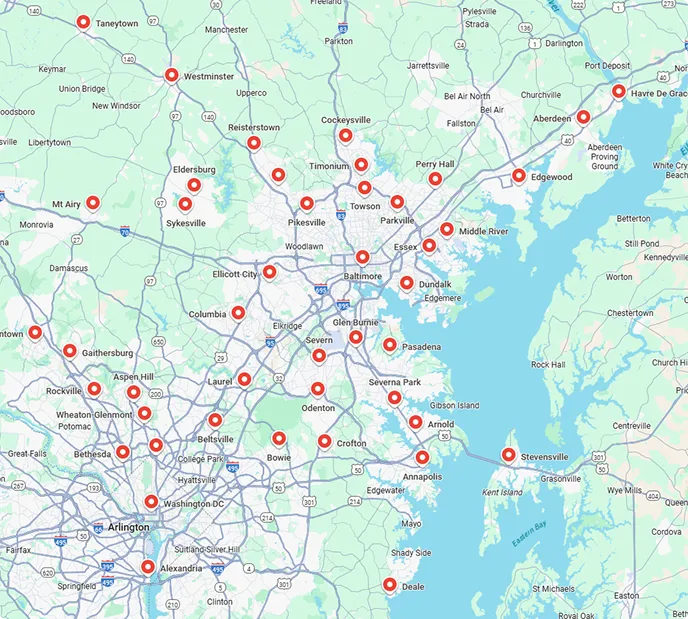
Service areas