

Water Heater Repair in Perry Hall, MD
A malfunctioning water heater is disruptive and can cause damage or safety hazards if left unchecked. In Perry Hall, MD, homeowners rely on consistent hot water year-round—especially during cold winters when demand spikes. Tario HVAC can explain common water heater problems found in Perry Hall homes, how diagnostics and repairs are performed, when replacement is the smarter choice, and the safety and warranty considerations that matter.
.webp)
Why timely Water Heater repair matters in Perry Hall homes
Perry Hall experiences cold winters and hard-water conditions in many neighborhoods. Both factors increase the strain on water heaters: colder incoming water forces longer heating cycles, and mineral buildup from hard water creates sediment that lowers efficiency and accelerates wear. Prompt repair preserves efficiency, prevents leaks and flooding, reduces energy waste, and avoids safety risks such as gas leaks or scalding water.
Common water heater issues in Perry Hall
- No hot water or insufficient hot water: Can be caused by failed heating elements (electric units), a malfunctioning gas valve or pilot/ignition system (gas units), a tripped breaker, or a worn dip tube.
- Pilot light or ignition problems: Pilot flame goes out, or the electronic ignition fails to light the burner—common in older gas water heaters and units exposed to drafts or dust.
- Leaking tank or fittings: Leaks at the tank body usually indicate corrosion and a near-term need for replacement. Leaks at fittings, valves, or connections can often be repaired.
- Strange noises: Popping, rumbling, or banging typically indicate sediment buildup. Sediment creates hotspots that can warp tank components and reduce lifespan.
- Thermostat or heating element failure: Electric heaters commonly suffer failed elements or thermostats that cause no heating or overheating.
- Faulty temperature and pressure (T&P) relief valve: A leaking or stuck valve can indicate overpressure or valve failure.
- Corrosion and anode rod depletion: Anode rods sacrifice themselves to prevent tank corrosion. When depleted, corrosion accelerates.
- Slow recovery or inefficiency: Age, scale buildup, or failing components reduce the heater’s ability to recover and raise water temperature.
Diagnostic approach: what to expect
A proper diagnosis combines visual inspection, safety checks, and targeted testing:
- Safety and shutoff checks: Verify the gas supply or electrical disconnect, and isolate the water supply if necessary.
- Visual inspection: Look for leaks, corrosion, rust, and sediment around the drain valve or tank bottom.
- Ignition and pilot assessment: For gas units, inspect pilot assembly, thermocouple, gas valve, and ignition control. For electric units, verify breakers and element continuity.
- Temperature testing: Measure outlet water temperature and check thermostat calibration.
- Pressure and T&P valve testing: Ensure the valve functions and that household water pressure is within safe limits.
- Element and electrical testing: Use multimeter checks on heating elements and thermostats in electric systems.
- Sediment evaluation: Drain a small amount to assess sediment levels and water clarity.
After diagnosis, a technician will provide a clear estimate describing recommended repairs, expected life extension, and alternatives.
Typical repairs and what they involve
- Pilot ignition repair or replacement: Clean or replace pilot assembly, thermocouple, or ignition module to restore reliable ignition.
- Heating element replacement: Replace failed electric heating elements and test for proper operation.
- Thermostat replacement or recalibration: Replace faulty thermostats and set safe temperature limits to prevent scalding.
- Valve and fitting repairs: Replace T&P valves, drain valves, pressure regulators, and pipe fittings that are leaking.
- Anode rod replacement: Installing a new anode rod helps prevent future tank corrosion and can add meaningful life to the tank.
- Tank leak repairs (limited): Minor leaks at connections may be repaired; tank body leaks from corrosion generally require replacement.
- Sediment flushing: Professional flushes remove sediment to restore efficiency and reduce noise; repeated flushing is recommended for hard-water areas.
- Electronic control or gas valve replacement: Modernizing controls or replacing failing gas valves improves reliability and safety.
Repair vs replacement: how to decide
Consider these factors when choosing repair or replacement:
- Age of the water heater: Tank water heaters typically last 8 to 12 years; tankless units vary but often last longer. If your unit is older and experiencing multiple failures, replacement is usually more cost-effective.
- Type and severity of damage: A failed element or valve is usually worth repairing. A leaking or heavily corroded tank should be replaced.
- Energy efficiency and operating cost: Newer models are more efficient. If energy bills are high and the unit is old, replacement can pay back through lower energy use.
- Warranty coverage: Manufacturer warranty on parts or the tank can influence the choice; a covered part replacement is often preferable.
- Repair cost relative to replacement: If repair costs exceed a substantial portion of a new unit, replacement is recommended.
Safety considerations
- Gas smell or suspected leak: Immediately ventilate the area and shut off the gas at the meter if safe. Avoid flames, switches, or electrical devices. A professional should inspect and repair gas systems.
- Electrical hazards: Shut off power at the breaker before inspecting or draining an electric water heater. Only qualified personnel should handle electrical repairs.
- Scalding risk: Keep thermostats set to safe temperatures (commonly around 120°F) and use anti-scald devices where necessary.
- Flood prevention: Leaking tanks can cause significant water damage. Know how to shut off the home’s water supply and electricity/gas to the unit.
Warranties and service plans
- Manufacturer warranties: Typically cover major components or the tank for a defined period. Coverage varies by model and age; keep original paperwork and service records.
- Parts and labor warranties: Contractors often offer limited warranties on replaced parts and labor for a specified time.
- Service plans: Annual maintenance plans commonly include inspection, flushing, sediment removal, T&P valve testing, anode rod checks, and priority scheduling. In Perry Hall, annual service helps counteract hard-water effects and the strain of cold winters.
Routine maintenance and extending system life
- Flush the tank annually (more often in hard-water areas) to reduce sediment buildup.
- Test the T&P relief valve annually.
- Inspect for leaks, rust, and corrosion twice a year.
- Replace the anode rod every 3 to 5 years or as recommended based on inspection.
- Keep the area around the water heater clear and ventilated.
FAQs
Q: How long will a typical water heater repair take?
A: Most common repairs—replacing a heating element, thermostat, or T&P valve—are completed within 1 to 3 hours. More complex diagnostics or gas-control replacements may take longer.
Q: Can a leaking tank be patched instead of replaced?
A: Small leaks from fittings can often be repaired, but leaks from the tank body due to corrosion usually mean replacement is necessary because patches are temporary and risky.
Q: How can I tell if my water heater is failing or just needs maintenance?
A: No hot water, frequent cycling, unusual noises, rusty or discolored water, and visible leaks indicate issues. A professional inspection will determine if maintenance (flushing, anode rod replacement) or repairs are required.
Q: How often should a water heater be flushed in Perry Hall?
A: In areas with hard water like many parts of Perry Hall, flushing every 6 to 12 months helps prevent sediment buildup. Frequency depends on mineral levels and usage.
Q: Are there safety checks I can do before scheduling service?
A: You can visually inspect for leaks, check the pilot light or reset the breaker, and test the T&P valve by lifting its lever briefly. For gas smells, electrical faults, or complex issues, a qualified technician should handle further actions.

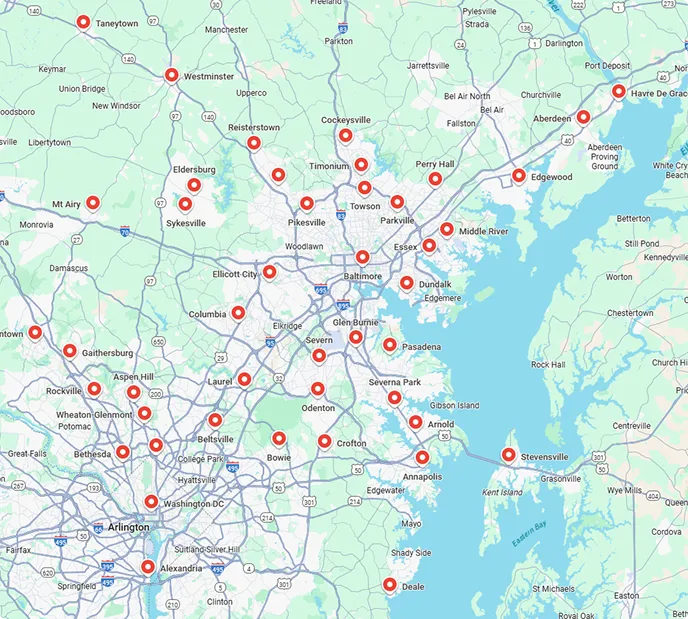
Service areas