

Tankless Water Heater Installation in Pasadena, MD
Upgrading to a tankless (on-demand) water heater in Pasadena, MD addresses common homeowner pain points: running out of hot water, high energy bills, and limited space. A properly selected and installed tankless unit delivers continuous hot water, reduces standby heat loss, and can extend equipment lifespan. In coastal communities like Pasadena, proximity to Chesapeake Bay, seasonal temperature swings, and local water hardness affect system selection, placement, and maintenance needs. Tario HVAC explains how tankless water heater installation works, what to consider when choosing a system in Pasadena, and what to expect during and after installation.
.webp)
Common Tankless Water Heater projects in Pasadena, MD
- New whole-home tankless installations for modernizing aging equipment
- Replacing a failed storage tank with an on-demand gas or electric unit
- Point-of-use tankless units for bathrooms or laundry to improve response time
- Gas to electric or electric to gas conversions where fuel availability allows
- Outdoor rated units for well-ventilated exterior installs near the bay
- Adding recirculation or tempering valves for faster hot water delivery and safe outlet temperatures
Typical problems that lead to replacement
- Frequent tank corrosion or leaks from aging storage heaters
- Insufficient capacity for family hot water demands
- High monthly energy use due to standby losses
- Repeated water heater repairs or failing components
- Need for more space in mechanical rooms or basements
System sizing made simple
Sizing a tankless water heater focuses on two numbers: required flow rate (gallons per minute, GPM) and temperature rise needed. Typical steps:
- Add up peak simultaneous fixtures (shower 1.5–2.5 GPM, faucet 0.5–1.5 GPM, dishwasher ~1–2 GPM).
- Determine the temperature rise: incoming groundwater in the Chesapeake region can be cool in winter (often mid 40s to low 50s F), so the heater must raise water to desired outlet temperatures (typically 110 to 120 F). A higher winter temperature rise requires more powerful equipment.
- Match GPM and temperature rise to a unit’s rating. Professionals use a load calculation to recommend the right model rather than guessing.
Local note: colder groundwater in winter and frequent simultaneous showers in family homes in Pasadena mean many households require higher-capacity units or multiple units zoned for different parts of the home.
Gas versus electric: pros and cons for Pasadena homes
- Gas tankless (natural gas or propane): Generally offer higher GPM capacity and better performance for large households. They require proper combustion venting and gas line sizing. In Pasadena, natural gas is common in many neighborhoods; propane may be needed where gas service is not available.
- Electric tankless: Easier to install where venting is a concern and often simpler for point-of-use installations. They require sufficient electrical service and may be better suited for small homes or single-point applications.
- Considerations for local homeowners include fuel availability, needed hot water volume, and whether outdoor/exterior installations will face corrosive salt air from nearby waterways.
Site preparation and ventilation needs
- Indoor gas units need a venting path that meets code; condensing units often use PVC for exhaust, while non-condensing units require metal venting.
- Outdoor-rated units eliminate indoor venting but must be protected from freeze and salt air. In Pasadena, coastal exposure can accelerate corrosion, so choose models rated for marine environments or use corrosion-resistant mounting and finishes.
- Combustion air: Gas units need adequate combustion air. Tight modern homes often require fresh-air intake or dedicated combustion vents.
- Clearances: Maintain manufacturer-recommended clearances from combustible materials and ensure access for service and maintenance.
- Condensate handling: Condensing tankless models produce acidic condensate that must be drained per code.
Installation process overview
- Site survey and load calculation to determine model and placement.
- Obtain required permits for plumbing, gas, and electrical work and schedule inspections as required by local jurisdictions.
- Prepare the site: framing, venting runs, condensate routing, and any gas or electrical upgrades.
- Install unit, connect water, fuel, and venting, and secure electrical hookups or gas piping sized to the unit’s demand.
- Commissioning: set temperature limits, run performance and safety checks, verify gas pressures, test venting, and demonstrate hot water delivery at key fixtures.
- Final inspection by local authorities for permit sign-off and code compliance.
Permitting and code compliance: Pasadena installs must meet Maryland plumbing and mechanical codes and local building department rules. Venting, combustion air, condensate disposal, and gas line sizing are inspected items. Using a licensed professional ensures installations meet regional code and inspection requirements.
Cost and payback expectations (conceptual)
Tankless systems reduce energy waste through on-demand heating and typically deliver measurable energy savings compared with older tank systems. Energy savings versus a conventional tank vary depending on household hot water use and fuel type, but many homeowners see a meaningful reduction in energy use and lower long-term operating costs. Payback depends on hot water demand, fuel costs, and installation complexity; typical energy payback periods frequently fall within several years to a decade for many households. High hot water use and rising energy prices shorten payback times, while low usage extends them.
Maintenance requirements for Pasadena homes
- Annual or biennial descaling and flushing is essential in areas with moderate to hard water like Pasadena. Mineral buildup reduces performance and can trigger maintenance warnings.
- Replace inline filters or screens as specified by the manufacturer.
- Inspect venting, condensate lines, and exterior housing for corrosion, especially for units near the bay.
- Verify combustion pressures and gas connections for gas-fired units during routine service.
- Consider a water softener or scale inhibitor where hard water is an issue to extend unit life.
Benefits for Pasadena homeowners
- Continuous hot water for showers, laundry, and appliances without a storage tank
- Reduced standby heat losses and improved energy efficiency
- Smaller footprint frees up space in basements and utility closets
- Longer expected service life than conventional tanks when maintained properly
- Lower environmental impact through reduced fuel consumption
Q: How long does a tankless water heater installation take?
A: A typical whole-home installation takes from a single day to two days depending on venting complexity, whether gas or electrical upgrades are needed, and permit scheduling.
Q: Will a tankless unit provide enough hot water for my family?
A: If sized correctly for your peak simultaneous demand and local groundwater temperatures, tankless units can meet most household needs. Larger families often require a higher capacity unit or multiple units.
Q: Do tankless units need annual maintenance?
A: Yes. Annual or biennial flushing and scale prevention is recommended, more often if water is hard.
Q: Can I install a tankless unit outdoors in Pasadena?
A: Outdoor-rated models are available and eliminate indoor venting, but you must protect them from freeze and coastal corrosion. Outdoor placement is common in mild climates but must follow manufacturer guidance.
Q: Are permits required for tankless water heater installation?
A: Yes. Gas, plumbing, and electrical permits and inspections are generally required to ensure code compliance.
Q: Will switching to tankless save energy in Maryland winters?
A: Tankless heaters eliminate tank standby losses and can be more efficient, but savings depend on usage patterns and required temperature rise during cold Maryland winters. Regular maintenance maximizes efficiency and savings.

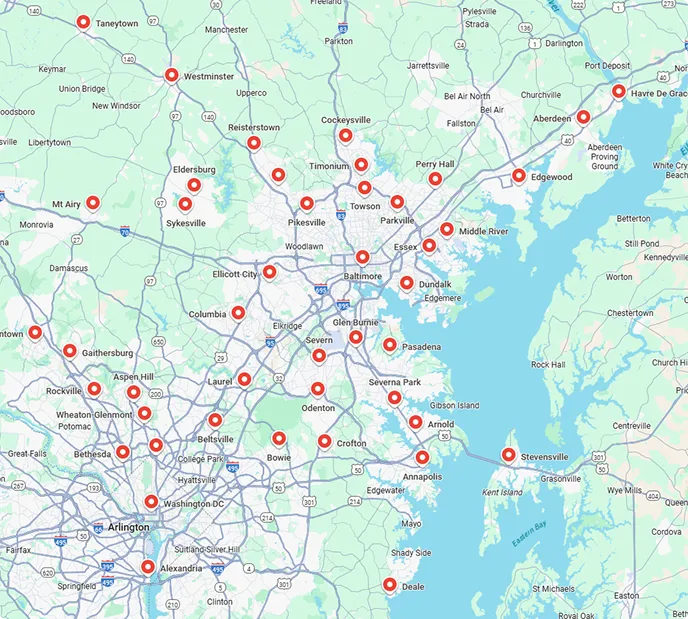
Service areas