

Whole House Dehumidifiers in Arnold, MD
Arnold, MD homeowners can effectively prevent mold and dampness with a properly sized, professionally installed whole-house dehumidifier from Tario HVAC, seamlessly integrated into their HVAC system. Our experts meticulously assess moisture issues, recommend appropriate capacity, and ensure reliable drainage and electrical connections. We handle precise placement, perfect duct integration, and thorough commissioning to achieve your target humidity levels. Tario HVAC helps you understand common performance metrics, provides ongoing maintenance, and delivers the concrete benefits of improved comfort, superior indoor air quality, and enhanced energy efficiency, all with practical steps for lasting success.
Whole House Dehumidifiers in Arnold, MD
High humidity is a year-round concern for homes in Arnold, MD. Proximity to the Chesapeake Bay and Maryland's warm, humid summers mean trapped moisture can lead to mold, musty odors, sticky rooms, and reduced comfort. A properly specified and installed whole house dehumidifier controls indoor humidity across every room, protects building materials, reduces HVAC strain, and improves indoor air quality. This page explains how professionals assess moisture issues, select and size systems for Arnold homes, install and integrate whole-home dehumidifiers with your HVAC, and what to expect for performance and maintenance.
Why Arnold, MD homes need whole-home dehumidification
- Coastal humidity and seasonal thunderstorms drive higher indoor moisture in summer months.
- Basements, crawlspaces, and older homes with less vapor barrier are especially prone to dampness and mold growth.
- Lowering relative humidity stabilizes comfort levels and lets air conditioning run more efficiently, allowing higher thermostat settings without a sticky feeling.
- Whole-house systems address moisture at the source rather than relying on room units that only treat single areas.
Common whole house dehumidifier issues in Arnold, MD
- Persistent basement mustiness or visible mold on walls and trim.
- Condensation on windows and cold surfaces, especially in spring and fall.
- Allergies or respiratory irritation tied to mold and mildew growth.
- Short-cycling units or insufficient removal during extreme humidity spikes.
- Drainage problems in sloped lots or homes without easy gravity drain access.
Assessment: how professionals diagnose moisture problems
A thorough assessment determines whether a whole-house dehumidifier is the right solution and what capacity is required. Typical assessment steps:
- Measure baseline indoor relative humidity (RH) in multiple areas and at different times to capture daily and seasonal variation.
- Inspect basements, crawlspaces, attics, and exterior envelope for leaks, poor ventilation, and insulation gaps.
- Evaluate HVAC system type and duct layout to determine integration options and air flow constraints.
- Account for household factors that add moisture: number of occupants, cooking and showering habits, presence of houseplants, and any home-based humidity sources.
- Identify drain routing options and electrical access for installation.
System selection and sizing for Arnold homes
Sizing a whole-house dehumidifier is about moisture load, not just square footage. Professional sizing considers:
- Square footage and ceiling height to calculate total conditioned air volume.
- Local climate factors in Arnold, MD, where summer humidity increases latent load significantly.
- Home tightness and existing ventilation, plus basement or crawlspace conditions.
- Typical sizing ranges for whole-home dehumidifiers are expressed in pints per day removal capacity at standard test conditions. For most single-family homes in Arnold, recommended capacities often fall between 50 and 120 pints per day depending on humidity severity and home size. Very damp or multi-level homes may require higher capacity or supplemental solutions.
- Controls: choose a unit compatible with a central humidistat, or with remote sensors and integrated controls that maintain target RH throughout the home.
Installation and HVAC integration
A professional installation ensures the dehumidifier performs efficiently and avoids common pitfalls:
- Ducted vs inline systems: A ducted whole-house unit ties into the HVAC supply or return ducts and treats all conditioned air. An inline unit installed near the air handler treats the air before distribution. Both approaches require careful airflow balancing.
- Drainage: Units need a reliable condensate drain. Where gravity drain is not possible, condensate pumps are used. Proper slope, trap configuration, and freeze protection for exterior lines are included in the plan.
- Electrical and controls: Dedicated circuit sizing, wiring for humidistat or integration with the thermostat, and placement of sensors in representative living spaces are standard steps.
- Accessibility: Installers position equipment for service access to filters, coils, and condensate components.
- Commissioning: After installation, a technician will verify airflow, set the control target (commonly 40 to 50 percent RH), test drainage, and monitor initial performance to confirm the system meets design expectations.
Typical performance metrics
Understand these common terms when reviewing whole-house dehumidifiers:
- Capacity: Measured in pints per day (or liters per day) at a standard condition. Higher numbers mean more moisture removal potential.
- Target relative humidity: Most homes achieve comfort and mold control at 40 to 50 percent RH. Sensitive occupants may prefer 45 percent.
- Energy use: Dehumidifiers add electrical load. Modern, ENERGY STAR-rated units deliver better removal per kWh. Integrated systems paired with the HVAC often reduce overall AC runtime by removing latent load efficiently.
- Cycle behavior: Effective whole-house systems run longer, steadier cycles rather than rapid on-off short cycling, which improves efficiency and prolongs equipment life.
Common problems and how they are resolved
- Inadequate humidity reduction: Usually caused by undersized equipment, poor air sealing, or uncontrolled moisture sources. Resolution includes resizing, duct sealing, and source control.
- Drain clogs and pump failures: Routine maintenance and proper condensate routing prevent backups and water damage.
- Noise or vibration: Proper mounting, isolation, and duct connections reduce sound issues.
- Frozen coils in cool conditions: Some units include auto-defrost; placement and control logic prevent freeze-ups.
Maintenance and filter care
Regular upkeep keeps performance consistent and prevents breakdowns:
- Filter cleaning: Most units have washable or replaceable air filters. Check monthly during heavy use and clean or replace per manufacturer guidance.
- Coil and pan inspection: Annually inspect coils and condensate pans for buildup or algae. Clean as needed to maintain airflow and drainage.
- Condensate line maintenance: Flush lines periodically and confirm pump operation if installed.
- Professional tune-ups: Annual service includes checking refrigerant levels (if applicable), controls calibration, and verifying dehumidification capacity.
Benefits for Arnold homeowners
- Mold and mildew prevention: Controlling RH limits fungal growth on walls, flooring, and HVAC systems.
- Improved comfort: Less stickiness, fewer odors, and more consistent indoor conditions allow higher thermostat settings without discomfort.
- Protection of home structure and belongings: Wood floors, furniture, and paint last longer with stable humidity.
- Potential HVAC efficiency gains: Reducing latent load can lower cooling demand during humid months.
Selecting and installing a whole house dehumidifier in Arnold, MD demands a local-aware approach that accounts for coastal humidity, basements, and seasonal variation. Accurate assessment, correct sizing, careful integration with your HVAC, and routine maintenance are the keys to reliable performance and long-term humidity control. Aim for balanced indoor RH and schedule periodic professional checks to keep the system operating as designed.

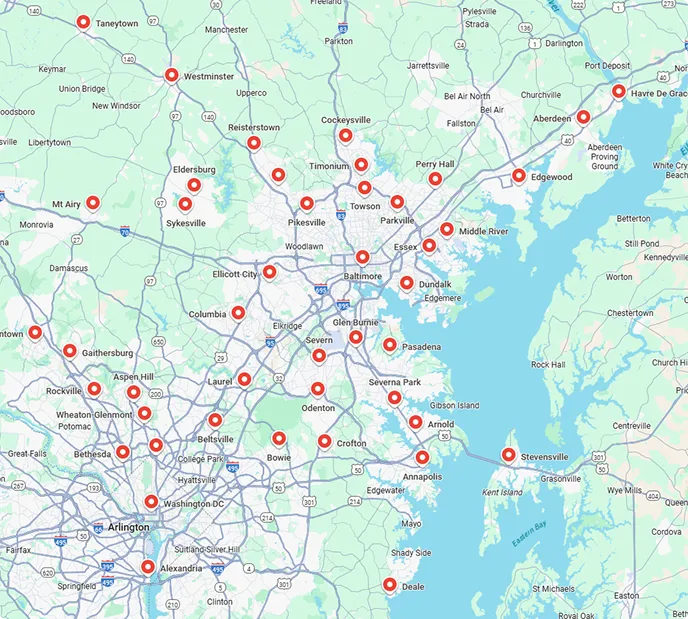
Service areas