

Whole House Air Purifiers in Wheaton, MD
Considering whole-house air purifiers for your Wheaton, MD home? Let's explore how a ducted, home-wide filtration system, seamlessly integrated with your HVAC, can continuously reduce pollen, VOCs, and fine particulates. Tario HVAC will cover common technologies, including HEPA, MERV filters, activated carbon, UV-C, and optional electronic/ionization options, along with typical installation approaches and essential compatibility checks. We'll also outline key performance metrics, maintenance schedules, and measurable results, emphasizing how properly sized systems and regular service from Tario HVAC deliver clearer air, significantly lower allergy symptoms, and healthier indoor environments for local homes.
.jpeg)
Whole House Air Purifiers in Wheaton, MD
Whole-home air purification is one of the most effective steps Wheaton, MD homeowners can take to improve indoor air quality, reduce allergy and asthma triggers, and protect family health year-round. With humid summers, pollen-heavy springs and falls, and seasonal indoor pollutant spikes from heating and activities, a properly specified whole house air purifier integrated with your HVAC system provides continuous filtration and contaminant control across every room.
Why whole-house purification matters for Wheaton homes
- Spring and fall pollen (oak, maple, ragweed) and summer mold spores are common in Montgomery County and readily infiltrate homes.
- Proximity to busy roads and I-495 means elevated fine particle (PM2.5) and traffic-related pollutants at times.
- Older or tightly sealed homes can trap VOCs from cleaning products, paints, and renovations, increasing indoor exposures.
A ducted, whole-home system treats air centrally and avoids the coverage and convenience limitations of portable units, delivering consistent results for allergy and asthma sufferers.
Whole-home technologies explained
Whole house air purifiers use one or more of these technologies, often combined for broad-spectrum performance.
- In-duct true HEPA filtration
- True HEPA captures 99.97% of particles down to 0.3 microns and is the gold standard for removing pollen, pet dander, dust mite allergens, and many fine particles.
- Because HEPA media increases airflow resistance, in-duct HEPA typically requires fan-assisted housings or integration with an HVAC blower capable of handling added static pressure.
- High-efficiency mechanical filters (MERV-rated)
- ASHRAE 52.2 tested MERV ratings indicate particle capture efficiency. MERV 13-16 filters remove the majority of fine particles and are frequently used where HEPA retrofit is impractical.
- MERV 13 is commonly recommended for effective PM2.5 and allergen reduction without major HVAC modifications.
- Activated carbon filtration
- Carbon beds adsorb odors and volatile organic compounds (VOCs) such as formaldehyde, smoke odors, and household chemical off-gassing.
- Carbon capacity and bed depth determine how long it remains effective before replacement.
- UV-C germicidal irradiation
- In-duct UV lamps reduce microbial growth on cooling coils and can inactivate some airborne bacteria and viruses when properly sized and located. UV is most effective as a complement to filtration, not a standalone particle remover.
- Electronic and ionization systems
- Electronic precipitators and ionizers can capture very small particles but have trade-offs: some models require frequent maintenance to clean collection plates and some older designs produce ozone. Look for CARB or UL 2998 compliant units that certify low or zero ozone emissions.
Typical installation approaches in Wheaton homes
- Retrofit into existing furnace return: most cost-effective and covers the whole house when placed at the return plenum. Good for homes with central forced-air HVAC.
- Fan-assisted HEPA housings: for homes where the existing blower cannot handle HEPA pressure drop, a dedicated inline fan ensures airflow while maintaining filtration efficiency.
- Dedicated ducted purification units: separate units installed within ductwork that include filtration, carbon, and sometimes UV modules—useful for larger homes or multi-zone systems.
- Localized duct runs or zoning considerations: multi-level and zoned systems may require multiple modules or strategic placement to ensure even distribution.
Compatibility checks performed before installation include blower capacity and speed control (single-stage vs variable-speed), existing static pressure, available space in the return plenum, and whether modifications to ductwork or control wiring are required.
Performance metrics homeowners should evaluate
- Particle removal efficiency: HEPA 99.97% at 0.3 microns; MERV 13-16 capture ranges published under ASHRAE 52.2 testing.
- Clean Air Delivery Rate (CADR) or equivalent clean air flow for whole-house systems: expresses the effective volumetric removal of particles. Proper sizing matches the unit to your home’s cubic footage and air changes per hour target.
- Pressure drop: mechanical filters and HEPA add resistance to airflow. Expect moderate additional pressure with MERV 13 and higher with HEPA; fan-assisted solutions mitigate negative impacts on HVAC performance.
- Ozone and byproduct safety: choose systems certified for low or zero ozone emissions (UL 2998, CARB-compliant where applicable).
- Energy impact: systems with added fans or higher static pressure can increase HVAC runtime; variable-speed blowers reduce energy penalties.
Maintenance and replacement plans
Maintaining performance requires scheduled service:
- Pre-filters: replace or clean every 1 to 3 months depending on dust load.
- MERV/HEPA filters: typically replaced every 6 to 12 months; frequency depends on household occupancy, pets, and local pollution levels. Wheaton homes near busy roads or with heavy pollen seasons may need more frequent changes.
- Activated carbon cartridges: replace every 3 to 12 months depending on VOC exposure and odor control needs.
- UV lamps: replace annually to maintain germicidal output.
- Electronic collectors: clean plates every 3 to 6 months to retain efficiency.
Annual inspections ensure system seals, ductwork, and controls function properly and that static pressure remains within HVAC tolerances.
Many homeowners opt for a maintenance plan that schedules filter replacements and annual checks to preserve performance and protect the HVAC warranty and efficiency.
Certifications and measurable results
When evaluating units, verify:
- True HEPA standard (99.97% at 0.3 microns) for mechanical media.
- ASHRAE 52.2 MERV ratings for filter comparisons.
- UL 2998 or CARB compliance to confirm low or zero ozone emission for electronic and ionizing products.
- AHAM/CADR ratings for portable units; for whole-house systems request manufacturer performance curves and sizing guidance to estimate expected reductions in PM2.5 and allergen loads.
Well-sized whole-home systems typically reduce indoor particulate concentrations by a substantial margin. Depending on source control and ventilation, proper filtration combined with activated carbon and UV strategies can reduce occupant exposure to allergens, PM2.5, and many indoor pollutants by 60 to 90 percent.
Typical Wheaton case outcomes
- Allergy relief: homes with seasonal pollen issues observed fewer peak-symptom days when a central MERV 13 or HEPA solution was installed and filters were maintained.
- Mold control: pairing coil-mounted UV with improved filtration reduced visible coil mold and musty basement odors in humid months.
- Odor and VOC reduction: activated carbon modules helped households with remodeling-related VOCs and persistent cooking odors to notice measurable indoor air quality improvement within weeks.
Whole house air purifiers in Wheaton, MD should be specified to match local pollutant patterns, existing HVAC capacity, and household health priorities. The most effective systems combine high-efficiency particle filtration, targeted sorbents for VOCs, and germicidal controls where microbial growth is a concern, all installed and maintained with attention to airflow, static pressure, and certified performance. Regular maintenance plans and annual inspections keep systems performing as designed and provide the best long-term health and comfort benefits for Wheaton households.

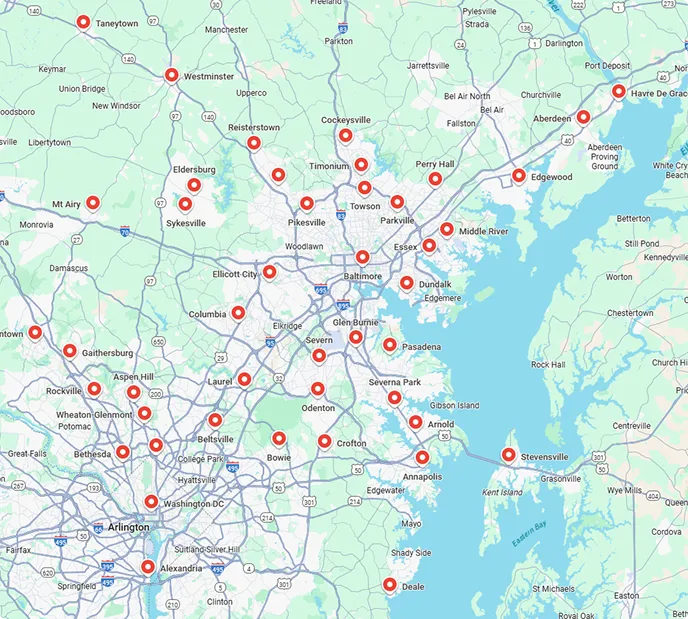
Service areas