

Whole House Air Purifiers in Reisterstown, MD
Whole-house air purifiers in Reisterstown, MD provide continuous, home-wide reduction of airborne particles, allergens, smoke, and VOCs by expertly integrating filtration with your central HVAC system. We'll explain various technology options, key installation considerations, and practical performance expectations, including HEPA and high-MERV filters, activated carbon, UV, and ionization. Tario HVAC covers proper placement, professional sizing, detailed maintenance schedules, and helps you select systems that perfectly meet sensitive occupants' needs while preserving your HVAC efficiency and enhancing home comfort through all seasonal challenges, all year long.
.jpeg)
Whole House Air Purifiers in Reisterstown, MD
Whole house air purifiers provide continuous, homewide reduction of airborne particles, allergens, smoke and many common VOCs by integrating filtration and air cleaning with your central HVAC. For homeowners in Reisterstown, MD, where humid summers, high spring and fall pollen counts, and seasonal wood smoke or wildfire haze can affect indoor air quality, a whole house system is often the most reliable way to protect sensitive occupants and maintain consistent air quality throughout the home.
Why whole house systems matter in Reisterstown
Reisterstown homes commonly face a mix of triggers: tree and grass pollen in spring and early fall, elevated indoor humidity in summer that encourages mold and dust mite activity, and occasional smoke or haze from regional fires or local fireplaces. Many homes are older and can have leaky ductwork or basements with damp air that carries spores and particulate into living spaces. A whole house purifier treats the entire living space rather than single rooms, reducing exposure wherever occupants spend time.
Common whole house air quality problems
- High pollen and seasonal allergy load on carpets, bedding and furniture
- Elevated particulate matter (PM2.5) from fireplaces, grilling, or outdoor smoke events
- Mold spores and dust mites promoted by summer humidity
- Chemical odors and VOCs from renovations, paints, cleaners and furnishings
- Pet dander and continual shedding in homes with animals
Technology options explained
Choosing the right technology depends on what you need to remove. Many systems combine technologies for broader protection.
- HEPA filtration
- High Efficiency Particulate Air (HEPA) captures at least 99.97% of particles 0.3 microns in diameter in standalone test conditions. In a whole house setup, HEPA-grade filtration is very effective for pollen, pet dander, dust and PM2.5 from smoke. Note that true HEPA in-duct systems must be sized and installed to avoid excessive pressure drop.
- High MERV media filters
- MERV rated filters range from 1 to 16 for residential use. MERV 8 to 11 is common for basic particle control. MERV 13 to 16 is recommended for superior removal of smaller particles and allergens, but HVAC compatibility must be checked because higher MERV ratings increase resistance to airflow.
- Activated carbon / adsorption medias
- Activated carbon beds or carbon-enhanced filters adsorb many VOCs, smoke odors and volatile chemicals. Performance depends on bed thickness and contact time. Carbon is essential when odors, paints, cleaning chemicals or smoke are primary concerns.
- Ultraviolet (UV) germicidal lights
- UV-C lamps installed near the coil or in the airstream reduce microbial load on coils, drain pans and airborne bacteria and viruses when exposure time and lamp intensity are sufficient. UV is an adjunct technology; it does not remove particles or most VOCs.
- Electronic and bipolar ionization systems
- These technologies reduce particles and some microbes by charging particles to make them easier to collect. Performance varies widely by product and proper installation. Some systems produce ozone or byproducts, so select units with validated third-party testing.
Placement and installation with central HVAC
Whole house purifiers are typically integrated into the return air duct or air handler. Common configurations:
- In-duct media filter or HEPA cassette mounted at the return plenum or air handler.
- Standalone fan-assisted whole house units installed in the mechanical room or attic that draw, filter and return air through the HVAC system.
- Dedicated air-cleaning modules with carbon beds positioned upstream of the coil to protect equipment and maximize adsorption.
Professional installation should include:
- Airflow and static pressure assessment to confirm the system will not overburden the fan
- Duct sealing and return path evaluation for even whole-house coverage
- Proper electrical supply and mounting
- Placement to maximize contact time for carbon and effectiveness of UV exposure if used
Expected reductions and performance metrics
Performance varies by technology, home tightness and system sizing. Typical guidance:
- HEPA-level filtration in a whole house setup can reduce airborne particulate matter by 85 to 99 percent for particles captured by the filter, with actual reductions depending on ACH and leaks.
- MERV 13 filters remove a large share of fine particles including many allergens and some smoke particles; expect major reductions in visible dust and symptom triggers.
- PM2.5 from smoke can be reduced by greater than 90 percent in properly sealed homes using HEPA plus a tight building envelope and adequate air exchanges.
- Activated carbon can substantially lower many common VOCs and smoke odors; reductions are highly dependent on carbon volume and specific chemicals, but common outcomes are noticeable odor reduction and lower measured VOC concentrations.
- Achieving 4 or more air changes per hour (ACH) is a good target for highly sensitive occupants; typical homes may see 1 to 2 ACH without additional mechanical filtration.
When comparing systems, ask installers for modeled ACH, equivalent CADR for the whole home, and measured pressure drop to ensure the system will work efficiently with your HVAC equipment.
Maintenance and filter replacement schedules
Regular maintenance is critical for performance:
- Pre-filter / washable filters: inspect monthly, clean or replace every 1 to 3 months depending on load and pets.
- MERV media filters: replace every 3 to 12 months based on MERV rating, dust load and manufacturer guidance.
- In-duct HEPA cassettes: typically replaced every 1 to 3 years, with inspection annually for pressure increase.
- Activated carbon filters: replacement ranges from 3 months to 12 months depending on adsorption load and bed thickness; heavy odor or VOC sources shorten useful life.
- UV lamps: replace annually to maintain germicidal output; verify lamp intensity periodically.
- Electronic system cleaning: electrostatic collectors require periodic washing per manufacturer instructions.
Watch for signs of reduced performance: increased dust settling, return grille pressure change, unusual odors returning, or increased allergy symptoms despite system operation.
Choosing the right system for sensitive occupants
For households with asthma, allergies, young children, older adults or chemical sensitivities, prioritize:
- True HEPA or high MERV media paired with sufficient airflow to reach 4 ACH when possible
- Combination systems that include substantial activated carbon for VOC and smoke control
- Professional sizing and airflow testing to confirm your HVAC can handle higher-efficiency filters
- Address humidity and moisture control to limit mold growth; consider whole house dehumidification in humid summers
- Sealing duct leaks and improving home tightness to increase purifier effectiveness
For occupants with chemical sensitivity, low-emission carbon beds and ventilation strategies that reduce indoor sources are essential. For homes with frequent smoke events, pairing a deep carbon bed with HEPA filtration delivers the broadest protection.
Whole house air purifiers are a long-term investment in health and indoor comfort for Reisterstown residents. The most effective systems combine particle filtration with targeted VOC control, are sized and installed to preserve HVAC airflow, and are maintained on a regular schedule. Pairing filtration with basic source control, proper ventilation and humidity management yields the best outcomes for allergy relief, smoke protection and overall indoor air quality. When selecting a system, focus on technologies that match your specific triggers, verify HVAC compatibility, and plan for routine filter and lamp maintenance to keep performance consistent through Reisterstown seasons.

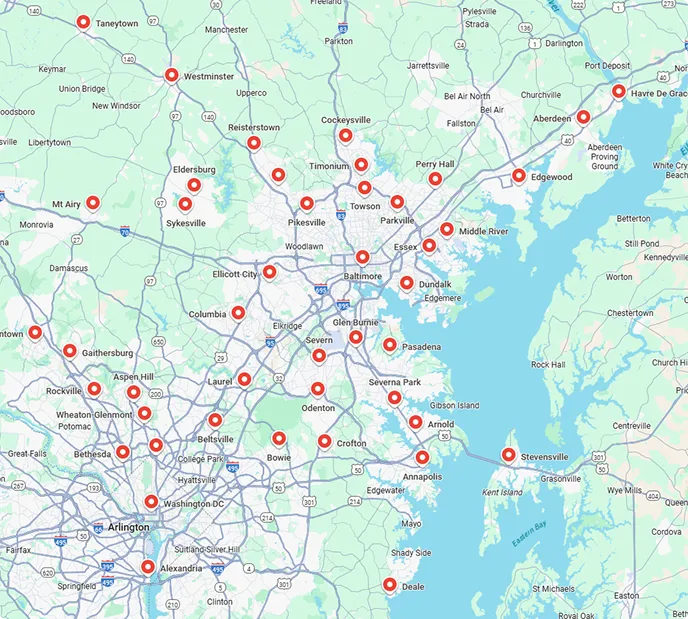
Service areas