

Ventilation in Washington, DC
Washington, DC homeowners can significantly benefit from practical, code-aware whole-home ventilation strategies precisely tailored to the local climate and diverse building types. Tario HVAC explains exactly when to use exhaust, supply, balanced, ERV, or HRV systems, demonstrates how to accurately size for optimal airflow, and guides you on managing ductwork, placement, and sealing for maximum effectiveness. We outline comprehensive humidity and pollutant control methods, explore energy recovery options, and detail operating costs, providing clear maintenance steps and a straightforward cost/benefit comparison. With Tario HVAC, the result is consistently improved indoor air quality, enhanced comfort, and superior energy performance for every DC residence.

Ventilation in Washington, DC
Proper whole-home ventilation in Washington, DC is essential for healthy, comfortable living and long-term durability of older masonry rowhouses, modern townhomes, and newly retrofitted energy-efficient homes. With hot, humid summers, cold winters, and urban pollution from traffic, DC homes face unique indoor air quality pressures: excess moisture, outdoor particulate infiltration, and stale indoor air when homes are made tighter for energy savings.
Common ventilation issues in Washington, DC homes
- Excess humidity, especially in basements and bathrooms, leading to mold and musty odors.
- Outdoor pollutant infiltration on busy streets: vehicle exhaust, construction dust, and seasonal allergens.
- Stale indoor air and VOC buildup after weatherization or insulation upgrades.
- Unbalanced airflow causing pressurization problems that draw in pollutants or create backdraft hazards for combustion appliances.
- Noisy or poorly located vents that reduce effectiveness and create occupant complaints.
Types of whole-home ventilation systems and when to use them
- Exhaust-only systems: Simple, lower cost. Use bathroom and kitchen exhaust fans to depressurize and pull outdoor air through leaks. Best for mild retrofit needs and homes with reliable makeup air. Not recommended for tightly sealed homes or ones with combustible appliances because of backdraft risk.
- Supply-only systems: Pressurize the home by introducing filtered outdoor air through a dedicated fan. Useful where outdoor air quality is generally good and you want to control filtration centrally. Can increase infiltration through leakier portions of the envelope.
- Balanced systems: Use separate intake and exhaust fans to control airflow precisely. Ideal for airtight homes and for meeting modern code and health standards. Balanced systems prevent pressure imbalances and allow central filtration and heat/energy recovery.
- ERV (Energy Recovery Ventilator): Transfers both sensible heat and moisture between outgoing and incoming air. In DC’s humid summers and cold winters, ERVs can reduce the HVAC moisture load and improve overall humidity control.
- HRV (Heat Recovery Ventilator): Transfers heat but not moisture. Best in cold, dry climates. In DC, HRVs are appropriate in homes where humidity control is handled separately.
Airflow calculations and code compliance
Sizing ventilation is not guesswork. Industry standards and local code influence required ventilation rates, but the simplest engineering check uses house volume and air changes per hour (ACH):
- CFM sizing formula: CFM = (ACH x Volume) / 60
- A common minimum guideline for whole-home ventilation is around 0.35 ACH for continuous ventilation, but exact requirements vary by occupancy, floor area, and local code.
Installers use a combination of per-person and per-square-foot rates from recognized standards plus local District of Columbia code requirements to determine continuous and intermittent ventilation needs. In Washington, DC projects also consider energy code compliance for new construction and larger renovations, which can affect ventilation type and efficiency requirements.
Ductwork assessment and installation
- Assessment: Evaluate existing duct layout, leakage, insulation, and available space for ducts and core penetrations. Older rowhomes often have limited chase space and may require creative routing or compact inline units.
- Sizing and materials: Use low-loss duct designs sized for target CFM and static pressure. Consider flexible duct only for short runs; use rigid or semi-rigid ducts for long runs to reduce friction and noise.
- Placement: Place intake away from loading zones, parking, or busy roads to minimize pollutant intake. Route exhaust away from neighboring units and operable windows to prevent cross-contamination.
- Sealing and insulation: Properly seal connections and insulate ducts that pass through unconditioned space to prevent energy loss and condensation.
Humidity and pollutant control strategies
- Integrate ventilation with dehumidification in DC summers. ERVs reduce moisture transfer but may not be sufficient in very humid conditions; a whole-house or point dehumidifier may be necessary.
- Use high-quality MERV-rated filters at the mechanical ventilation unit to reduce particulates from traffic and construction. Consider upgraded filtration when wildfire smoke or seasonal spikes occur.
- Address source control: bathroom/kitchen exhaust, local spot ventilation during cooking, bathroom fans vented outside (not into attics), and minimizing indoor pollutant sources (cleaners, paints).
- Monitor indoor RH and CO2: Target relative humidity between roughly 30-50% to limit mold and dust mite growth; elevated CO2 suggests insufficient ventilation for occupancy.
Energy recovery options and operating cost considerations
- ERV and HRV systems reduce heating and cooling loads by reclaiming energy from exhaust air. In DC, ERVs are often the most cost-effective on an annual basis because they moderate humidity as well as temperature.
- Balanced systems with energy recovery typically have higher initial costs than exhaust-only solutions but lower ongoing HVAC energy use and better indoor air quality.
- Consider fan efficiency ratings and controls (demand-control ventilation, timers, or boost modes) to reduce runtime while meeting occupancy needs.
Noise and placement considerations
- Choose low-sone fans and install vibration-isolating mounts to keep background noise low, particularly in rowhomes where mechanical noise transmits between units.
- Place the mechanical unit in conditioned or semi-conditioned space where feasible to minimize duct runs and infiltration issues. If mounted in attic or crawlspace, ensure access for maintenance and protect against condensation.
- Locate intakes away from traffic, garbage areas, and HVAC exhausts to avoid bringing odors and pollutants into the system.
Maintenance requirements
- Replace or clean filters regularly per manufacturer guidance; frequency increases during pollen season or high urban dust periods.
- Clean ERV/HRV cores at least annually and inspect drain paths where condensation may occur.
- Inspect ducts and connections every few years and after major renovations to ensure seals remain intact.
- Verify fan performance and static pressures periodically to ensure designed airflow is being delivered.
Cost/benefit comparison for DC homeowners
- Exhaust-only: Lowest upfront cost, modest IAQ improvement for leaky homes, potential downsides include increased HVAC load and moisture issues in humid months.
- Supply-only: Good filtration control, potential pressurization benefits, but may push pollutants from attics or crawlspaces without proper sealing.
- Balanced ERV/HRV: Highest upfront investment but best long-term value in energy savings, humidity control, and consistent indoor air quality—especially relevant in DC’s climate and for tighter, renovated homes.
- Lifecycle benefits: Improved indoor air quality reduces allergy and asthma triggers, prevents mold remediation costs, and preserves building materials—often outweighing initial equipment costs over time.
Choosing the right ventilation approach in Washington, DC requires balancing local climate realities, home construction type, and long-term energy and health goals. Proper sizing, careful ductwork planning, and routine maintenance are as important as the system type. For DC homes where humidity and outdoor pollution are recurring concerns, balanced systems with energy recovery frequently deliver the best combination of comfort, indoor air quality, and energy performance.

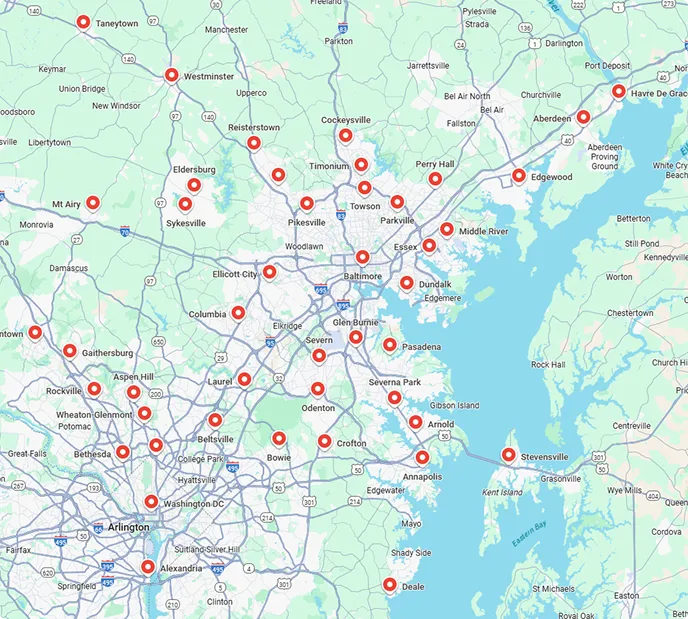
Service areas