

Furnace Installation in Wheaton, MD
For homes in Wheaton, MD, a properly installed furnace provides the bedrock for reliable, efficient heating. With cold Maryland winters, an aging housing stock, and ever-increasing energy costs, professional furnace installation from Tario HVAC is absolutely essential for your comfort, safety, and long-term savings. We're here to explain what you can expect from our comprehensive furnace installation service in Wheaton, MD, covering everything from the pre-installation assessment and thorough ductwork evaluation to system testing, warranty registration, and practical tips to ensure your system runs efficiently for years to come.

Furnace Installation in Wheaton, MD
A properly installed furnace is the foundation of reliable, efficient heat for Wheaton, MD homes. Cold Maryland winters, aging housing stock, and rising energy costs make professional furnace installation essential for comfort, safety, and long term savings.
Common furnace installation scenarios in Wheaton, MD
- Replacement of a failing or inefficient furnace in older Montgomery County homes
- Upgrading to a high efficiency furnace to reduce energy costs and emissions
- Converting from oil or an older unit to natural gas or a two-stage/variable model for better comfort control
- New installations for additions, finished basements, or new construction projects
- Ductwork revisions or system zoning to correct uneven heating and improve comfort
Why a local, thorough assessment matters
Wheaton homes vary from midcentury suburban houses to townhomes and newer infill construction. Local climate factors such as cold winters and humid summers influence how a furnace should be sized and installed. A proper pre-installation assessment prevents common problems like short cycling, poor airflow, and high utility bills.
A comprehensive assessment includes:
- Heat load calculation (Manual J style) based on square footage, insulation, window area, orientation, and occupancy
- Evaluation of existing ductwork condition, layout, leakage, and sizing relative to the proposed furnace
- Inspection of combustion air availability, venting paths, and appliance clearances consistent with Montgomery County code considerations
- Review of thermostat location, zoning needs, and indoor air quality options such as humidification or filtration upgrades
Proper unit sizing and equipment selection
Correct sizing is critical. An oversized furnace will short cycle, increasing wear and reducing efficiency. An undersized unit will struggle to maintain set temperatures during Wheaton cold snaps. Equipment selection should consider:
- AFUE efficiency ratings appropriate for your goals and home design
- Single stage versus two stage or modulating furnaces for better temperature stability and efficiency
- Compatibility with existing ductwork, electrical service, and thermostat systems
- Options for improved indoor air quality like high efficiency filters, electronic air cleaners, or whole house humidifiers
Ductwork evaluation and necessary modifications
Many local homes have older, leaky, or poorly insulated ducts that reduce system performance. A ductwork evaluation will identify:
- Leaks at seams and joints that cause heat loss and pressure imbalance
- Inadequate return air paths or undersized supply ducts resulting in uneven rooms
- Need for insulation on ducts in attics or crawlspaces to prevent heat loss
- Opportunities for balancing, adding returns, or implementing zoning for improved comfort
Sealing and insulating ducts during a furnace replacement is often one of the most cost effective ways to improve comfort and efficiency.
Step-by-step installation process
A professional installation follows a defined sequence to ensure safety, performance, and compliance.
- Obtain necessary permitting and ensure installation meets local building and fuel codes.
- Power down and safely disconnect the existing system, removing the old furnace and clearing the work area.
- Prepare the installation location, including a proper pad, mounting, and clearance for service access.
- Install the new furnace with correct gas line connections, electrical hook up, flue or venting assembly, and condensate management when applicable.
- Connect and seal duct transitions, configure return paths, and install any required combustion air intakes.
- Program thermostat and control systems, and install any indoor air quality accessories.
- Perform startup, calibration, and initial safety checks.
Licensed technicians follow manufacturer guidance and local regulations throughout the process.
Safety and performance testing
Safety and performance testing confirm the installation is correct and the system is operating efficiently:
- Combustion analysis to verify proper burner operation and safe carbon monoxide levels
- Gas leak testing and pressure checks on fuel lines
- Venting and draft verification to ensure exhaust safely exits the home
- Airflow and static pressure testing to confirm proper distribution through ducts
- Electrical checks, thermostat calibration, and verification of safety controls and limit switches
Technicians should also confirm carbon monoxide alarms are installed and functioning in accordance with local recommendations.
Post-installation walkthrough and warranty registration
After installation, a professional will provide a walkthrough that explains system operation, filter locations, recommended maintenance intervals, and thermostatic settings for Wheaton winters. They will also review warranty coverage, registration procedures, and provide documentation for permits and inspections. Proper warranty registration protects your investment and ensures manufacturer support when needed.
Tips for optimal operation and longevity
- Replace or clean filters regularly, typically every 1 to 3 months depending on filter type and household factors.
- Schedule an annual furnace tune up before heating season to maintain efficiency and catch wear issues early.
- Seal and insulate accessible ductwork in attics and crawlspaces to reduce heat loss.
- Use a programmable or smart thermostat for consistent comfort and energy savings.
- Keep supply registers and return grilles unobstructed and maintain required clearances around the furnace.
- Monitor vents for cold spots and consider zoning or balancing if rooms remain uneven.
Benefits of a professional installation in Wheaton, MD
A properly installed furnace delivers consistent comfort during Maryland winters, improves indoor air quality, reduces energy costs, and enhances safety. For older Wheaton houses in particular, pairing a new furnace with duct sealing and insulation yields noticeable improvements in performance and home value.
Q: How do I know what furnace size my Wheaton home needs?
A: A licensed technician performs a heat load calculation that accounts for your home size, insulation, window area, orientation, and local climate. This ensures the furnace is correctly sized to avoid short cycling or inadequate heating.
Q: Are permits required for furnace installation in Wheaton, MD?
A: Permits are typically required for HVAC replacements and new installations in Montgomery County. A qualified installer will obtain necessary permits and ensure work meets local code.
Q: How long does a furnace installation take?
A: Typical installations for direct replacements can be completed in a day, while projects involving ductwork modification, conversions, or additional permits may take longer.
Q: What maintenance is needed after installation?
A: Annual tune ups, regular filter changes, and periodic duct inspections are recommended to maintain efficiency and prolong equipment life.
Q: Should I upgrade ductwork during a furnace replacement?
A: If ducts are leaky, undersized, or poorly insulated, upgrading or sealing them during replacement will significantly improve comfort and energy efficiency in Wheaton homes.

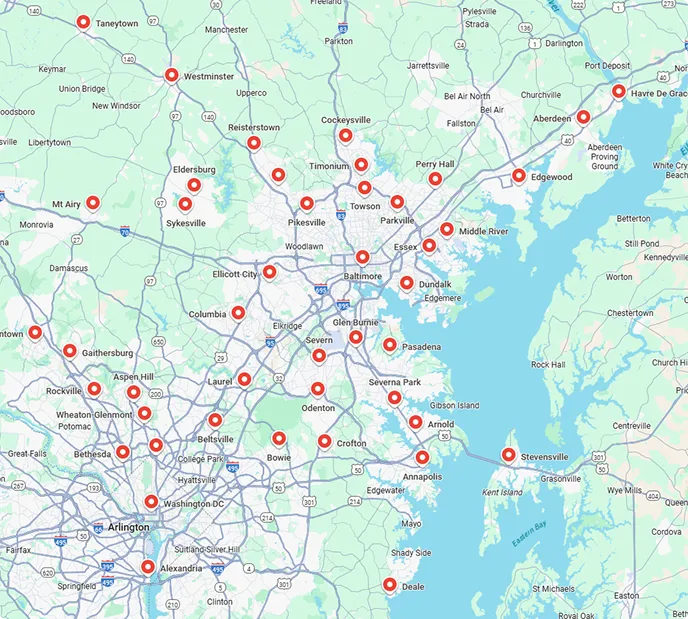
Service areas