

Furnace Installation in Gaithersburg, MD
Deciding to replace or install a new furnace is a critical choice for maintaining comfort and safety in your Gaithersburg home during those chilly months. At Tario HVAC, we know that proper furnace installation not only boosts efficiency and cuts down on utility bills but also plays a vital role in preventing safety hazards, such as carbon monoxide exposure. We'll outline our comprehensive professional furnace installation process, specially tailored for Gaithersburg, MD. This includes a thorough pre-install inspection, precise sizing and ductwork evaluations, navigating local codes and permitting, rigorous safety testing, system startup and user orientation, alongside our dedicated post-installation support and warranty registration.
-min.webp)
Furnace Installation in Gaithersburg, MD
Replacing or installing a furnace is one of the most important decisions for keeping your Gaithersburg home comfortable and safe during cold months. Proper furnace installation improves efficiency, reduces utility bills, and prevents safety hazards like carbon monoxide exposure.
Why proper furnace installation matters in Gaithersburg, MD
Gaithersburg experiences cold winters and variable spring and fall seasons, so a correctly installed furnace ensures reliable heat when temperatures drop. Local older homes often have legacy ductwork and mixed insulation levels that affect system performance. A professional installation tailored to your home avoids common problems such as short cycling, uneven heating, excessive energy use, and premature equipment failure.
Common furnace installation types and issues in Gaithersburg, MD
- High-efficiency condensing furnaces - Require condensate drainage and sealed venting systems. They deliver higher AFUE but need attention to drainage and corrosion-resistant components.
- Standard-efficiency non-condensing furnaces - Use conventional flues and may be simpler to install in older venting systems.
- Direct-vent or power-vent systems - Useful when flue routing is limited or in tightly sealed homes.
Common local issues:
- Undersized or oversized units due to lack of proper load calculation
- Leaky or undersized ductwork causing heat loss and imbalance
- Insufficient combustion air in tightly sealed homes
- Incomplete paperwork and permitting for Montgomery County codes
Pre-installation inspection and diagnosis
A thorough pre-installation inspection sets the stage for a reliable installation. Key checks include:
- Visual assessment of existing furnace, venting, and gas line
- Ductwork condition and leakage testing
- Insulation levels and building envelope review
- Thermostat compatibility and control wiring
- Venting paths and clearance requirements
- Inspectors will also review attic, crawlspace, and basement access to plan equipment placement and service clearances.
Sizing and ductwork considerations
Sizing a furnace is not based on square footage alone. Proper sizing uses standardized load calculations:
- Manual J for heating load determination
- Manual D for duct design and layout
- Manual S to select appropriate equipment based on load and ductwork
Ductwork considerations:
- Sealing and insulating ducts to reduce losses in Gaithersburg’s seasonal climate
- Correctly sizing supply and return runs to prevent high static pressure
- Balancing airflow to eliminate hot and cold spots
- Upgrading older ducts that are undersized, crushed, or poorly connected
A correctly sized furnace matched to a well-designed duct system maximizes comfort and energy efficiency.
Installation steps and what to expect
Professional furnace installation typically follows these steps:
- Finalize equipment selection based on load calculations and home needs.
- Disconnect and remove old equipment safely, including fuel and electrical isolation.
- Modify or replace duct transitions, plenums, and return paths as required.
- Install new furnace on appropriate mounting; ensure level and secure placement.
- Connect fuel supply, venting, condensate drain (if applicable), and electrical controls.
- Seal duct connections and insulate as needed to local standards.
- Install flue or direct vent piping to meet clearance and termination rules.
Each step is executed with attention to local code requirements and manufacturer installation instructions to protect safety and warranty integrity.
Code compliance, permitting, and documentation
Gaithersburg falls under Montgomery County building and fuel gas codes. Professional installers will:
- Submit required permit applications and documentation
- Schedule inspections for gas and mechanical work
- Ensure installation meets Maryland and local code requirements for combustion air, venting, clearances, and electrical connections
- Proper paperwork ensures safe, code-compliant operation and protects resale value.
Safety and combustion testing
Safety checks are essential before operating a new furnace:
- Visual gas leak check and pressure test on fuel lines
- Combustion efficiency testing to verify proper burner operation
- Carbon monoxide level measurement at the furnace and key living spaces
- Draft and venting verification to ensure safe flue gas removal
- Electrical checks and safety control verification
- These tests confirm the system is operating safely and efficiently for your family.
Startup, commissioning, and performance verification
During commissioning, technicians will:
- Configure controls and set furnace operating parameters
- Verify correct airflow by measuring static pressures and supply/return temperatures
- Confirm thermostat communication and zoning (if present)
- Run a full heating cycle and observe cycle times to avoid short cycling
- Provide documentation of measured performance values and any adjustments made
- Commissioning ensures the system delivers the expected comfort and efficiency in real-world conditions.
User orientation and homeowner responsibilities
After installation, a clear orientation helps homeowners operate the new system safely and efficiently:
- Location and function of emergency shutoff and gas valve
- How to change and select furnace filters and recommended filter types
- Thermostat programming tips for fuel savings and comfort
- Expected sounds and normal operation cues versus warning signs
- Steps for routine visual checks and when to call for professional service
- Technicians will also explain warranty terms and guide you through warranty registration.
Post-installation support and warranty registration
Post-installation activities protect your investment:
- Registering manufacturer warranty to ensure coverage
- Providing printed or digital installation documentation and test results
- Scheduling recommended follow-up checks and routine maintenance
- Advising on maintenance frequency in Gaithersburg’s climate to maintain efficiency
- Warranty registration and documented commissioning are critical for future service and resale disclosures.
Long-term benefits and maintenance advice
A correctly installed furnace provides reliable heat, lower energy costs, and longer equipment life. For Gaithersburg homes, regular seasonal maintenance is especially important due to humidity variation and heating season length. Recommended maintenance includes:
- Replacing or cleaning filters every 1 to 3 months depending on filter type and household conditions
- Annual professional tune-up and safety inspection before the heating season
- Periodic duct inspections and sealing to reduce heat loss
- Ensuring adequate attic and crawlspace insulation to lower heating load
Q: How long does a professional furnace installation in Gaithersburg, MD typically take?
A: Most full furnace replacements take one day for standard installations, though more complex jobs involving ductwork upgrades or venting changes may require additional time and scheduling for inspections.
Q: Will I need a permit for furnace installation in Gaithersburg?
A: Yes. Furnace work usually requires a mechanical and/or gas permit through Montgomery County. Licensed installers will handle permit submission and coordinate inspections.
Q: How is the right furnace size determined for my Gaithersburg home?
A: The installer will perform a Manual J load calculation that considers insulation, windows, orientation, and local climate. This calculation prevents oversizing or undersizing that can cause inefficiency or comfort issues.
Q: What safety tests are performed after installation?
A: Typical safety checks include gas leak pressure testing, combustion efficiency and CO testing, venting and draft checks, electrical safety checks, and operational control verification.
Q: What should I expect for warranty and paperwork after installation?
A: You should receive manufacturer warranty registration instructions, copies of installation and test reports, and documentation of permits and inspections to support future service and resale needs.

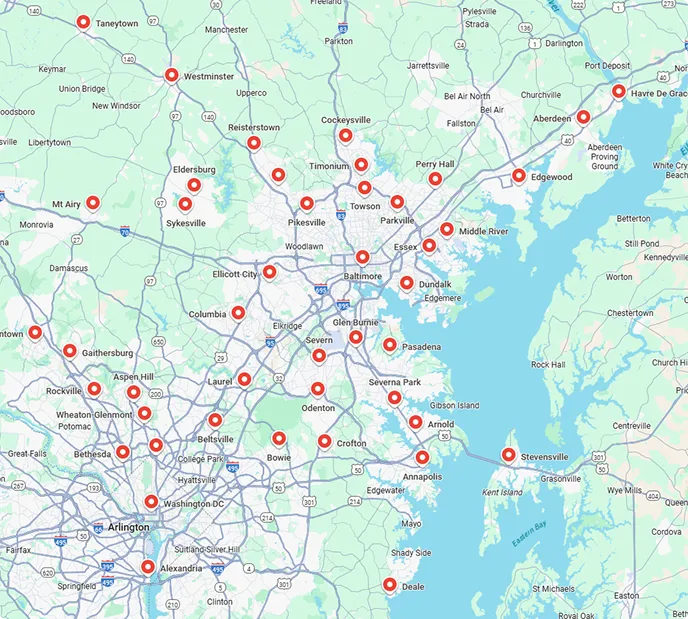
Service areas